Moving a hot tub is a transport job first and a strength job last. If you want to know how to move a hot tub without cracking the shell, damaging the garden or hurting someone, start by measuring the route and deciding early whether it needs a specialist mover.
In This Article
- Should You Move a Hot Tub Yourself?
- Measure the Tub, Route and Access Before You Touch It
- Drain, Disconnect and Protect the Hot Tub
- Moving Equipment: Spa Sleds, Dollies, Straps and Cranes
- The Safe Moving Sequence Step by Step
- What It Costs to Move a Hot Tub in the UK
- Mistakes That Crack Shells, Damage Gardens or Injure People
- Frequently Asked Questions
Should You Move a Hot Tub Yourself?
You can move a hot tub yourself only when the move is short, level, low-risk and fully planned. That usually means repositioning an empty tub on the same patio or sliding it a few metres onto a prepared base. Moving a hard-shell hot tub through gates, down steps, across soft lawn or onto a trailer is a different job.
Most acrylic hot tubs weigh roughly 180-450kg empty, and swim spas can be far heavier. Add awkward size, fragile cabinet panels and a high centre of gravity, and it becomes clear why four strong adults are not the same thing as a proper moving plan.
My safe threshold
I would only consider a DIY move if all of these are true:
- The tub is empty and disconnected: no water, no live electrics, no loose cover.
- The route is short and level: patio-to-patio, not steps, slopes or gravel.
- The access is generous: at least 10-15cm clearance either side at gates and turns.
- You have the right kit: boards, straps, moving blankets and proper dollies, not just enthusiasm.
- You can stop safely: no point where the tub has to be held half-balanced while someone thinks.
If any of those fail, price the move professionally before taking panels off. A damaged cabinet, cracked shell or injured back will cost more than doing it properly.
This guide sits alongside our hot tub delivery preparation guide and hot tub installation planning guide. Those cover getting a new tub in and ready; this covers moving an existing one safely.
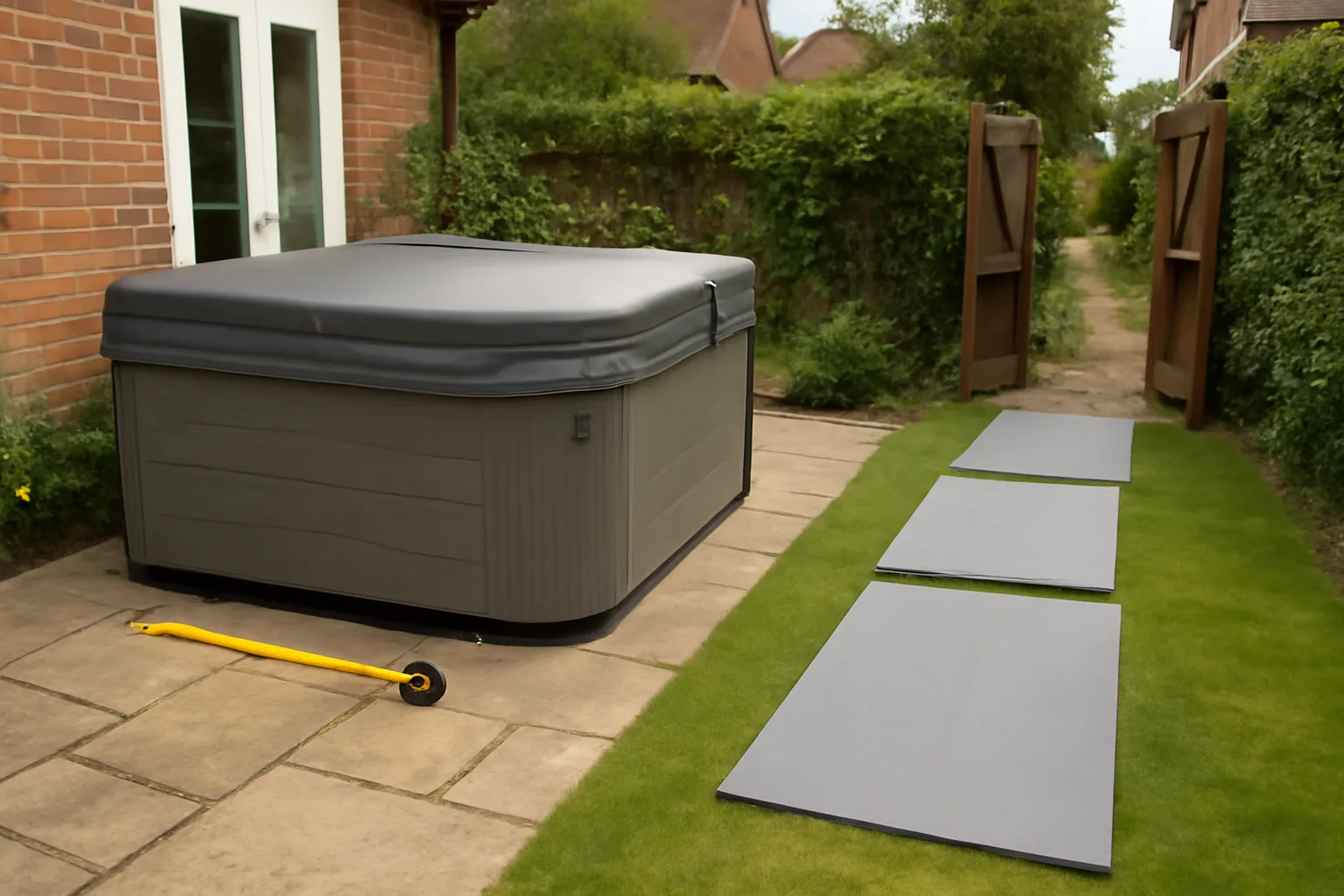
Measure the Tub, Route and Access Before You Touch It
The move is usually won or lost before the tub moves a centimetre. Measure the tub, then measure the whole route as if you were the person pushing it through the narrowest turn.
Measure the hot tub properly
Write down:
- Width, length and height: include cover clips, handles, corner trim and any cabinet bulges.
- Dry weight: use the model manual if you have it; if not, check the manufacturer’s archived spec page.
- Panel access: note which side contains the control pack, pumps and electrical entry.
- Shell edge shape: rounded corners move more easily than square cabinets through tight turns.
If you are moving a second-hand tub, check the same things before buying. Our second-hand hot tub checks are worth reading before you pay a deposit on a bargain that cannot leave the seller’s garden.
Measure the route
Measure the route from the tub to the vehicle, not just the gate. The problem point is often a drain cover, patio step, raised threshold, tight side return, pergola post or fence panel that looked harmless in photos.
Check:
- Gate width: measure with the gate open, including hinges and latches.
- Turning space: a 2.1m tub may need more than 2.1m at a corner.
- Height clearance: watch for roof edges, outdoor lights, tree branches and cables.
- Ground surface: wet grass, loose gravel and soft soil make a heavy tub far harder to control.
- Vehicle position: the shortest route is not always the safest if the van cannot park level.
If the route needs fence panels removed, budget for it before moving day. A handyman or fencing contractor may charge £80-£200 for a simple temporary panel removal and refit, depending on posts, fixings and access.
Drain, Disconnect and Protect the Hot Tub
Do not move a hot tub with water in it. Even a few centimetres of leftover water adds weight, sloshes unpredictably and can flood the cabinet when the tub is tipped.
Drain and dry it
Drain through the built-in drain valve if there is time, or use a submersible pump if you need it empty faster. A basic dirty-water pump from Screwfix or B&Q is usually around £45-£90, and a short garden hose is another £10-£25 if you do not already have one.
Once drained, remove filters, loosen low-point drain caps where the manual allows, and sponge out footwells. The goal is not showroom dryness; it is removing loose water that could move inside the shell or cabinet.
If you are also cleaning before the move, use the same principles in our drain and clean hot tub guide: drain, clean the shell, rinse carefully and leave the service bay accessible.
Disconnect power safely
A plug-and-play inflatable or 13A hot tub is simple to unplug once switched off. A 32A hard-wired hot tub is not. If the tub has an isolator, armoured cable or dedicated outdoor supply, get a qualified electrician to disconnect and make safe.
Expect roughly £80-£180 for a simple electrician visit, more if cable needs rerouting or a consumer-unit issue appears. The existing hot tub electrical requirements UK guide explains why this is not a corner to cut.
Protect panels, pipework and cover
Remove loose accessories, steps, cover lifters and drinks trays. Take photos of cabinet panels and screw positions before removing anything. A packet of resealable bags and a marker pen costs about £3-£6 and saves a lot of swearing later.
Use moving blankets around cabinet corners and straps around the tub body, not through jets, handles or pipework. Budget £20-£45 for a pair of moving blankets and £15-£35 for ratchet straps from Screwfix, Toolstation or Halfords. Avoid over-tightening straps across acrylic edges.
Moving Equipment: Spa Sleds, Dollies, Straps and Cranes
The right equipment spreads load and keeps the tub controlled. The wrong equipment concentrates force into one corner and cracks things.
What pros use
Specialist movers commonly use spa sleds, heavy-duty dollies, air wedges, skates, protective boards and long straps. They also know which side of a tub can tolerate being tipped and which side contains vulnerable components.
Move Your Spa lists hot tub relocation services from about £250 and shows separate setup packages from about £120-£380, depending on the level of work. Its hot tub relocation page also notes that crane work can add roughly £300-£1,000 where access is difficult. Those numbers are useful because they put DIY risk into context.
DIY equipment list
For a low-risk same-garden move, I would want:
- Two or more heavy-duty furniture dollies: often £25-£60 each to buy, less to hire locally.
- Plywood or ground protection boards: roughly £20-£45 per board, depending on thickness.
- Moving blankets: about £20-£45 per pair.
- Ratchet straps or lifting straps: around £15-£35, rated properly for the load.
- Work gloves: about £5-£15 per pair, mainly for grip and edge protection.
That is already £100-£250 of kit if you do not own any of it. If the professional move quote is £250-£500, DIY does not look as clever as it did over breakfast.
When a crane is the right answer
A crane or HIAB is not an admission of defeat. It is the right answer when the safest route is over a fence, wall, hedge or extension rather than through a tight garden path. Crane cost depends on location, reach, lift plan and time on site, but £300-£1,000 is a realistic UK planning range.
If you need a crane, you also need clear access for the vehicle, overhead checks and insurance clarity. Do not book the cheapest crane casually; ask whether the operator has moved hot tubs before and who is responsible for slings, protection and landing position.
The Safe Moving Sequence Step by Step
Do the move in one controlled sequence. Stop at each stage and check the tub, ground and team before the next movement.
- Confirm the route: walk it again with measurements, boards, gates and vehicle position checked.
- Switch off and disconnect: isolate power, remove accessories and keep the service bay accessible.
- Drain fully: pump out water, sponge low points and remove filters.
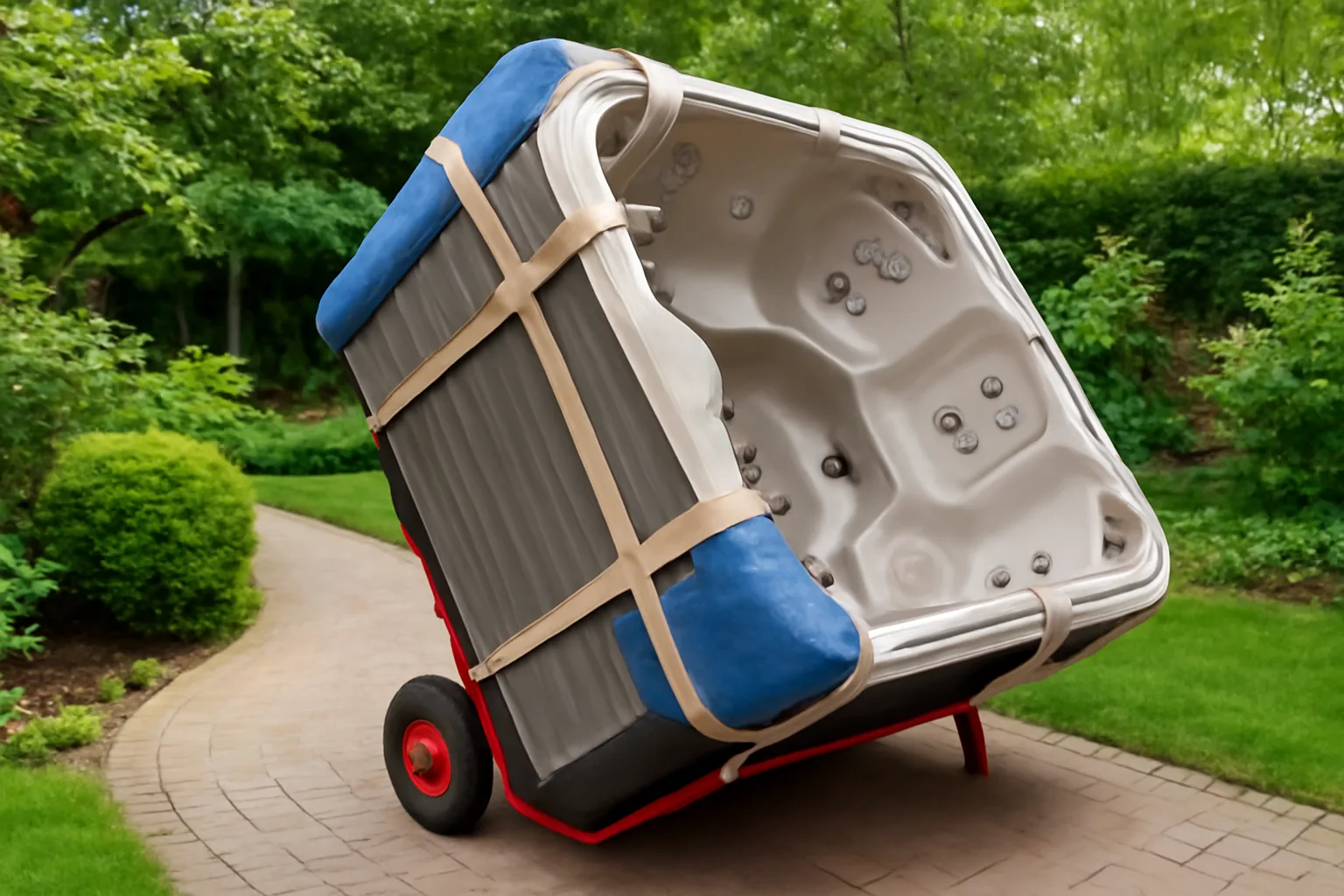
- Protect the tub: fit blankets, corner protection and straps before tipping.
- Tilt only as planned: tip onto the approved side, keeping weight controlled and hands away from pinch points.
- Load onto sled or dollies: centre the weight and strap it before moving.
- Move slowly over boards: one person calls instructions; nobody pushes from blind corners.
- Load or unload level: use a ramp rated for the weight, not a plank found in the garage.
- Set down before reconnecting: place it on the prepared base, check level, inspect panels and only then reconnect.
The caller matters. One person should be in charge of stop/go decisions. Group moves go wrong when five people all shout different advice at the awkward bit.
Restart checks after the move
Once positioned, check the base is level before filling. A full hot tub is extremely heavy; even a small slope can strain the shell, cabinet and plumbing. Our hot tub base guide and deck support guide explain the load problem in more detail.
Fill through the filter housing if your manufacturer recommends it, bleed air if needed, then watch the service bay for leaks while the pumps run. Do not walk away for the first heat-up.
What It Costs to Move a Hot Tub in the UK
Budget depends on distance, access and whether the tub is already disconnected. A short same-property move is not priced like a cross-county relocation with steps and a crane.
Typical price ranges
Use these planning figures:
| Job | Typical UK cost | Notes |
|---|---|---|
| Same-garden repositioning | £150-£350 | Often cheaper if access is level and simple |
| Local hot tub relocation | £250-£600 | Move Your Spa starts from about £250 |
| Difficult access or long carry | £400-£900 | Steps, slopes and tight turns push labour up |
| Crane or HIAB support | £300-£1,000 extra | Depends on reach, site and lift time |
| Electrician disconnect/reconnect | £80-£250+ | More if cable or isolator work is needed |
| Fresh water-care restart kit | £25-£80 | Chlorine/bromine, test strips and cleaner |
If the tub is being moved to a new house, include transport, insurance, access at both addresses and setup time. Also check the cover. A tired hot tub cover can split when handled, and a replacement insulated cover can cost roughly £300-£600 depending on size and taper.
DIY costs that get missed
DIY does not mean free. You may still need:
- Van or trailer hire: about £70-£160 per day, plus fuel and insurance excess.
- Ramp hire: roughly £20-£60 if not included with the vehicle.
- Ground boards: £40-£150 if you need several sheets.
- Replacement trim or panels: small parts can still be £20-£100+ from the manufacturer.
- Water-care restart: see our hot tub chemicals starter kit guide if you are starting again after a drain.
The honest maths is simple: if you need to buy or hire most of the kit, professional moving is often the better value.
Mistakes That Crack Shells, Damage Gardens or Injure People
The big mistakes are predictable.
Moving it with water inside
Do not do it. Water adds weight and shifts as the tub tips. That can twist the shell, soak the cabinet and make the load harder to control.
Lifting from weak points
Do not lift by jets, pipework, cabinet trim, cover lifter brackets or loose handles. Lift and support the shell where the manufacturer or mover recommends. If you cannot find that information, pay someone who has moved the model or similar tubs before.
Ignoring manual-handling risk
The HSE’s manual handling guidance is written for workplaces, but the principle applies at home too: avoid hazardous manual handling where possible, assess the risk and reduce it before lifting. A hot tub is awkward, heavy and hard to grip, which is the bad combination.
Forgetting the final base
Do not move the tub, celebrate, then discover the base is not ready. A filled hot tub can weigh 1,000-2,000kg depending on size. The base must be level, firm and built before the move, not adjusted afterwards with spare paving slabs.
For winter moves, plan the restart too. Our winterise your hot tub guide covers freezing-risk thinking if the tub will sit empty or disconnected in cold weather.
My final view: move a hot tub yourself only for a short, level repositioning with proper kit. For anything involving property-to-property transport, steps, cranes, narrow side access or electrics, get a specialist quote before you move a single panel.
Frequently Asked Questions
How many people do you need to move a hot tub? For a small same-patio repositioning, four capable adults may be enough with dollies and boards. For a full relocation, use specialist movers rather than relying on people alone.
Can you move a hot tub on its side? Many hard-shell hot tubs can be moved briefly on a suitable side, but only when drained, protected and supported. Check the manufacturer guidance because equipment layout varies.
How much does it cost to move a hot tub in the UK? A simple local professional move often starts around £250 and can reach £600-£900 with difficult access. Crane work can add roughly £300-£1,000.
Do you need an electrician before moving a hot tub? Yes, if it is hard-wired. A 13A plug-and-play model can usually be unplugged, but a 32A installation should be isolated and reconnected by a qualified electrician.
Can a removal company move a hot tub? Some can, but ask about hot tub experience, insurance, moving equipment and whether they will handle disconnect/reconnect boundaries. A normal house-removal team is not automatically a spa-moving team.
What is the biggest risk when moving a hot tub? The biggest risk is losing control of an awkward, heavy shell at a pinch point. That can crack the tub, damage property or injure someone, so route planning matters more than brute force.