Installing a hot tub goes smoothly when the boring work is done before the delivery lorry arrives. The tub itself is only one part of the job; access, base, electrics, drainage, privacy and first-fill setup decide whether installation takes an afternoon or turns into a very expensive garden obstacle.
In This Article
- How to Install a Hot Tub in the UK: The Planning Sequence
- Measure the Route Before You Choose the Tub
- Prepare the Base, Drainage and Service Access
- Plan the Electrics Before Delivery Day
- Check Planning, Privacy and Neighbour Practicalities
- Budget for Delivery, Lifting and First-Fill Setup
- Avoid the Mistakes That Delay Installation
- Frequently Asked Questions
How to Install a Hot Tub in the UK: The Planning Sequence
The right way to think about a UK hot tub installation is not “buy tub, put tub in garden, fill tub”. A filled acrylic hot tub with bathers can weigh well over 1,500kg, needs a level load-bearing base, and may need a dedicated electrical supply before it can be commissioned.
I would plan the job in this order:
- Choose the position: close enough to the house to use, far enough from boundaries to feel private, and not blocking service access.
- Check access: measure the full delivery route before you choose the model, not after.
- Specify the base: concrete, reinforced paving or structurally rated decking, designed for the filled weight.
- Book electrics: decide between 13A plug-and-play and 32A hardwired supply, then use a qualified electrician where required.
- Plan drainage and water supply: know how you will fill, top up and empty the tub without flooding the lawn or patio.
- Confirm delivery method: trolley, side carry, spa dolly, crane or hiab lift.
- Prepare first-fill kit: hose filter, chemicals, test strips, cover, steps and basic cleaning gear.
That sequence stops the common failure: buying a good tub, then discovering the side gate is 5cm too narrow, the patio falls the wrong way, or the electrician cannot fit you in for three weeks. If you are still choosing size, read our hot tub size guide before committing, because a compact four-seater and a full lounge-style six-seater create very different install problems.
Keep the planning job in its lane. For anything involving a new circuit, buried cable, raised deck, retaining wall or crane lift, pay the right trade. Saving £300 at the planning stage can cost far more if the tub has to be moved twice.
Measure the Route Before You Choose the Tub
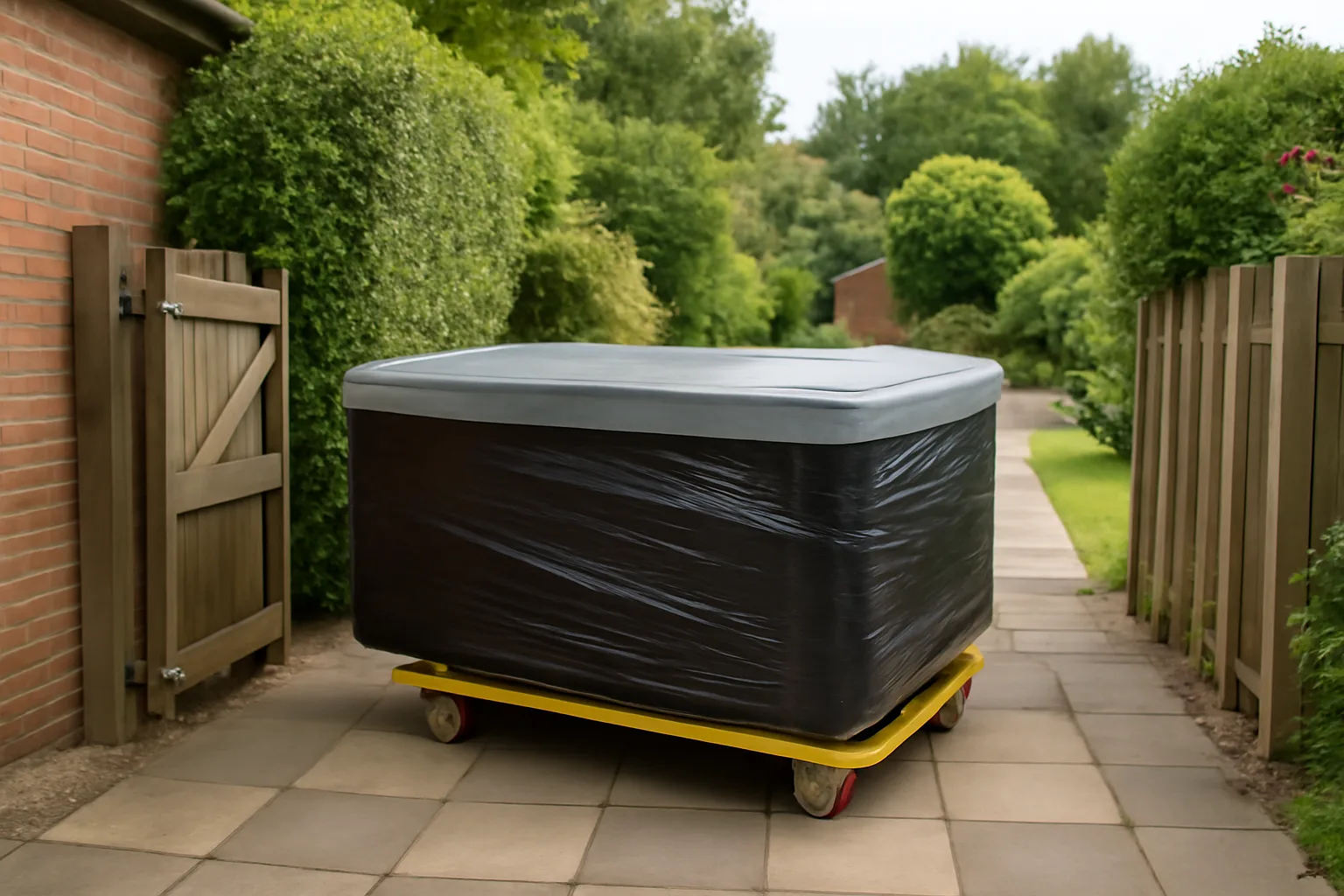
Access is the first hard yes/no. A hot tub normally arrives upright on its side, wrapped, and moved on a spa dolly or trolley. That means the delivery route must allow for the tub’s longest dimension, not just its footprint once installed.
Before you order, measure:
- Gate width: many garden gates are 760-900mm wide, while a hard-shell tub on its side may need 800-1,000mm plus handling room.
- Height clearance: check pergolas, porch roofs, low branches, lean-to roofs, meter boxes and outside lights.
- Turns: tight L-shaped paths can be worse than narrow gates because the tub cannot pivot.
- Steps and slopes: a single step is manageable; a steep stepped garden may need extra labour or a lift.
- Ground condition: gravel, mud and soft lawn make trolley movement harder, especially after rain.
- Parking: the delivery vehicle needs somewhere close enough to unload safely.
Most retailers ask for delivery photos or a pre-delivery access form. Take that seriously. A basic delivery and positioning service may be included in the hot tub price, but awkward access can add £100-£300 for extra labour. A specialist hot tub move commonly starts around £250-£300, and crane or hiab work can move from £500 to £1,500+ depending on distance, road closures and lift complexity.
If the only route is over a garage, wall or house, get a quote before paying the hot tub deposit. Over-house lifts are normal in the industry, but they are not casual add-ons. You may need the tub dimensions, dry weight, lift radius, parking position and insurance confirmation.
Access also affects the model choice. A 2m x 2m tub with a simple square shell is easier to move than a huge swim-spa-style unit or a heavily insulated premium shell. If access is marginal, do not assume “they’ll manage”. Delivery crews are good, but they are not there to demolish your gate.
Prepare the Base, Drainage and Service Access
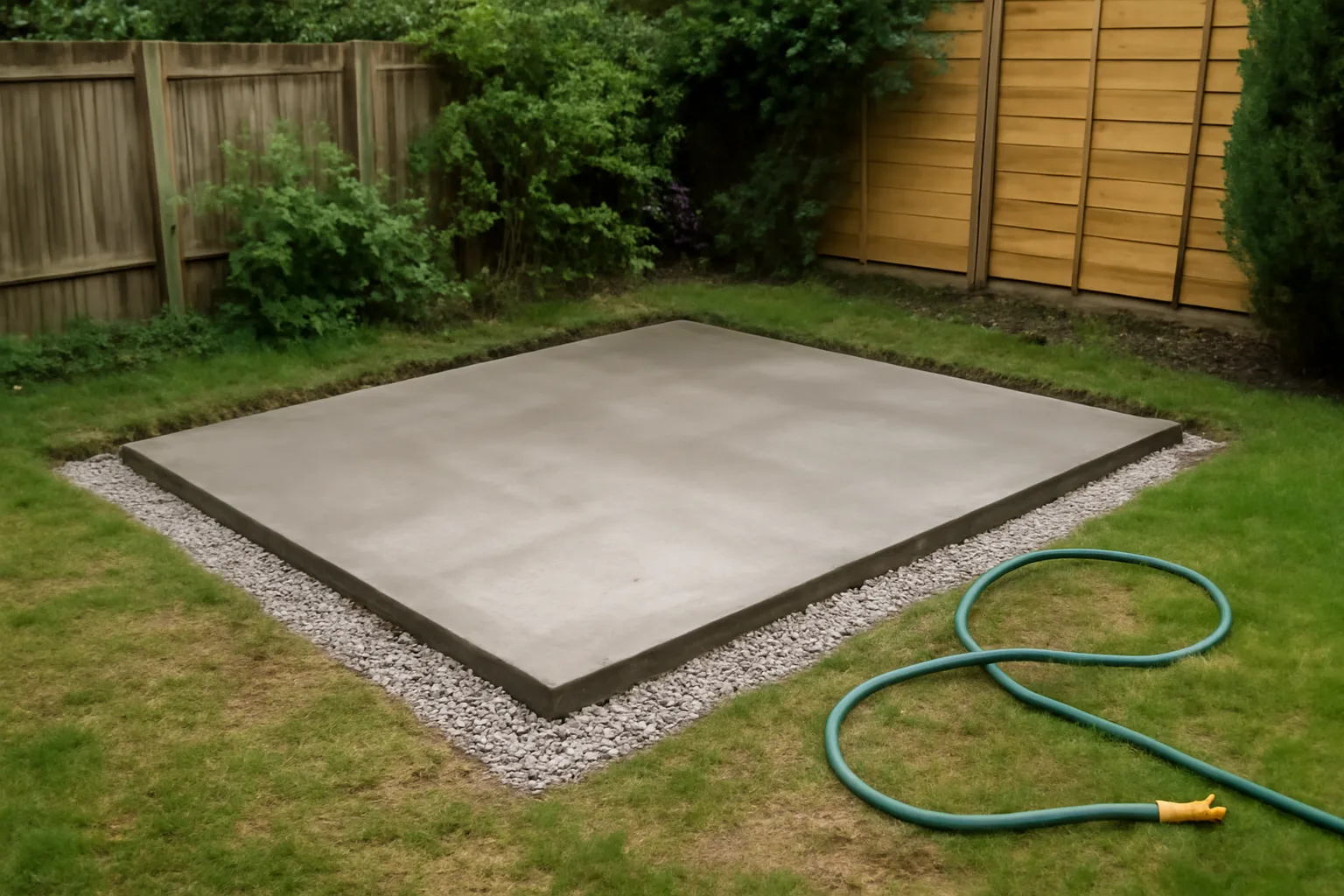
A hot tub base has three jobs: support the filled weight, stay level, and let the tub be serviced later. If it fails at any of those, the cabinet can twist, water can pool, and warranty claims get awkward.
The usual UK base options are:
- Concrete slab: the safest default for a hard-shell tub. Expect roughly £600-£1,500 for a small reinforced slab once excavation, hardcore, formwork and concrete are included.
- Reinforced paving: can work if laid properly on a compacted sub-base. Budget roughly £400-£1,200 depending on size and ground prep.
- Structurally rated decking: only if designed for the filled tub load, water and bathers. Reinforcement can add £1,000-£3,000+ compared with a normal deck.
- Hot tub pads or grids: useful for lighter tubs on a prepared sub-base, often £150-£400, but check the manufacturer’s rules before relying on them for a heavy acrylic spa.
Our hot tub base guide goes deeper on materials, but the short answer is simple: if you are installing a proper hard-shell tub and want the least drama, choose a level concrete slab unless there is a strong reason not to.
Drainage needs equal attention. You will eventually empty 800-1,500 litres of treated water. That is too much to release blindly onto a neighbour’s boundary, a clay lawn or a patio falling towards the house. Plan a route to a suitable drain, soakaway or garden area, and let sanitiser levels drop as advised by the tub supplier before draining. A submersible pump costs about £40-£90 and is far quicker than relying on a small gravity drain.
Service access is the bit people forget because the new tub looks better tucked tightly into a corner. Leave enough room to open the equipment panel. As a working minimum, allow around 50-60cm at the service side, more if the pump bay faces a fence. If you build decking around the spa, design removable panels from the start. Retrofitting access hatches later is miserable.
Think about where steps, cover lifter and towels will go. A cover lifter often needs 25-45cm clearance behind the tub, and a decent set of steps costs about £80-£200. If you place the tub tight to a wall, you may save patio space but make the cover heavy and awkward every single time.
Plan the Electrics Before Delivery Day
Do the electrics before delivery, not after. A hot tub sitting on the patio waiting for power is a depressing garden sculpture.
There are two common routes:
- 13A plug-and-play: smaller tubs that plug into a suitable outdoor RCD-protected socket. Outdoor sockets and installation vary, but budget roughly £120-£300 if you need a new weatherproof socket installed by an electrician.
- 32A hardwired supply: many acrylic hot tubs need a dedicated supply from the consumer unit, with isolator, suitable cable and RCD protection. A typical UK job is often £400-£900, but long cable runs, trenching or consumer-unit work can push it above £1,000.
NICEIC’s garden electrics guidance says outdoor socket-outlets should be RCD-protected, weatherproof and installed with suitable outdoor cabling. For hot tubs specifically, that is not a detail to wing with an extension lead. Water, bare feet and electricity need proper separation.
Ask the retailer for the electrical specification before booking the electrician. You need the amperage, cable-entry point, isolator location and whether the final connection must be completed by the retailer or your electrician. Some suppliers require the isolator to be a set distance from the tub so it can be reached in an emergency but not touched from inside the water.
If you are installing near decking, paving or a new base, coordinate trades. The neatest cable route is usually planned before the slab is poured or the decking boards go down. Retrofitting outdoor armoured cable across a finished garden rarely looks tidy.
There is a good reason HotTubGeek has a separate hot tub electrical requirements guide. This is one of the areas where a vague answer is not enough. Use the article for planning language, then get a qualified electrician to confirm the actual circuit.
Check Planning, Privacy and Neighbour Practicalities
Most domestic hot tubs do not need planning permission by themselves. The complications are usually the things built around them: raised decking, a pergola, an enclosure, screening, a garden building, or a site in a conservation area or listed property. BISHTA’s consumer FAQ advice notes that hot tub installation can need extra care where structures or special property restrictions apply, and it is sensible to check locally if in doubt.
Our planning permission guide for hot tubs covers this in more detail. For a normal patio-level tub in a private garden, planning is rarely the blocker. For a raised deck with a roof, lighting and privacy screens, it deserves a proper check.
Privacy is more practical than legal in many homes. Sit in the proposed spot, ideally at evening-use height, and look around:
- Can neighbours see straight in? A £150-£500 screen, trellis or planting run may be enough.
- Will the pump noise carry? Even a quiet tub can hum at night beside a fence.
- Where will voices travel? Hot tubs turn normal conversation into late-evening noise very easily.
- Can you reach the house safely? Wet feet, winter paving and no lighting are a bad mix.
If the tub is close to a boundary, talk to the neighbour before the crane turns up. You do not need to invite a committee into your garden plans, but a quick heads-up helps. In a semi-detached or terrace, I would avoid placing the pump bay directly against the shared boundary unless there is no other option.
You also need child and pet safety. A lockable insulated cover is not optional; it is part of responsible ownership. A replacement quality cover can cost £350-£700, so protect the one that comes with the tub. Cover lifters, steps with grips and low-level lighting are boring purchases, but they make the hot tub easier and safer to use.
Budget for Delivery, Lifting and First-Fill Setup
The install budget is where people get caught. They price the hot tub, then mentally file everything else under “small extras”. The extras are not small.
For a typical UK garden hard-shell hot tub, realistic planning ranges are:
- Basic delivery and positioning: often included, but allow £0-£300 depending on supplier and access.
- Specialist hot tub move: about £250-£600 for non-standard access or moving a used tub.
- Crane or hiab lift: often £500-£1,500+, with road closure or complex lifts costing more.
- Concrete or reinforced base: roughly £600-£1,500 for a modest domestic slab.
- Hardwired electrical supply: roughly £400-£900 for many 32A installs, more if trenching or consumer-unit upgrades are needed.
- Water-care starter kit: £30-£80 for sanitiser, pH adjusters, test strips and foam control.
- Hose filter: £15-£40, useful in hard-water areas.
- Steps: £80-£200 for sturdy spa steps.
- Cover lifter: £150-£350, worth it if the cover is heavy or the tub will be used often.
HSE’s spa-pool guidance is aimed mainly at business and managed settings, but its focus on controlling legionella and other infectious agents is a useful reminder that hot tub installation does not end when the shell is in place. Good water circulation, disinfection, cleaning and temperature control matter from the first fill.
For a sensible private-home install, I would budget at least £1,500-£3,000 on top of the tub if you need a base and hardwired electrics. If access needs a crane or you are recessing the tub into decking, £3,000-£6,000+ is more realistic. Built-in or sunken installs can go higher because structure, drainage and access hatches all become part of the job.
Do not forget running prep. A new tub may take 8-24 hours to heat depending on model, water temperature and cover quality. If you want it ready for a Saturday evening, do not schedule delivery for Saturday lunch. Our guide to heating a hot tub faster explains why cover discipline and fill temperature matter.
Avoid the Mistakes That Delay Installation
Most installation delays are avoidable. They happen because the buyer, retailer, electrician and landscaper each assume someone else has checked the awkward detail.
Mistake: ordering before measuring access
Measure before you pay the deposit. Send photos and dimensions to the retailer. If access is tight, ask them to confirm in writing whether standard delivery is enough or whether you need a survey, extra crew or lift.
Mistake: putting the tub too far from the house
A hidden corner looks peaceful in summer and unused in January. If you want year-round use, place the tub where the walk from the house is short, lit and not slippery. Our garden placement guide covers the comfort side, but the installation point is simple: convenience drives use.
Mistake: hiding the service panel
Leave access to the pump bay. Engineers need to reach pumps, heater, control box, unions and drain points. If you build a deck right up to the cabinet with no removable panel, you have built a future repair bill.
Mistake: treating 13A and 32A tubs as interchangeable
A 13A plug-and-play tub is easier to install but may heat more slowly or limit jet/heater use on some models. A 32A hardwired tub costs more to prepare but gives the spa the supply it was designed for. Choose based on the model and how you will use it, not just the installation bill.
Mistake: planning no route for drained water
You will empty the tub for cleaning, water changes and winter work. If there is no drain plan, the first water change becomes a muddy panic. Read our drain and clean guide before the tub arrives, not three months later.
Mistake: ignoring winter access
Summer installation photos lie. In January, you need a clear path, lighting, somewhere for the cover to go, and enough grip underfoot. If your planned position is across wet decking, down two steps and behind a dark garage corner, rethink it.
The best hot tub installation is unexciting: level base, clear access, power ready, water route planned, privacy sorted, and the first-fill kit waiting. Do that, and delivery day is just delivery day. Skip it, and the hot tub becomes the most expensive thing in the garden that nobody can use yet.
Frequently Asked Questions
Can I install a hot tub myself? You can prepare some parts yourself, such as clearing access and arranging the base, but hardwired electrics and complex lifting should be handled by qualified professionals.
How much does hot tub installation cost in the UK? A simple install may add £500-£1,500 on top of the tub. A more typical hard-shell setup with base and electrics is often £1,500-£3,000, and crane or built-in work can push it higher.
Do I need a concrete base for a hot tub? Not always, but a level reinforced concrete slab is the safest default for many hard-shell hot tubs. Reinforced paving or rated decking can work if designed for the filled weight.
Does a hot tub need a 32 amp supply? Many acrylic hot tubs need a 32A hardwired supply, while smaller plug-and-play tubs can run from a suitable 13A outdoor RCD-protected socket. Always check the manufacturer’s specification.
How long does it take to install a hot tub? Delivery and positioning can take a few hours if the base and electrics are ready. The full preparation process often takes one to four weeks because trades, concrete curing and electrical work need scheduling.
Can a hot tub go on decking? Yes, but only if the decking is structurally designed for the filled tub, water and bathers. Ordinary garden decking is usually not enough without reinforcement.