You’ve picked your hot tub, mentally planned where it’s going in the garden, maybe even told the neighbours about it — and then someone asks “what are you putting it on?” Suddenly you’re down a rabbit hole of load-bearing calculations, sub-base depths, and conflicting advice from every forum on the internet. Get the base wrong and you’re looking at cracked slabs, a wonky tub, or worse — structural damage that voids your warranty.
This hot tub base options guide cuts through the noise. We’ll walk through every viable base type, what each one actually involves, and help you pick the right one for your garden, your budget, and your tub.
Why Your Hot Tub Base Matters More Than You Think
A filled hot tub with people in it can weigh anywhere from 1,500 kg to over 2,500 kg, depending on size. That’s roughly the same as a Land Rover sitting in one spot on your patio, 365 days a year. The base needs to handle that weight without shifting, sinking, or cracking — through British winters, summer heat, and everything in between.
Beyond structural integrity, the wrong base causes problems you won’t notice for months. A slight unevenness — even 10 mm across the footprint — puts uneven stress on the hot tub shell. Over time, this can cause hairline cracks, pump issues, and warranty headaches. Most hot tub manufacturers explicitly state in their warranty terms that the base must be level to within 5-10 mm. Skip this step and you’re on your own if something fails.
There’s also drainage to think about. Hot tubs splash, overflow, and occasionally need draining. A well-planned base handles water runoff without turning the surrounding garden into a swamp.
Before You Start: Measuring Up and Planning
Before choosing a base type, you need three measurements sorted:
- The hot tub footprint — add 300 mm to each side for access, maintenance panels, and air circulation
- Total filled weight — check the manufacturer’s spec sheet for “filled weight” (water + tub) and add roughly 400 kg for four adults
- Ground conditions — clay soil behaves very differently to sandy or chalky ground. Clay holds water and expands; sandy soil drains but can shift
Check with your local council whether you need planning permission. In most cases, a hot tub counts as a temporary garden structure and falls under permitted development. But if you’re in a conservation area, listed building curtilage, or planning to build a permanent structure like a raised concrete plinth, it’s worth a quick call. The gov.uk planning portal has the permitted development guidelines if you want to check before phoning anyone.
You’ll also want to think about access. Getting a hot tub through a side gate is one thing. Getting a cement mixer, paving slabs, or timber joists through the same gap is another. Measure your access routes early — it saves arguments later.
Concrete Slab Bases
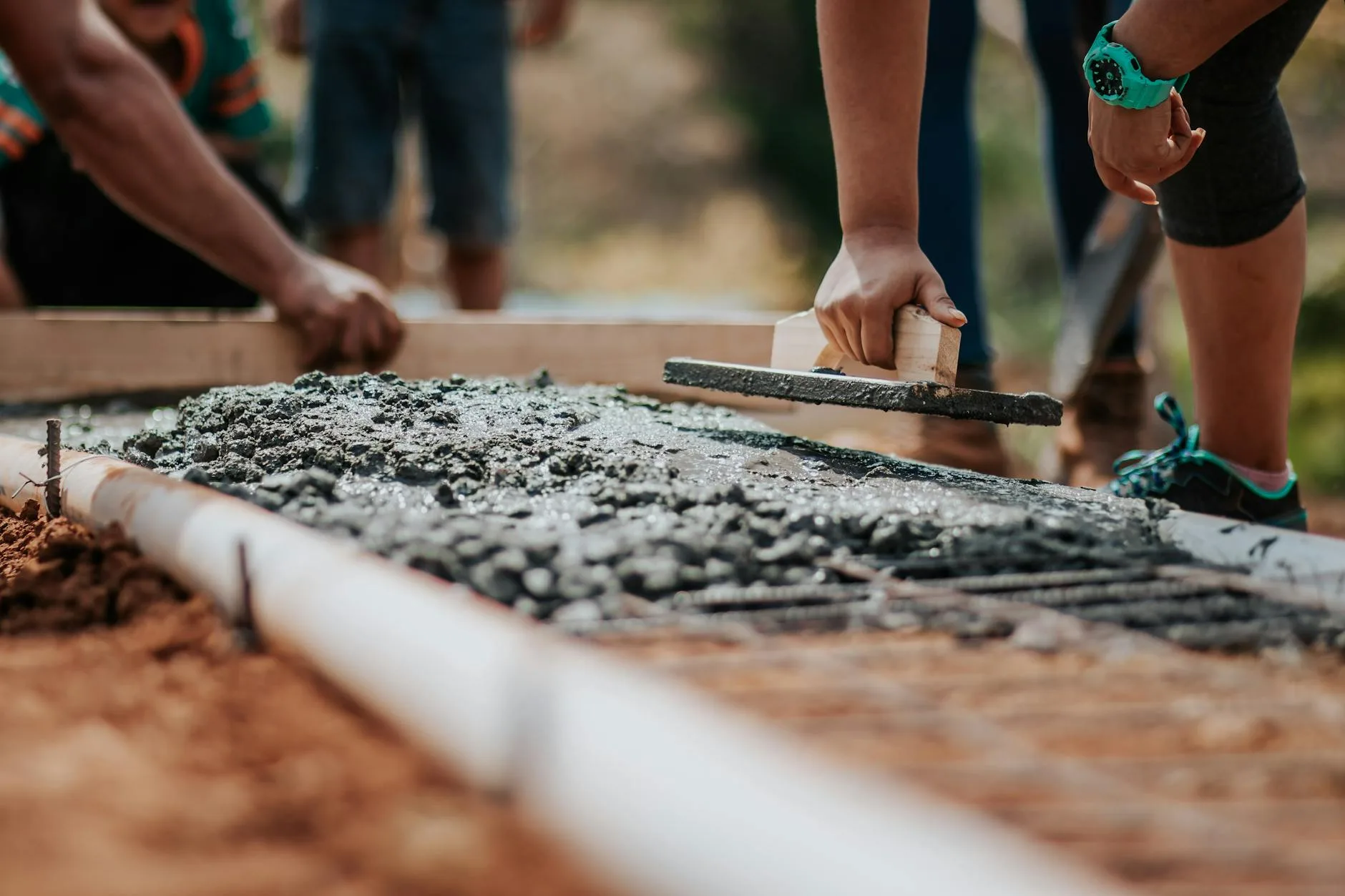
If you want the most solid, long-lasting base that you’ll never have to think about again, a poured concrete slab is the answer. It’s what most hot tub installers recommend, and for good reason.
What’s Involved
You’re looking at excavating to around 150-200 mm depth, laying a compacted Type 1 sub-base (MOT), then pouring a minimum 100 mm thick concrete slab reinforced with steel mesh (A142 or A193). For a typical 2 m × 2 m hot tub, the base should be at least 2.6 m × 2.6 m to allow that all-important access margin.
The concrete mix should be at least C25 grade — anything weaker risks cracking under sustained load. Most builders use C30 for hot tub bases because the cost difference is minimal and the added strength is worth it.
Cost
Expect to pay £400-£800 for a professionally poured concrete base, depending on size, access, and whether your ground needs extra excavation. DIY is possible if you’re comfortable with shuttering and finishing — bags of postmix from B&Q or Wickes will run you £150-£300 in materials for a 2.5 m × 2.5 m slab, plus sub-base aggregate.
Pros
- Strongest option by far — handles any hot tub weight without concern
- Perfectly level if done properly (use a self-levelling screed if needed)
- Zero maintenance once cured
- Won’t shift, sink, or rot over time
Cons
- Permanent — if you ever want to move the hot tub, you’ve got a concrete slab in the garden
- Curing time — concrete takes 48 hours minimum before you can place weight on it, and technically 28 days to reach full strength
- Drainage — you need to build in a slight fall (about 1:80) or plan drainage channels, otherwise water pools around the tub
Who It’s Best For
Anyone with a permanent hot tub (acrylic shell models from brands like Jacuzzi, Lay-Z-Spa’s premium range, or Hydropool) where you know the tub isn’t moving for years. If you’ve spent £4,000+ on a hot tub, spending £600 on a proper concrete base is a no-brainer. Have a look at our complete UK buyer’s guide if you’re still deciding which tub to go for.
Paving Slab Bases
The most popular DIY option, and for good reason — paving slabs give you a solid, attractive base without the commitment or mess of pouring concrete.
What’s Involved
The key here is the sub-base. You can’t just lay slabs on bare earth and hope for the best. The proper method:
- Excavate to 150-200 mm below finished level
- Lay and compact 100 mm of Type 1 sub-base (MOT hardcore) using a plate compactor — you can hire one from HSS or Jewson for about £40/day
- Spread a 30-40 mm layer of sharp sand and screed it level
- Lay the slabs on a full mortar bed (not five-spot method — that creates voids which crack under heavy point loads)
Use slabs at least 50 mm thick. Standard 450 mm × 450 mm or 600 mm × 600 mm paving from Marshalls, Bradstone, or similar will do. Porcelain pavers look great but are more expensive; standard pressed concrete pavers handle the weight just fine.
Cost
Materials for a 2.5 m × 2.5 m area typically run £200-£500 depending on your choice of slab. Having it laid professionally adds £300-£600 for labour. Total: £500-£1,100 for a good-looking, solid paved base.
Pros
- Looks great — you’re essentially building a patio, which adds value to the garden
- DIY-friendly — most competent DIYers can manage this over a weekend
- Removable — slabs can be lifted if you change your mind
- Good drainage — water runs through the joints naturally
Cons
- Settling risk — if the sub-base isn’t properly compacted, individual slabs can drop, creating an uneven surface
- Joint cracking — mortar between slabs can crack from weight transfer, especially in frost
- More prep work than people expect — the sub-base is 80% of the job; rushing it guarantees problems
The Critical Mistake to Avoid
Most failed paving bases come down to one thing: poor compaction. Tamping the sub-base by hand with a fence post is not enough for hot tub weights. Hire a wacker plate. Run it over the sub-base in at least three passes, dampening between each. This alone is the difference between a base that lasts and one that sinks within a year.
Timber Decking Bases
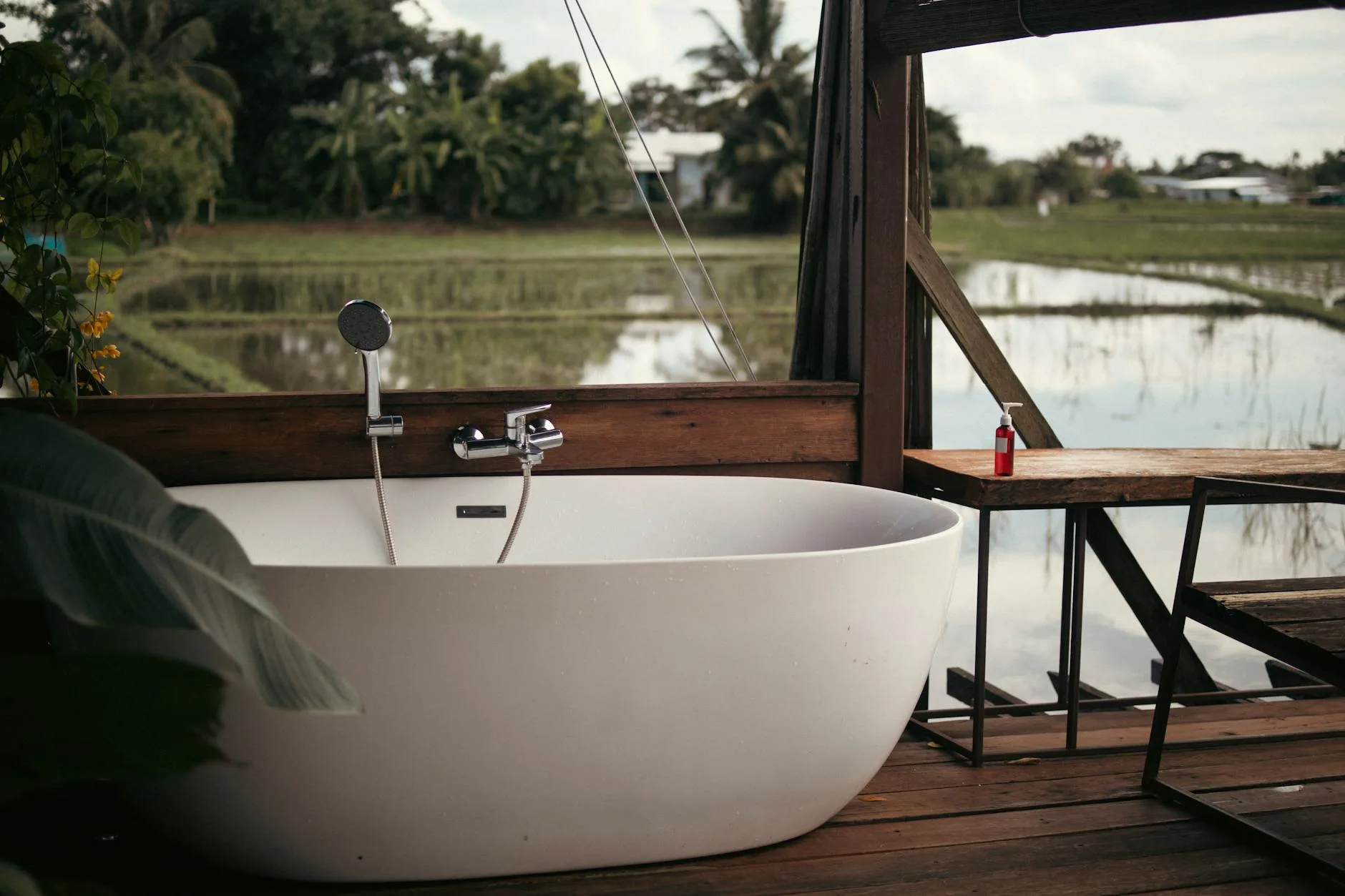
Decking looks fantastic with a hot tub — it’s the setup you see in all the brochure photos. But it’s also where most people get into trouble, because standard garden decking isn’t designed to hold two tonnes in one spot.
Can Standard Decking Take a Hot Tub?
Almost clearly not. A typical garden deck uses 150 mm × 50 mm joists at 400 mm centres, supported by posts at 1.2-1.8 m intervals. That’s fine for garden furniture and foot traffic. It’s not fine for a 2,000 kg static load.
Building Decking Specifically for a Hot Tub
If you want decking, you need to beef up the structure noticeably under the hot tub footprint:
- Joists — 200 mm × 50 mm (or doubled 150 mm × 50 mm) at 300 mm centres maximum
- Bearers — 200 mm × 100 mm on concrete pad foundations or screw piles
- Support posts — at no more than 900 mm intervals under the tub area
- Concrete pad footings — each post needs a pad at least 450 mm × 450 mm × 200 mm deep
- Deck boards — 32 mm thick minimum. Standard 28 mm boards will flex noticeably
Use pressure-treated C24 graded timber as minimum — C16 isn’t strong enough for these spans under load. Better yet, specify softwood to BS 8417 for use class 3 or 4 if the deck is low to the ground where moisture lingers.
Cost
A purpose-built hot tub deck section (roughly 3 m × 3 m) runs £1,500-£3,500 professionally installed, depending on height, access, and whether you’re integrating it into a larger deck. Materials alone for the reinforced section: £600-£1,200.
Pros
- Best-looking option — the classic hot tub aesthetic
- Raised access — easier to step in and out, especially with dedicated steps and surrounds
- Hides plumbing — the space underneath conceals pipes, pumps, and wiring neatly
- Can integrate seating, lighting, and storage around the tub
Cons
- Most expensive option by far
- Maintenance — timber needs annual treatment (oil or stain) and inspection for rot
- Structural engineering — you really should get a structural calculation done for anything above 600 mm height
- Composite decking caveat — composite boards (Trex, Cladco, etc.) are fine for the surface, but the substructure must still be timber or steel. Composite has no structural strength.
Who It’s Best For
People who are building (or already have) a deck area and want the hot tub integrated into it. It’s an investment, but the result is a proper garden feature rather than a tub plonked on concrete. This is especially popular with wood-fired hot tubs where the rustic timber aesthetic completes the look.
Other Base Options Worth Considering
Gravel Beds
Some inflatable hot tub owners use compacted gravel bases. They’re cheap (around £100-£200 for materials) and drain brilliantly. The catch? Gravel isn’t truly level, shifts under weight over time, and can puncture the base of inflatable tubs if any sharp stones work their way up. If you go this route, lay a geotextile membrane, use 20 mm pea gravel (not angular), compact it thoroughly, and put a foam ground mat on top. It’s a reasonable option for inflatable hot tubs under 800 kg filled weight — anything heavier needs a solid base.
Hot Tub Base Pads (Plastic Grid Systems)
Pre-made interlocking pad systems (like ProBase or EcoBase) have gained popularity. They’re plastic grid panels that sit on compacted ground and distribute weight. At £150-£300 for a typical hot tub size, they’re a decent middle ground between gravel and paving. They work well for lighter tubs but check the manufacturer’s stated load rating carefully — some are designed for sheds and won’t handle hot tub weights.
Existing Patio
If you’ve already got a solid patio, you might not need to build anything new. Check that the slabs are properly bedded on mortar (not just loose-laid on sand), the surface is level, and there are no cracked or rocking slabs. Tap each slab — if it sounds hollow, it’s sitting on a void and needs re-bedding before you put 2 tonnes on it.
How to Check Your Base Is Level
A 1200 mm spirit level across multiple directions is the minimum. For larger bases, use a long straight edge (a piece of 50 mm × 100 mm timber works) with the spirit level on top. Check corner to corner diagonally as well as side to side.
If you’re within 5 mm across the full footprint, you’re fine. Between 5-10 mm, most tubs will cope but you may notice the water line isn’t quite even. Over 10 mm — fix it before placing the tub.
For concrete bases, a self-levelling compound sorted after the main pour is the easiest fix. For paving, it usually means lifting and re-bedding the high or low slabs.
Drainage and Water Management
Every base needs a drainage plan. Hot tubs splash, overflow during rain, and need draining every 3-4 months for water changes — that’s 1,000-1,500 litres each time. Keeping your water right is a whole topic on its own; our beginner’s guide to hot tub chemicals covers the maintenance side.
Options for managing drainage:
- Slight gradient — build in a 1:80 fall away from the house (mandatory for any base within 2 m of a building)
- Channel drain — an ACO-style channel drain along one edge catches overflow and directs it to a soakaway or garden drain
- French drain — a gravel-filled trench around the base perimeter, lined with geotextile, handles gradual drainage well
- Direct connection — for permanent installations, a dedicated drain pipe to the nearest foul water or surface water drain is ideal
Never let hot tub water drain onto your neighbour’s property. Chemically treated water running into their flower beds won’t make you popular. Also, treated water technically shouldn’t go into surface water drains — check with your water company if you’re connecting to a drain.
Electrical Considerations for Your Base
While this guide is about the base itself, plan your electrical supply at the same time. Most acrylic hot tubs need a dedicated 32A or 40A supply run from a new MCB in your consumer unit, installed by a Part P registered electrician. The cable route from the house to the tub affects where you position the base.
Budget £300-£600 for the electrical installation, depending on cable run length. The supply cable often runs underground in ducting — so if you’re excavating for a concrete base anyway, lay the cable duct at the same time. Digging everything up twice is a waste of money no one enjoys.
If you’re planning to insulate around your hot tub, factor that into your base dimensions too. Insulation panels or a surround structure need a few extra centimetres of solid base to sit on.
Making Your Decision: Which Base Should You Choose?
Here’s how to think about it:
- Budget under £500 and you’re handy — paving slabs on a properly compacted sub-base. It’s the sweet spot of cost, durability, and DIY-friendliness.
- Want zero compromises on strength — poured concrete slab. It’s the gold standard for a reason.
- Building a deck area anyway — integrate a reinforced section for the hot tub. Just don’t skimp on the substructure.
- Inflatable tub you might move — compacted gravel or plastic grid pads are practical and cheap.
- Already have a solid patio — check it’s properly bedded and level, then use it. No point building something new if the existing surface does the job.
Whatever you choose, the common thread is preparation. A £200 paving base with perfect sub-base compaction will outperform a £1,000 deck with lazy foundations every single time. Spend your energy on what’s underneath — that’s what carries the weight.
Frequently Asked Questions
What base does a hot tub need? A hot tub needs a flat, level, load-bearing base such as reinforced concrete, suitable paving or a properly engineered deck. Soft ground and uneven patios cause problems.
Do I need an electrician for a hot tub? For any hard-wired hot tub, yes. UK installations should be handled by a qualified electrician because water and outdoor electrics leave no room for shortcuts.
How much access space should I leave around a hot tub? Leave enough space to remove side panels and reach pumps, filters and controls. At least 60 cm around service sides is a sensible minimum.