Buying used can save thousands, but a cheap spa becomes expensive fast if the cover is waterlogged, the pump is tired, or the electrics were bodged by the last owner. This second hand hot tub buying guide is about the checks that decide whether a pre-owned tub is a sensible bargain or someone else’s repair bill. My short version: only view it full, hot and running, and price every missing part before you haggle.
In This Article
- Second Hand Hot Tub Buying Guide: The Quick Verdict
- Check The Seller Before You View The Tub
- Inspect The Shell, Cabinet And Cover
- Test The Water, Jets And Controls
- Price The Hidden Costs Before You Haggle
- Plan Transport, Electrics And Installation
- The Bottom Line
- Frequently Asked Questions
Second Hand Hot Tub Buying Guide: The Quick Verdict
A second-hand hot tub is worth considering if it is from a known brand, less than about eight years old, shown working at temperature, and cheap enough to leave room for transport, servicing and a few replacement parts. I would be much more interested in a tidy five-year-old Sundance, HotSpring, Jacuzzi, Hydropool, Arctic Spas or RotoSpa from a house move than a mystery tub with no paperwork and a seller who has already drained it.
The saving has to survive the extras
The biggest mistake is comparing the used price with the new sticker price and calling the difference a saving. A £2,500 used hard-shell tub might look cheap against a £9,000 showroom model, but not if you then spend £600 moving it, £500 on a new cover, £350 on parts, £500 on electrical work and £200 on chemicals and filters before the first soak. At that point, a new entry-level tub with warranty starts to look less silly.
For most UK buyers, I would only go ahead if all five of these are true:
- You can see it running: full of water, heated to at least 36°C, with every pump, jet, light and control tested.
- The brand is traceable: model name, serial number, manuals and parts are still available in the UK.
- The shell is sound: no cracks, blisters, soft floor, major leaks or repair patches around jets.
- The numbers still work: the used price plus moving, electrics and first-service costs is still well below a new equivalent.
- You are ready to walk away: no cash deposit before inspection, no rushed viewing after the seller has drained it.
Inflatable and hard-shell deals behave differently
Inflatable hot tubs are a different calculation. A used Lay-Z-Spa or Intex can make sense at £100-£250 if it is clean, holds air and includes the pump, lid, liner, pipes and thermal cover. But once a used inflatable needs a replacement pump, the bargain often disappears: Lay-Z-Spa replacement heater pumps are listed at about £269.99-£499.99, which can be more than the used tub itself.
Hard-shell tubs have more upside because they cost far more new, hold value better and can be repaired. They also carry bigger risk. A failed circulation pump, damaged control board or cracked pipework can turn a Saturday bargain into weeks of chasing parts.
Check The Seller Before You View The Tub
Start with the seller, not the spa. The safest used hot tub purchase is a local household selling because they are moving, landscaping, downsizing or upgrading. The riskiest is a vague online listing with two photos, no brand name, “worked last time we used it”, and a demand for a deposit before viewing.
Ask for the model name, age, serial number, original invoice if they have it, and the reason for sale. You are not being awkward. You are checking whether parts, manuals and service information exist. If the seller cannot name the model, ask for clear photos of the cabinet badge, control panel and equipment bay. A good seller can send those in two minutes.
There is a big difference between buying from a private seller and a hot tub dealer. A dealer refurbished tub at £3,000-£7,000 may come with delivery, installation help and a short warranty. A private sale at £1,000-£4,000 is cheaper, but you are carrying much more risk yourself. That is fine if the price reflects it. It is not fine if the seller wants dealer money for a tub with no warranty.
Before you travel, ask these questions:
- Is it currently full and running? If not, do not treat any answer about leaks or heating as proven.
- How old is it? Under five years is ideal, five to ten years can be fine, over ten years needs a much lower price.
- Who installed the electrics? A 32A hard-shell tub should have been wired properly, not adapted from a socket with hope and a long lead.
- Has it been serviced? Receipts for pumps, heaters, covers and control parts are better than “my mate checked it”.
- What is included? Cover, steps, lifter, chemicals, filters, thermal blanket, manuals and delivery cradle all affect value.
If you are comparing used against new sizes, read our guide to what size hot tub you need before you view. A six-person tub sounds tempting until you realise it needs more space, more water, more heat and more people to move it.
One practical tip: ask the seller to send a short video of the tub running before you view. It should show the control panel temperature, pumps changing speed, all seats bubbling, lights working and the equipment bay while the pumps run. A video is not proof, but it filters out a lot of weak listings.
Inspect The Shell, Cabinet And Cover
At the viewing, look at the expensive visible parts before you get distracted by lights and waterfalls. The shell, cabinet, insulation and cover decide whether the tub has been cared for or left to rot under a tired lid.
Shell and cabinet checks
The acrylic shell should be smooth, clean and evenly coloured. Small surface scratches are normal. Cracks, blisters, yellow staining, swollen areas or rough repairs around jets are not normal. Pay close attention to the footwell, seat edges, jet surrounds and the lip where the cover sits. If the shell flexes oddly under hand pressure or you can see patch repairs, walk away unless the price is low enough for parts-only risk.
Open the cabinet panels if the seller allows it. You are looking for dry insulation, tidy pipework and no smell of damp electrics. A little dust is fine. Black mould, chewed insulation, water staining, cracked pipe unions or fresh silicone smeared everywhere are warning signs. If a tub has spray-foam insulation, leaks can be harder to trace because the wet area may be hidden behind foam.
Cover, steps and accessories
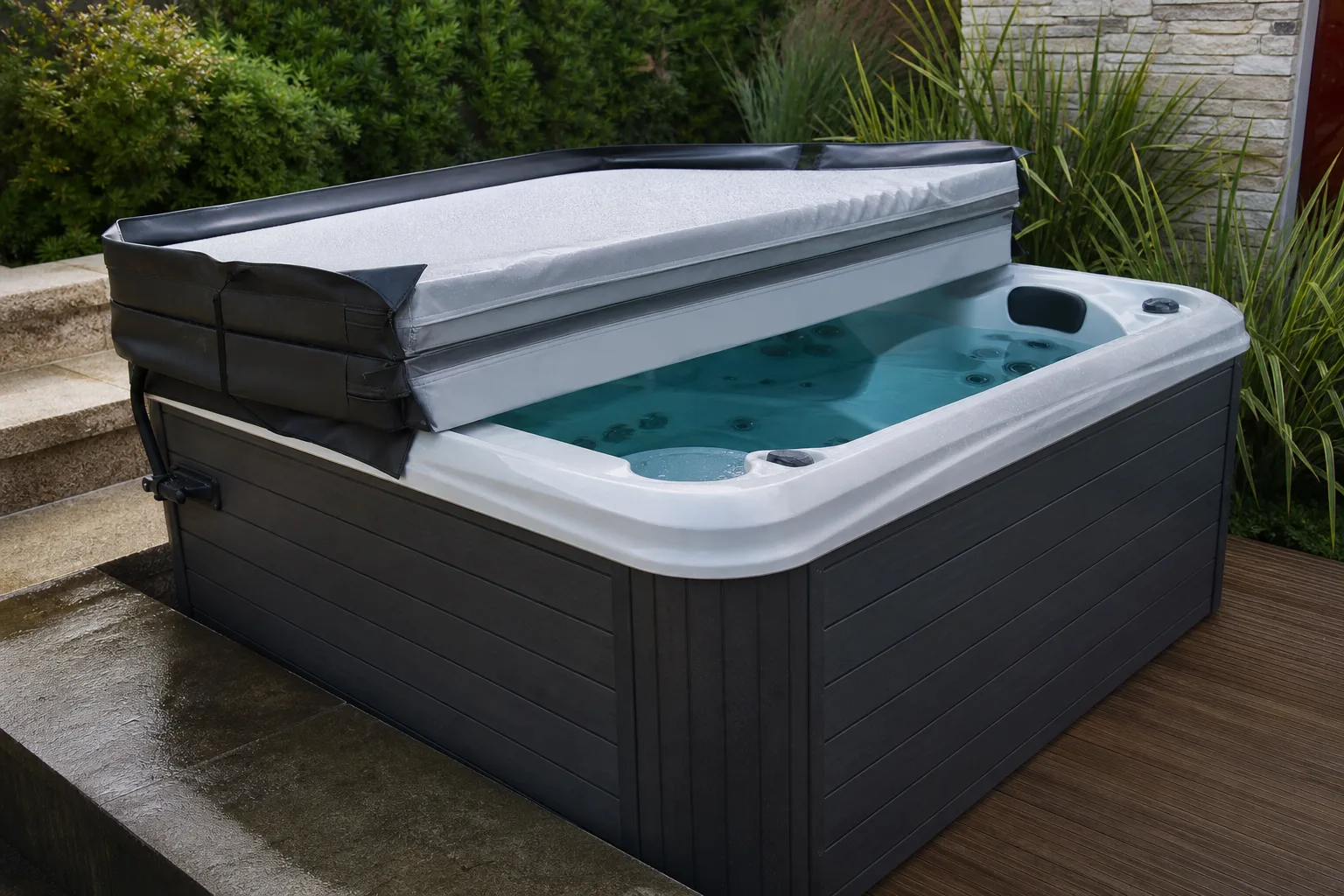
The cover deserves more attention than most buyers give it. A good insulated cover keeps heat in, keeps rain out and stops energy costs running away. A bad one becomes heavy, sags in the middle and lets steam escape all night.
Check the cover for:
- Weight: if one side feels waterlogged and hard to lift, the foam core may be saturated.
- Fit: gaps at the corners and a poor seal mean more heat loss.
- Vinyl condition: split seams, cracking and brittle straps mean replacement is near.
- Locking clips: missing or broken clips matter if children can access the garden.
Replacement covers are not a small extra. Outdoor Living lists hot tub covers from £299, and custom insulated covers can easily land around £400-£700 depending on size and specification. If the cover is tired, subtract that from your offer before you talk yourself into the tub.
Steps, cover lifters and handrails are smaller, but still real money. Used steps might be £30-£80 on Facebook Marketplace. A new cover lifter can be about £120-£250. Handrails often sit around £80-£180. None of these should kill a deal, but they should stop you overpaying.
Test The Water, Jets And Controls
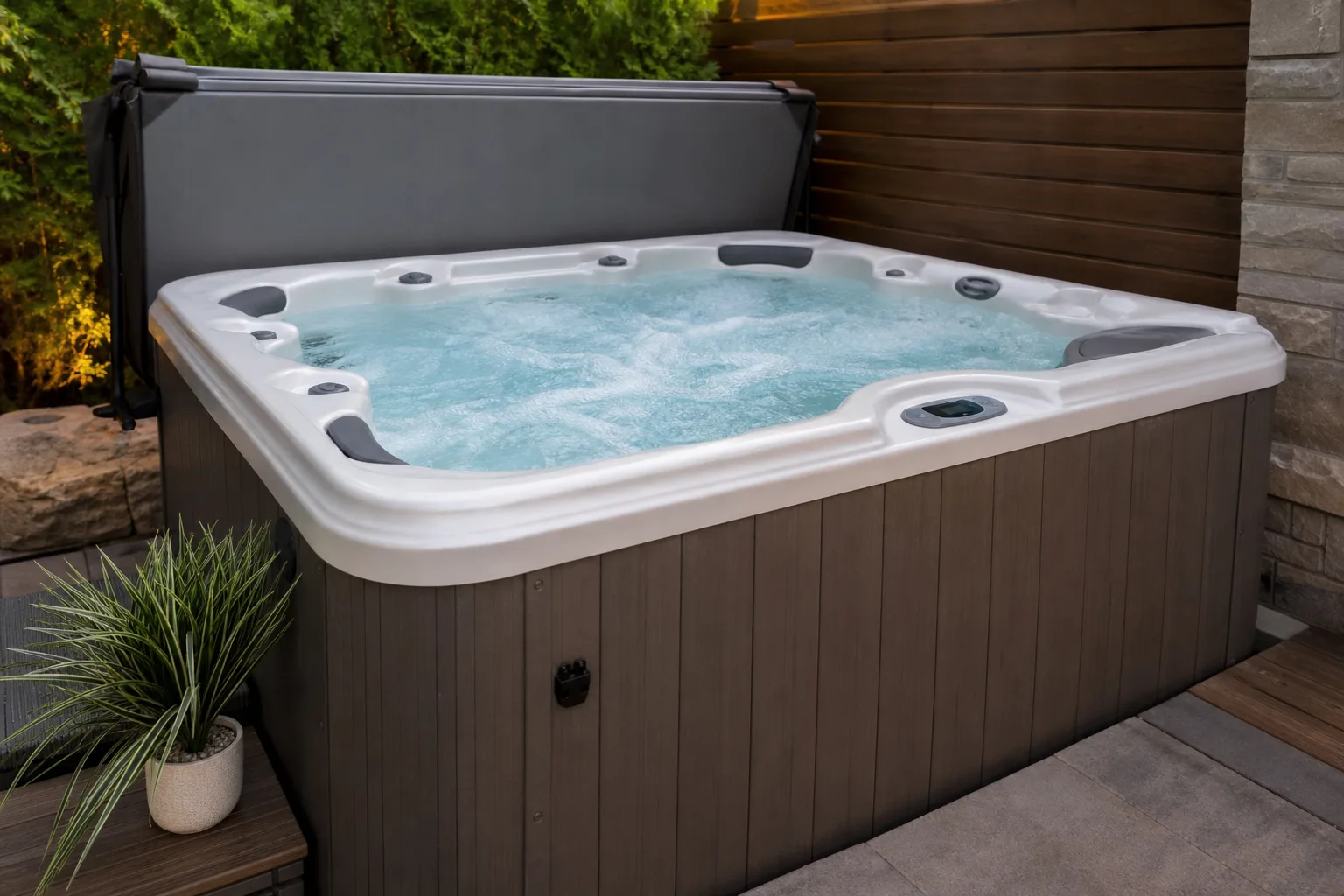
Do not buy a second-hand hot tub that you cannot test hot and full. A dry inspection tells you very little about leaks, pump strength, heater behaviour, temperature sensors or noisy bearings.
Heat and jet checks
Start with the water temperature. If the seller says it works, it should be hot. A tub sitting at 20°C on viewing day is not proven, even if the display lights up. Ask when it was filled, when it reached temperature, and whether it has held heat overnight. A hard-shell tub that cannot hold 37-38°C in normal UK weather may have a heater, cover, sensor or insulation issue.
Run each pump and each jet zone. Weak flow from one seat can be an airlock, a closed diverter or a blocked jet. Weak flow everywhere points to a pump, filter or plumbing issue. A loud growl from the pump bay often means worn bearings. A rattling noise can be debris, a failing wet end or loose mounting. None of this proves disaster, but you price it in.
Take the filters out and look at them. Clean filters are not proof of good ownership, but collapsed pleats, green slime or a heavy chemical smell tell you the seller may not have cared for the water. New filter sets often cost about £25-£80 depending on model, and you should budget for new ones anyway. I would not use a stranger’s old filters in a tub I had just bought.
Hygiene and control panel checks
Water hygiene matters because hot tubs are warm aerosol-producing systems. The HSE notes that spa-pool systems can be a source of infectious agents including Legionella, which is why a neglected used tub deserves a full drain, clean, filter replacement and fresh start before anyone gets in. Domestic owners are not running a leisure centre, but the risk logic is the same: warm, dirty water and poor circulation are a bad mix.
Check the control panel carefully:
- Buttons: every pump, light, temperature and mode button should respond cleanly.
- Error codes: search the exact code before buying, not after the tub is on your patio.
- Heater icon: confirm it calls for heat and does not trip the supply.
- Display: fading LCDs and cracked overlays can let water into the panel.
If the tub trips the electrics during testing, pause the deal. It might be a simple heater fault or a moisture issue, but do not accept “it only does that sometimes” as a harmless quirk. Water and electricity do not do harmless quirks.
Price The Hidden Costs Before You Haggle
This is where most used hot tub deals are won or lost. The advert price is only one line in the real budget. You need the tub, the move, the electrical setup, the base, the first clean, the parts and the boring bits that make it usable.
Build the real budget
A private-sale hard-shell tub might be advertised at £1,000-£5,000. A refurbished dealer tub might sit at £3,000-£8,000. A used inflatable might be £100-£350. Those numbers only make sense after you add the likely extras.
Budget roughly:
- Professional hot tub move: about £300-£800 locally, more for cranes, stairs, long carries or awkward access.
- Electrician visit: about £300-£900 for a suitable outdoor supply, depending on distance from the consumer unit and existing protection.
- New filters: about £25-£80.
- Chemicals and test strips: about £40-£120 to start properly.
- Replacement insulated cover: about £299-£700.
- Service call: often £100-£200 before parts.
Parts can change the deal
Parts vary by brand. A Lay-Z-Spa replacement heater pump can be £269.99-£499.99 from the brand’s own pump range, while A6 Hot Tubs lists individual spa pumps from about £170.38 to £468.90. Control boards, heaters and topside panels can add another few hundred pounds each, especially on older premium tubs.
That is why I like a simple ceiling price. Work out the maximum total cost you would accept, subtract every known extra, then make your offer from the leftover number. If your total budget is £4,000 and the move, electrics, cover and first service could cost £1,700, the tub itself is not a £3,500 purchase. It is closer to £2,300, and only if it passes the checks.
Compare that against a new or ex-display option. Our UK hot tub cost guide gives the bigger new-price picture, while our best hot tubs under £3,000 guide is useful if a used deal is creeping too close to new entry-level territory.
There are still good used deals. A lightly used £8,000 tub from a known brand at £2,500, with a sound cover and paid professional move, can be a win. A tired £1,200 unknown tub needing a cover, pump, electrical work and leak repair is not cheap. It is a project.
Plan Transport, Electrics And Installation
Never assume you can move a hard-shell hot tub with a van and four optimistic friends. Many weigh 250-450kg empty, and the awkward part is not just the weight. It is the size, the fragile shell, the cabinet, the steps, the gate width, the slope, and the fact that dropping it can crack something you cannot see until it is full.
Access and base planning
Measure everything before you pay:
- Tub dimensions: length, width and height, not just seat count.
- Access route: gates, side passages, steps, turns, gravel, decking and overhead branches.
- Vehicle access: how close a mover can get at both ends.
- Final base: concrete, reinforced patio, suitable spa pad or properly specified decking.
If you need a crane or hiab lift, get a quote before buying. A bargain can vanish in one awkward lift. If the seller says “we got it in somehow”, ask how. People forget the hard part once the tub has been sitting happily for five years.
Electrics and first clean
Electrics are the other non-negotiable. Plug-and-play inflatable tubs and some small hard-shell models use a normal 13A supply, but many hard-shell hot tubs need a dedicated outdoor circuit. Electrical Safety First says a registered electrician should be used for hot tub installation checks, and its RCD guidance is worth reading before you decide an old outdoor socket is “probably fine”: hot tub RCD guidance.
If you already have a hot tub supply, do not assume it suits the next tub. Check the amperage, isolator position, cable route, RCD protection and manufacturer requirements. Our guide to hot tub electrical requirements explains the basics, but a qualified electrician should make the final call.
The base matters too. A used tub with a slightly twisted frame can leak or stress the shell when filled. If your patio falls away, your decking flexes, or your old slabs rock under foot, sort that before delivery day. Our guide to hot tub base options is worth reading before you discover 1,200 litres of warm water is less forgiving than garden furniture.
Once the tub is home, treat it as unknown until cleaned. Drain it fully, flush the pipework with a hot tub line cleaner, clean the shell, replace filters, refill, balance the water and run a full sanitation cycle. If winter is close, read our winterising guide too; a used tub with water left in pipework during a freeze can be ruined before spring.
The Bottom Line
I would buy a second-hand hot tub only if the boring checks are strong. Known brand, live test, sound shell, dry cabinet, decent cover, clear access, realistic moving cost and no electrical guesswork. If the seller cannot show it running, the deal needs to be cheap enough for parts risk or you should walk away.
The best second-hand hot tub deals are rarely the cheapest listings. They are the honest, well-documented tubs being sold for a practical reason, with enough saving left after transport and setup to justify losing the comfort of a new warranty.
If you are torn between two used tubs, buy the one with better condition and clearer history, not the one with more seats, more jets or flashier lights. Jets are fun. A dry equipment bay is better.
Frequently Asked Questions
Is buying a second-hand hot tub a good idea? It can be, but only if you see it full, hot and running before paying. A known-brand hard-shell tub with paperwork and a sound cover can save thousands. A drained mystery tub with no model details is too risky unless priced for spares.
How much should I pay for a used hot tub in the UK? A used inflatable often sits around £100-£350, while private-sale hard-shell tubs commonly range from about £1,000-£5,000 depending on brand, age and condition. Always add moving, electrics, servicing, filters and cover costs before judging value.
Should I buy a used hot tub that has already been drained? I would avoid it unless the price is very low and you are happy taking repair risk. A drained tub cannot prove heating, leaks, pump strength or control behaviour. Ask the seller to refill and heat it before viewing.
What is the biggest risk with a second-hand hot tub? Hidden leaks and tired equipment are the big financial risks. Poor water care is the hygiene risk. A cracked shell, saturated cover, noisy pump or tripping electrics can each wipe out the saving.
Do I need an electrician for a second-hand hot tub? For most hard-shell tubs, yes. Many need a dedicated outdoor circuit, correct isolation and RCD protection. Even if a supply already exists, get it checked against the tub’s requirements before use.
What should I replace after buying a used hot tub? Replace the filters, start with fresh chemicals and strongly consider a pipe flush before first use. Replace the cover if it is heavy, cracked, sagging or no longer seals properly.