Most UK garden hot tubs do not need planning permission, but the awkward cases are the ones that cost money: raised decking, listed homes, tight boundaries, noisy pumps and anything that looks more like a garden building than a portable spa. The useful answer on hot tub planning permission UK rules is not “yes” or “no”; it is “what exactly are you installing, where is it going, and can a neighbour see or hear it?”
In This Article
- Hot Tub Planning Permission UK: The Short Answer for Most Homes
- When a Hot Tub Usually Falls Under Permitted Development
- Situations Where You Should Check Before Ordering
- What Councils Actually Care About
- Planning Permission vs Building Regulations vs Electrical Work
- How to Reduce Planning Risk Before You Buy
- Typical UK Costs If You Need Professional Help
- Bottom Line
- Frequently Asked Questions
Hot Tub Planning Permission UK: The Short Answer for Most Homes
If you are putting a normal inflatable or hard-shell hot tub on a patio in a private back garden, planning permission is usually not the first problem. Weight, electrics, access and neighbour noise are normally more urgent.
That said, “usually” is doing a lot of work. A hot tub can become a planning issue if it sits on a raised platform, forms part of a new garden room, changes drainage near a boundary, affects a listed building, or creates a privacy problem. We have seen owners spend weeks choosing jets and lighting, then realise the real headache is the 700mm deck they want to build around it.
For most standard homes, use this simple filter:
- Portable tub on existing ground-level patio: usually low planning risk.
- New raised deck, balcony or platform: check before ordering.
- Hot tub inside a new cabin or enclosure: check the building as well as the tub.
- Listed building, conservation area or flat: do not assume normal permitted development rights apply.
- Close to neighbours: planning may not be the issue, but complaints about noise and overlooking can still bite.
The Planning Portal’s guidance on outbuildings and permitted development is the best starting point if the hot tub is going under a gazebo, cabin or purpose-built shelter. For a bare tub on a patio, the planning question is usually less about the tub itself and more about what you build around it.
When a Hot Tub Usually Falls Under Permitted Development
Permitted development is the reason many garden projects do not need a full planning application. It allows certain works within limits, although those limits vary by property type and location. A free-standing hot tub is not quite the same as an extension or a garden office, so most councils treat it as garden equipment unless the surrounding structure triggers a rule.
Ground-level portable tubs
An inflatable Lay-Z-Spa costing about £400-£900 from Argos, B&Q or Amazon UK is rarely a planning application issue when it sits on a level patio. A hard-shell four-person tub costing roughly £4,000-£8,000 from a UK dealer is also usually treated as garden equipment if it is not built into a raised structure.
The planning risk is low when:
- The tub is at ground level: it does not create a new viewing platform into neighbouring gardens.
- It is not enclosed by a large permanent structure: a simple cover is different from a full-height cabin.
- It stays within your garden: no works spill onto shared land, access lanes or a neighbour’s boundary.
- Drainage is controlled: water is not discharged across a neighbour’s property or into a place it should not go.
If you are still choosing the tub, our guide to how much a hot tub costs in the UK is useful because planning risk often rises with more permanent, expensive installs. The £600 inflatable you pack away in October is a different beast from a £12,000 hard-shell tub sunk into decking with glass balustrades.
Garden buildings and shelters
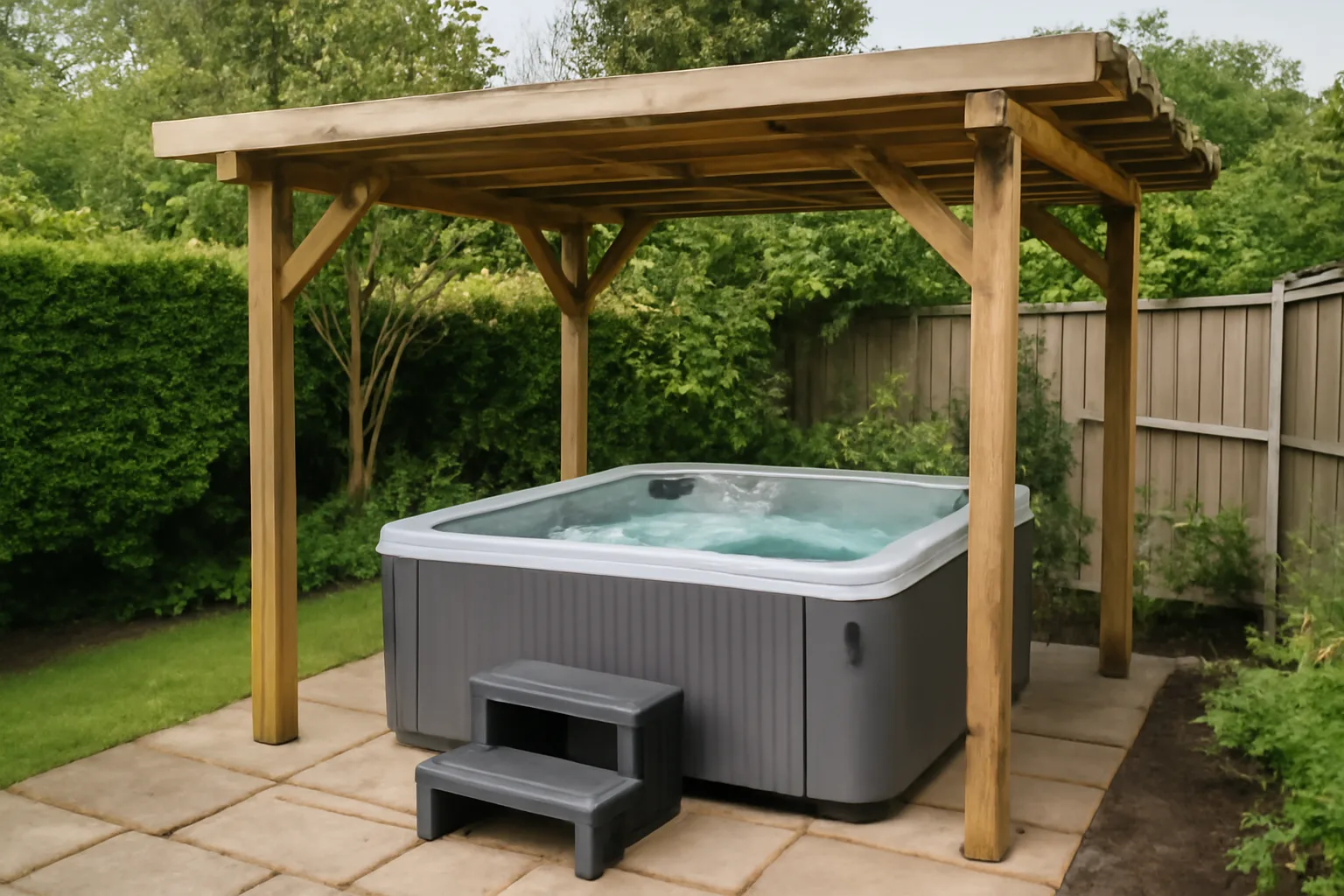
The minute you add a gazebo, pergola, cabin or enclosure, stop thinking only about the hot tub. The structure may need to meet permitted development limits on height, location and use. A low pergola over a corner spa might be fine. A tall insulated garden room with a hot tub, bar, shower and electrics starts looking like a building project.
This is where owners get caught out. They ask “does the hot tub need permission?” when the better question is “does this garden building need permission?” A basic hot tub gazebo from B&Q or Dunster House might cost £700-£2,000. A proper timber spa enclosure can run from £4,000 to £15,000 before electrics and base work. At that point, a quick planning check is cheap compared with rebuilding it.
For covered setups, read this alongside our guide to hot tub gazebos and enclosures, but keep the jobs separate in your head: planning checks first, comfort and privacy second.
Situations Where You Should Check Before Ordering
Some installs are not worth gambling on. A council planning duty officer, a lawful development certificate or a short paid consultation with a planning consultant can feel dull, but it is less dull than moving a filled hot tub that weighs well over a tonne.
Listed buildings, conservation areas and flats
If your home is listed, in a conservation area, in an Area of Outstanding Natural Beauty, or has had permitted development rights removed, the normal rules may not apply. The same goes for many flats and maisonettes, where lease terms and freeholder consent can matter more than planning permission.
The official GOV.UK householder permitted development guidance is clear that permitted development rights have limits and exceptions. It is not bedtime reading, but it is the document I would rather check before paying a deposit.
For flats, read your lease before you ring a hot tub showroom. A balcony spa is usually a terrible idea because of loading, drainage and neighbour impact. Even a small two-person inflatable can hold hundreds of litres of water. The building structure, not the pump, is the serious bit.
Raised decking and overlooking
Planning problems often start with height. A hot tub on a raised deck can create a new overlooking position, especially in terraced gardens where fences already sit close together. If someone can sit in the tub and see straight into next door’s kitchen, expect trouble.
Decking itself can need planning permission if it is too high above ground level. If the tub is part of a raised entertainment area, check before you build. Our deck support guide covers the structural side, but the planning side is about height, privacy and visual impact.
My rule of thumb: if the deck changes how much of your neighbour’s garden you can see, treat it as a planning risk. Frosted screens and planting may help, but they are not magic erasers if the structure is too dominant.
New bases, drainage and boundary work
A reinforced concrete base rarely needs planning permission on its own, but drainage and boundary changes can cause problems. Hot tubs need periodic draining. You do not want chlorinated or treated water running into a neighbour’s garden, across a shared path, or into a place your local water company would object to.
If you are still deciding between concrete, paving and decking, read our hot tub base guide before ordering. A typical concrete base might cost £600-£1,500 depending on access, thickness and waste removal. If the quote is much cheaper, ask exactly what depth, reinforcement and drainage plan are included.
What Councils Actually Care About
Councils are not usually bothered that you own a hot tub. They care when the installation affects neighbours, the character of the area, safety, drainage or the appearance of a protected building.
Privacy and overlooking
Privacy is the most obvious flashpoint. A ground-level tub behind a normal fence is usually easier to defend than a raised spa with steps, lighting and a view over three gardens.
Good privacy fixes include:
- Lowering the tub position: ground level beats raised platforms for planning risk.
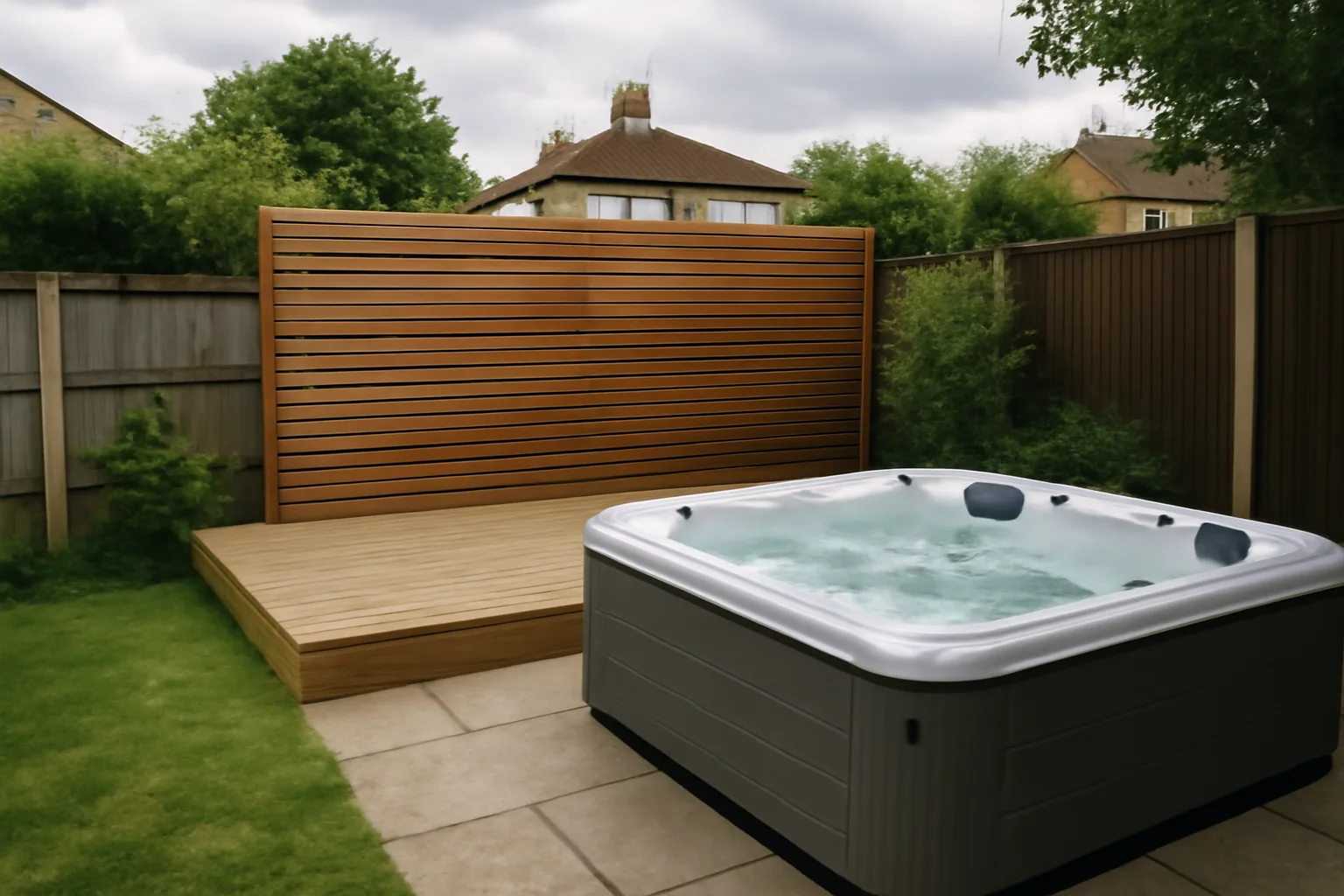
- Using solid screening carefully: a £150 reed screen may look temporary, but a 2.4m timber wall can create its own planning issue.
- Planting evergreen screening: slower, but softer visually and less confrontational than a new fence fortress.
- Choosing the quiet corner: avoid bedrooms and shared boundaries where possible.
If privacy is your main worry, our guide to where to place a hot tub in the garden goes deeper on sightlines, access and usable space.
Noise, pumps and late-night use
Planning permission and noise complaints are separate issues. You may not need planning permission, but a neighbour can still complain if pumps, music or voices become a nuisance.
Modern hard-shell tubs are quieter than many people expect, but they are not silent. Budget inflatables can be more annoying because the pump unit sits outside the tub and insulation is limited. Based on owner reports, the biggest complaint is rarely the gentle hum at 5pm; it is six people talking loudly at 11pm with the cover off and the jets on.
Practical fixes are cheap:
- Buy an insulated cover: about £80-£250 for inflatables, often included with hard-shell tubs.
- Use rubber isolation pads: around £20-£60 to reduce vibration through decking.
- Set quiet hours: boring, but it saves neighbour goodwill.
- Put the pump away from bedrooms: yours and theirs.
If noise is a concern, compare models using our hot tub noise levels guide before you buy. A quieter pump is easier than retrofitting peace.
Planning Permission vs Building Regulations vs Electrical Work
These three get muddled together, and that is where bad advice spreads.
Planning permission
Planning permission asks whether the development is acceptable in its setting. For a hot tub, that usually means the surrounding works: decking, enclosures, visual impact, privacy, boundaries and protected properties.
Building regulations
Building regulations deal with safety and construction standards. A simple portable tub on a patio may not trigger much here, but a raised deck, heavy platform, garden room, drainage works or structural changes can. If the tub sits on a deck, the deck needs to carry the load when the tub is full of water and people.
A full hot tub can weigh 1,000-2,500kg depending on size. That is why a “it’ll probably be fine” deck quote makes me nervous. Spend the money on a proper base or structural advice before you spend it on LED cup holders.
Electrical work
Electrical safety is non-negotiable. Many inflatable tubs use a standard plug, but larger hard-shell tubs often need a dedicated outdoor circuit fitted by a qualified electrician. A typical 32A hot tub electrical installation might cost £600-£1,500 depending on cable run, consumer unit work and ground conditions.
That is not planning permission, but it is still a hard gate before use. Our UK hot tub electrical requirements guide covers this properly, so do not treat a showroom delivery slot as proof that your house is ready.
How to Reduce Planning Risk Before You Buy
The best time to solve planning uncertainty is before the deposit leaves your account. Once a delivery team is booked, every answer gets more expensive.
Do a five-minute site check
Walk outside and ask:
- Can neighbours see the seating position? Sit where the tub would go, not where you wish it would go.
- Is the tub raised above normal garden level? Steps and platforms change the planning picture.
- Is there a listed/conservation constraint? Check the council website if you are not sure.
- Where will water drain? Do not leave this to the first drain-down day.
- How will installers access the spot? Cranes, removed fences and shared driveways can create separate permission problems.
I would rather buy a slightly smaller tub in the right place than a bigger one that creates permanent neighbour tension. A four-person tub used often beats a six-person tub everyone avoids because it feels exposed.
Ask the council the right question
Do not ask a vague “can I have a hot tub?” question. Be specific:
- Property type: detached, semi, terrace, flat, listed or conservation area.
- Exact location: distance from boundaries and whether it is visible from public land.
- Height: ground level, raised platform, decking height and screen height.
- Structure: no shelter, pergola, gazebo, cabin or full enclosure.
- Drainage: where emptied water will go.
Send a sketch and photos. It sounds old-fashioned, but clear photos save long email chains. If the answer matters because you are spending £8,000-£15,000, consider a lawful development certificate rather than relying on a casual phone answer.
Typical UK Costs If You Need Professional Help
Not every hot tub needs paid planning advice. But if your setup is borderline, these are realistic UK costs to budget before the fun shopping starts.
- Pre-application planning advice: often £50-£250 through a local council, depending on the service and property type.
- Lawful development certificate: commonly around half the householder planning application fee, plus drawing costs if needed.
- Planning consultant: about £300-£900 for a small domestic advice job; more if drawings and submissions are included.
- Basic site drawings: roughly £150-£500 for simple location/block plans from a draughtsperson.
- Structural advice for decking: about £250-£700 for a domestic engineer visit or calculation note.
The value depends on the project. For a £500 inflatable on a ground-level patio, I would not spend £700 on planning advice unless the property is unusual. For a £12,000 hard-shell tub in a conservation-area garden with a new raised deck, I would budget for advice without grumbling. It is part of the install cost.
There is also a resale angle. If you later sell the house, clean paperwork for permanent garden structures can make buyer questions easier. It will not turn a hot tub into a gold-plated asset, as we explain in do hot tubs increase house value?, but it can remove one objection.
Bottom Line
Most ordinary garden hot tubs do not need planning permission in the UK. A ground-level inflatable or hard-shell tub on an existing patio is usually a practical installation question, not a planning application.
Check before ordering if the property is listed, in a conservation area, a flat, close to a sensitive boundary, or if the tub sits on raised decking or inside a new building. My default recommendation is simple: spend money first on the boring checks, base and electrics, then on jets, lights and speakers. Nobody enjoys planning admin, but nobody enjoys moving a filled spa either.
Frequently Asked Questions
Do I need planning permission for an inflatable hot tub? Usually not if it sits at ground level in a private garden, but listed buildings, flats, conservation areas and raised platforms can change the answer.
Can I put a hot tub next to my fence? You can in many cases, but it may annoy neighbours because of noise, steam and privacy. Leave room for servicing and avoid placing pumps beside bedroom windows.
Does a hot tub gazebo need planning permission? Sometimes. The hot tub may be fine, but the gazebo, cabin or enclosure must meet permitted development limits on height, position and use.
Do I need building regulations approval for a hot tub? The tub itself may not, but raised decking, structural platforms, drainage work and electrical installation can bring safety requirements into play.
Should I ask the council before buying a hot tub? Ask if the property is listed, in a conservation area, a flat, near a boundary, or if you are building raised decking or a permanent shelter.
How much does planning advice cost for a hot tub? Basic council pre-application advice may be around £50-£250, while a small domestic planning consultant job often lands around £300-£900.