For most UK hot-tub owners, buy a changing robe first: the Osprey waterproof robe is the practical starting point. It protects the walk from tub to house without another appliance near water. If you want a warm towel as well, use the SAMEAT bucket inside the house with dry towels, then carry one out when needed. These are different jobs; no indoor electric warmer belongs on the patio beside the tub.
Our top 5 picks

Best robe for most households — Osprey changing robe, Black M.
A wind-blocking layer for the walk indoors; check the oversized Medium fit.

Best indoor towel warmer — SAMEAT bucket, White.
Pre-warms dry towels indoors; it is not an outdoor hot-tub appliance.

Best premium robe — Dryrobe Advance, Black/Grey M.
Weather-protective robe with a generous changing fit; this link is Medium.

Best nearby storage — Keter Marvel+ 270L.
A weather-resistant box for spare dry kit; keep towels bagged and dry.

Best indoor drying aid — Lakeland Dry:Soon 3-Tier.
For drying towels after the soak, not warming them beside the tub.
In this guide
- Comparison at a glance
- Five products reviewed
- Choosing a towel warmer
- Electrical safety and placement
- Robes, storage and drying
- Running costs
- The bottom line
- FAQs
Hot tub towel warmers and robes at a glance
| Product | Job | Use location | Main check |
|---|---|---|---|
| Osprey changing robe M | Weather protection | Outside, then dry indoors | Medium fit and changing room |
| SAMEAT towel bucket | Pre-warm dry towels | Indoors only | Towel size and safe siting |
| Dryrobe Advance M | Premium weather protection | Outside, then dry indoors | Medium fit and cost |
| Keter Marvel+ 270L | Near-tub storage | Outdoor storage | Keep contents dry and ventilated |
| Lakeland Dry:Soon 3-Tier | Dry used towels | Indoors only | Floor space and drying load |
The list combines two robes, a pre-warmer, a storage box and a drying aid—not five interchangeable warmers. Choose for the part of the routine that is currently uncomfortable. Compare current prices and sizes at the links; fixed price bands age quickly. For separate in-tub comforts, see our accessories guide.
Five products reviewed
1. Osprey changing robe: best starting point
The linked black Medium has a waterproof and windproof outer, sherpa-style lining, hood, adjustable cuffs and a two-way zip. That combination addresses the exposed trip back to the house better than a warmed towel alone. The oversize cut also creates room to change, but Medium is not a universal fit: check Osprey’s size chart rather than ordering your ordinary coat size.
A robe does not replace drying with a towel. Hang it to dry after use; do not leave a damp lining shut inside a garden box. This is the most useful first purchase if the tub sits outside and the house is more than a step away.
2. SAMEAT towel bucket: best indoor pre-warmer
The SAMEAT bucket has a lidded chamber and 30-minute, one-, two- and four-hour timer settings with automatic shut-off. Its maker says it can take two oversized towels, but bulky bath sheets vary: check the dimensions and do not pack the chamber tight. Use only clean, dry, permitted fabrics and follow the manual on heat and clearance.
This is an indoor appliance. Put it on a suitable dry surface away from the hot tub and carry the warmed towel out. A roof, pergola or ordinary extension lead does not turn it into a safe outdoor heater. Follow the manufacturer’s placement instructions and keep the warmer indoors, away from splashes and wet surfaces.
3. Dryrobe Advance: premium changing robe
The linked Advance is a long-sleeve Black/Grey Medium with a waterproof, windproof outer and fleece lining. It offers more covered changing space and weather protection than a towelling dressing gown. Dryrobe’s product details explain the construction, but check the brand’s size guide for this Medium variant before ordering.
Choose it if you regularly use the tub in cold or wet weather and want the premium finish. Osprey is the more economical route; neither robe should be presented as tested against the other here.
4. Keter Marvel+ 270L: dry-kit storage nearby
The graphite Marvel+ is a 270L resin storage box with a weather-resistant shell and a ventilated design. It gives dry towels and slippers a place off wet decking. Weather-resistant does not mean airtight or guaranteed dry in every storm: put clean towels in a separate bag or bring them out just before use.
Do not store wet robes, towels or hot-tub chemicals together in this box. Hang fabrics to dry indoors and keep chemicals in their original containers in a suitable separate place. For a tight patio, measure the box footprint against the exit path before buying; the hot-tub size guide helps plan that space.
5. Lakeland Dry:Soon 3-Tier: drying after use
The Dry:Soon has three folding tiers, 21m of drying space and a stated 15kg load limit. Lakeland’s manual lists 300W power consumption. It is useful when several wet bath sheets need drying after an evening soak; it is not a quick towel pre-warmer and is for indoor use.
Allow indoor floor space and airflow, and follow the manual on loading and covering the rails. If towels already dry promptly on a ventilated ordinary airer, this extra appliance may not earn its place.
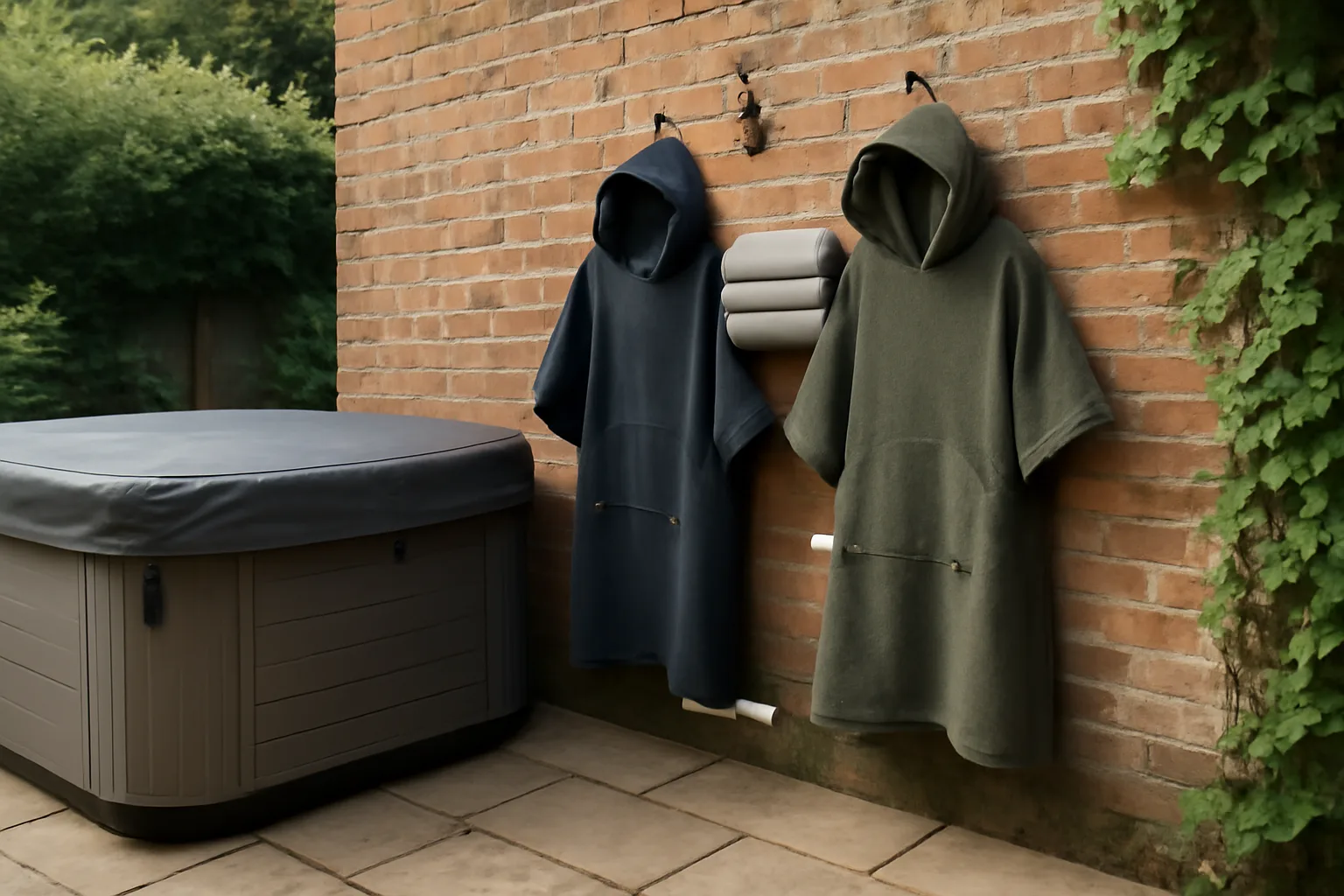
How to choose the right towel warmer and robe for your hot tub
Decide first whether the problem is cold on the walk indoors, a cold towel at the door, or a pile of damp towels afterwards. A changing robe solves the first; an indoor bucket pre-warms a dry towel for the second; an indoor airer helps with the third. Buying all three is unnecessary for many households.
- Bucket capacity: compare the towel dimensions with the chamber, not a broad “two towels” promise.
- Timer: choose a simple shut-off routine and do not leave a warmer running unattended against its instructions.
- Robe fit: allow room to change, but check the exact size and length.
- Storage: keep clean dry towels protected; dry used fabrics before putting them away.
Where to place electrical equipment safely
Keep an indoor towel bucket and heated airer inside a dry room, away from splashes, and follow each manufacturer’s instructions. Do not use an indoor appliance outdoors just because a socket or pergola is available. Electrical Safety First’s garden advice says outdoor electrical equipment needs RCD protection and outdoor-suitable connections; it does not make an indoor towel warmer suitable for outdoor operation.
Avoid trailing a lead across wet paving. If your layout needs a permanent outdoor supply, consult a qualified electrician and our hot-tub electrical guide. Robes and dry towel storage near the exit usually solve the comfort problem without adding another powered item there.
Robes, towels and storage that work together
Keep a robe accessible under cover while you soak. Bring a dry bath sheet out shortly before exit, especially if it has been warmed indoors. Hang wet robes and towels in a ventilated indoor space afterward; a sealed storage box is for clean, dry kit, not overnight drying.
Keep the route clear and non-slip. The steps and surrounds guide covers the step-out area, while the winterising guide addresses cold-weather tub care. Neither a warm towel nor a robe compensates for slippery paving.
Running costs without guesswork
Electricity cost depends on the appliance’s rated watts, time used and your tariff. Divide watts by 1,000, multiply by hours, then by your pence-per-kWh rate. For example, a 300W airer used for four hours consumes about 1.2kWh at its rated power; real cycling may differ. Check the exact product label before doing the same calculation for a towel bucket. Do not treat old pence-per-session estimates as a current tariff.
The bottom line
For most homes, start with a well-fitting waterproof changing robe and dry towels. Add the SAMEAT bucket only if you can run it safely indoors and will carry the towels out; add the Lakeland airer only if drying used towels is an ongoing problem. The Keter box helps organise dry gear, but do not leave wet fabrics in it. This is a safer and more useful plan than positioning any ordinary electric warmer beside the water.
Frequently Asked Questions
Can I use a towel warmer outside next to a hot tub?
Not unless the exact appliance manufacturer explicitly approves that outdoor location and electrical setup. The indoor bucket in this guide should stay inside, away from splashes; carry the warm towel out.
Which should I buy first: a changing robe or a towel warmer?
For a garden hot tub, a changing robe is usually more useful first because it protects the walk back indoors without another powered appliance. Add an indoor towel bucket if you value pre-warmed dry towels.
Will a bucket towel warmer dry wet towels?
Do not assume so. The SAMEAT instructions say to heat dry, suitable fabrics, not damp towels. Dry used towels separately in a ventilated room or on a suitable indoor airer.
Does a weather-resistant storage box keep towels dry?
It helps protect stored kit, but it is not a guarantee against every storm or condensation. Bag clean dry towels or bring them out just before use, and never seal damp robes inside overnight.
How do I estimate the running cost of a heated airer?
Multiply the rated kilowatts by hours used and your own electricity price per kWh. The Lakeland airer is rated at 300W, or 0.3kW; four hours at rated power is about 1.2kWh before allowing for any cycling.