Hot tub water stays easy when you stop treating it as a rescue job and give it a routine. The aim is not to become a part-time pool engineer. It is to test, dose, rinse and reset often enough that cloudy water, foamy sessions and panicked drain-downs become rare.
In This Article
- The Simple Hot Tub Water Care Schedule
- What to Check Every Time You Use the Tub
- Weekly Water Care Tasks
- Monthly Tasks That Stop Bigger Problems
- After Heavy Use, Rain or a Weekend Away
- What the Routine Costs in the UK
- Common Schedule Mistakes to Avoid
- Frequently Asked Questions
The Simple Hot Tub Water Care Schedule
A good hot tub water care schedule has three layers: tiny checks before use, a proper weekly reset, and a monthly deeper clean. Miss one day and nothing dramatic happens. Miss two weeks and you start paying for it with extra chemicals, dirty filters and water that never quite looks right.
The Health and Safety Executive’s spa-pool guidance is written for managed facilities, but the basic point applies at home too: warm aerated water needs regular testing, disinfectant control and cleaning. Domestic owners do not need commercial paperwork, but they do need a habit.
Here is the rhythm I would use for a typical 1,000-1,500 litre UK garden hot tub used three or four times a week:
- Before each soak: check water clarity, smell, temperature, cover condition and sanitiser level.
- Two or three times a week: test sanitiser, pH and total alkalinity with strips or a liquid kit.
- Weekly: rinse the filter, shock the water, wipe the waterline and check chemical stock.
- Monthly: deep-clean the filter, check calcium hardness, inspect the cover, clean the shell above the waterline and review water age.
- Every 8-12 weeks: drain and refill most domestic tubs, sooner after heavy use or persistent water problems.
That last point depends on water volume, usage and the product manual. A small inflatable used by the family most evenings may need fresh water every six to eight weeks. A larger hard-shell tub used twice a week can often go nearer three months if the chemistry is stable.
The target readings
For most domestic hot tubs, aim for:
- Free chlorine: usually 3-5 ppm, depending on your product label.
- Bromine: usually 4-6 ppm if you run a bromine system.
- pH: 7.2-7.6, with 7.4 a sensible target.
- Total alkalinity: roughly 80-120 ppm.
- Calcium hardness: often 150-250 ppm for acrylic tubs, but check your manual.
Do not chase perfect numbers every morning. The schedule works because it spots drift early, not because it forces the water to behave like a lab sample.
What to Check Every Time You Use the Tub
The pre-soak check should take under two minutes. It is not a full chemistry session. It is a quick “is this safe and pleasant tonight?” check before anyone gets in.
Look and smell first
Clear water should let you see the footwell or seat base easily. If the water is cloudy, green, oily, foamy or has a sour smell, do not shrug and get in. Test it, clean the filter and decide whether it needs a shock dose or a drain.
A sharp swimming-pool smell is not proof that the water is clean. It often means used-up sanitiser by-products are building up. If that keeps happening, read the deeper hot tub shock process and build shocking into your weekly routine rather than waiting for the smell.
Check sanitiser before bathing
If you use chlorine, a quick strip reading before a family soak is sensible. If it is low, dose, circulate and retest before getting in. If it is sky-high after shocking, wait. No one enjoys paying for a tub and then treating their eyes like an experiment.
Owners often report that their water looks fine even when the sanitiser is low. That is the trap. Warm water can look fine right up to the point where it does not.
Keep the cover and waterline clean
Lift the cover fully and check the underside. A slimy cover underside, black spotting around seams, or a musty smell tells you the cover needs cleaning and drying. Wipe the waterline with a non-scratch sponge if you see a greasy mark. A bottle of hot tub surface cleaner is about £8-£12 from Amazon UK, B&Q or a hot tub dealer, but warm water and a dedicated cloth handle light marks well.
Quick pre-use checklist
Use this order:
- Look: clear water, no scum line, no unusual colour.
- Smell: no sour, swampy or harsh chemical odour.
- Test: sanitiser in range before people get in.
- Touch: cover underside dry enough and not slimy.
- Run: jets briefly and listen for weak flow or odd pump noise.
If two checks fail, do the maintenance first. A skipped evening is cheaper than replacing water, filters and half a shelf of chemicals.
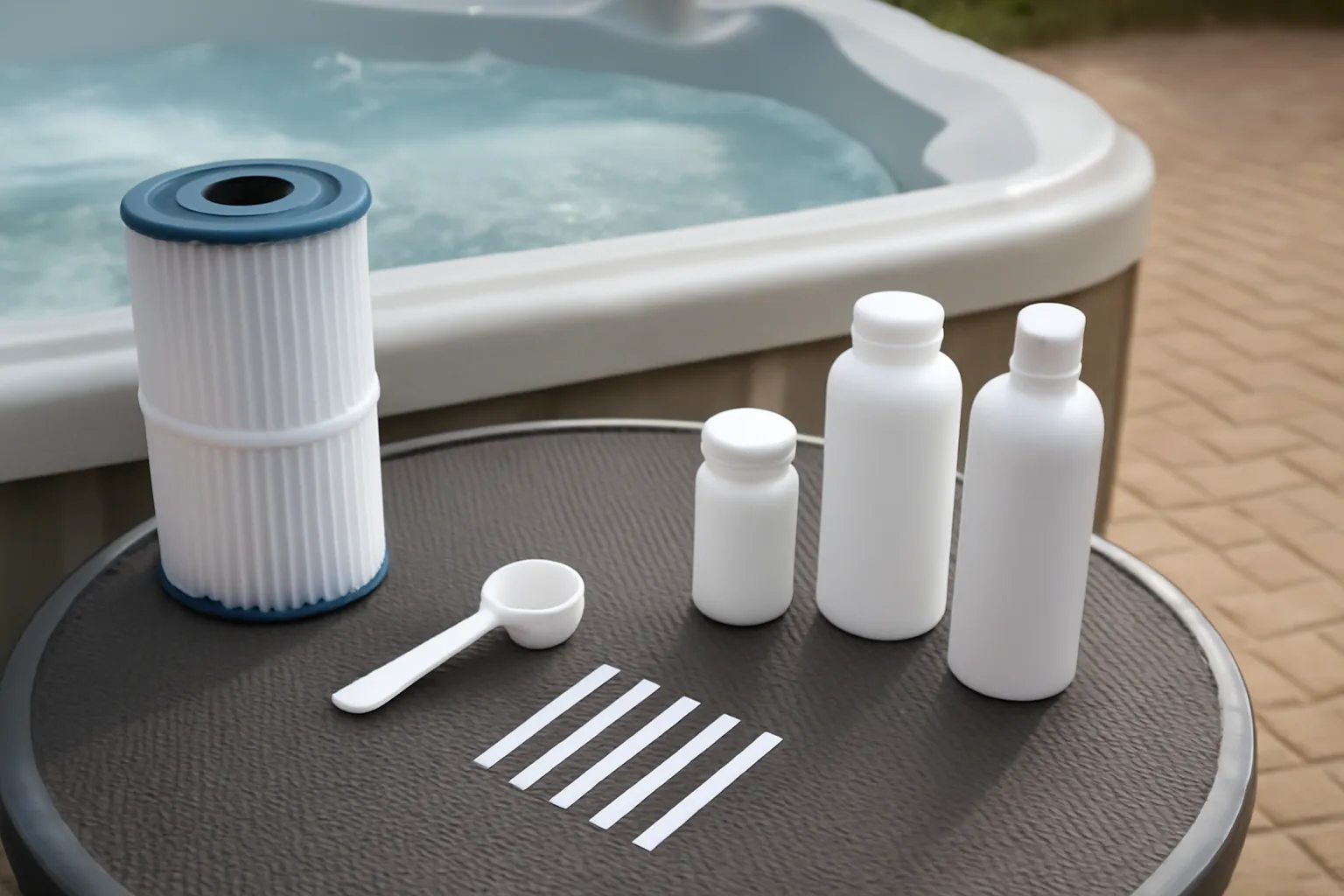
Weekly Water Care Tasks
Weekly care is where most water problems are either prevented or created. Pick a fixed day. Sunday morning works well because you can clean up after weekend use and leave the cover open for a bit while the water circulates.
Test properly, not by memory
Use a test strip or liquid kit before adding anything. The best basic strips check chlorine or bromine, pH, alkalinity and calcium hardness. A 50-pack usually costs £7-£12, while better multi-parameter strips from AquaChek, Clearwater or LaMotte sit around £12-£20.
If you want a more reliable setup, use strips for quick checks and a liquid kit for the weekly reading. That costs more upfront, often £18-£35, but it stops you making expensive decisions from a faded strip colour. Our hot tub water test kit guide covers the kit choices in more detail.
Dose in the right order
Do not add chlorine, pH reducer, alkalinity increaser and clarifier all at once. You will not know which product changed which reading.
For normal weekly care, use this order:
- Test total alkalinity first. If alkalinity is badly out, pH will be hard to control.
- Adjust pH next. Keep it around 7.2-7.6 so the sanitiser works well.
- Correct sanitiser after pH. Chlorine and bromine readings are more useful once pH is sensible.
- Shock after heavy use or once a week. Leave the cover open while gases escape.
- Retest before bathing. The strip matters more than the clock.
If pH keeps climbing, it is usually aeration, alkaline tap water or high alkalinity. The dedicated lowering pH guide is better than guessing with extra pH Minus.
Rinse the filter every week
The filter catches body oils, hair, skin, leaves and the dull grey muck that makes water look tired. Rinse it weekly with a garden hose, working between the pleats from top to bottom. A filter cleaning wand costs about £10-£15 and is worth buying if your filter has tight pleats.
Do not use a pressure washer. It can damage the pleated material and make the filter worse at catching fine particles. For the full method, use the hot tub filter cleaning guide; for this schedule, the key point is timing. Weekly rinse, monthly soak, annual replacement for most cartridges.
Shock the water
A weekly non-chlorine shock is the normal maintenance choice for water that already tests clean. It helps break down oils, sweat and used-up sanitiser by-products without pushing chlorine too high. A 1kg tub of non-chlorine shock usually costs £12-£20 and lasts several weeks or months depending on tub size and use.
Use chlorine shock when the water smells wrong, has been heavily used, has just been refilled, or looks cloudy despite normal readings. That is a stronger reset, and you will usually need to wait longer before bathing.
Wipe the waterline
Waterline grime is not just ugly. It feeds foam and clogs filters. Wipe the shell around the waterline every week with a dedicated cloth or sponge. Keep household bathroom cleaners away from the tub unless the manufacturer says they are safe. They can foam, damage acrylic and interfere with the water balance.
Monthly Tasks That Stop Bigger Problems
Monthly jobs are not glamorous, but they are the reason some owners get three clear months from a fill while others are draining every three weeks.
Deep-clean the filter
Once a month, soak the cartridge in a proper hot tub filter cleaner. A 500ml-1 litre bottle of filter cleaner usually costs £8-£15 from Amazon UK, Hot Tub Suppliers, B&Q or a local spa dealer. Most products need a bucket, warm water and several hours of soak time.
If your tub uses one cartridge, buy a spare. A replacement filter is usually £15-£40 for common inflatable and mid-range tubs, and £35-£70 for some branded hard-shell cartridges. With two filters, one can soak and dry while the other keeps the tub running.
Check calcium hardness
Calcium hardness moves slowly, so monthly is enough unless you have just refilled. Hard water areas such as the South East, East Anglia and the Midlands often start high. Soft water areas in Scotland, Wales and the South West can start low.
High calcium can cause scale on heaters, jets and shell surfaces. Low calcium can make water more aggressive towards metal parts. The separate water hardness guide goes deeper, but the schedule version is simple: test monthly, note the direction, and adjust before scale or corrosion symptoms appear.
Inspect the cover
The cover is part of water care because it controls heat loss, debris and evaporation. Wipe the underside monthly, check for waterlogged foam, cracked vinyl and failed straps. A bottle of vinyl cleaner or conditioner is usually £8-£15. A full replacement cover can be £250-£500, so keeping the current one dry and clean is not fussy maintenance.
This also helps running costs. A poorly sealed cover lets heat and water vapour escape, and that makes the heater work harder. If energy use is already on your mind, the hot tub electricity usage guide explains how cover condition changes the numbers.
Check water age
Old water gets harder to manage because dissolved solids build up from chemicals, sweat, cosmetics and top-ups. If you are adding more product each week and the water still looks dull, the answer may be fresh water rather than another bottle.
As a rough guide:
- Small inflatable tub, regular family use: drain every 6-8 weeks.
- Hard-shell tub, moderate use: drain every 8-12 weeks.
- Heavy use, parties or repeated foam: drain sooner.
- Long periods unused: test, shock and assess smell before deciding.
Water is cheaper than fighting stale water for a month. In most UK homes, refilling a 1,200 litre hot tub costs only a few pounds in water, though heating that fresh water costs more.
After Heavy Use, Rain or a Weekend Away
The normal schedule assumes normal use. Real life does not always behave. Guests arrive, kids spend two hours in and out, rainwater gets under the cover, or the tub sits unused while you are away.
After a busy soak
More bathers mean more sweat, skin, hair products, fake tan and detergent residue from swimwear. After a party or long family session, do three things:
- Test sanitiser and pH the same evening. Do not wait until the next planned test day.
- Rinse the filter within 24 hours. Heavy use loads the pleats quickly.
- Shock the water. Use the product type that suits your readings and sanitiser system.
Based on owner feedback, the biggest difference between easy and annoying water care is what happens after heavy use. People who reset the water that evening usually get away with it. People who close the lid and hope for the best often meet cloudy water two days later.
After heavy rain
Rain can dilute sanitiser and nudge pH. If your cover seals well, this is minor. If wind pushed rain under one side, test the next day. Also check the cover skirt and cabinet vents for standing water.
Do not assume rainwater is harmless because it is “natural”. It can carry garden debris, bird mess from nearby fences and airborne dirt. A quick test costs pennies.
Before and after a weekend away
Before leaving for two or three days, balance pH, bring sanitiser into range, rinse the filter and secure the cover. If you use bromine tablets in a floating dispenser, check the setting and tablet level. If you use chlorine granules, do not overdose wildly to cover the gap; follow the label and retest when you return.
When you get back, open the cover, let the tub breathe, test the water and smell it before anyone gets in. The HSE’s hot tub Legionella advice is a useful reminder that warm, poorly managed spa water deserves respect. You do not need to panic. You do need to test.
What the Routine Costs in the UK
Water care is not free, but it is not the scary part of hot tub ownership either. Electricity, covers and repairs usually cost more. A sensible routine keeps chemical spend predictable and protects the expensive parts.
Typical monthly consumables
For a domestic tub used three or four times a week, expect:
- Test strips: about £2-£5 per month if you buy a £8-£15 tub of 50-100 strips.
- Chlorine or bromine: about £5-£12 per month, depending on usage and tub size.
- pH Plus and pH Minus: often £1-£4 per month once the water is stable, though the first fill may use more.
- Non-chlorine shock: about £4-£10 per month with weekly use.
- Filter cleaner: about £1-£3 per month spread across the bottle.
- Replacement filters: budget £15-£70 a year per cartridge, depending on brand.
That puts many owners around £15-£30 a month for water-care consumables. Heavy use, large water volume, bromine systems and hard water can push it higher.
Starter products worth buying
If you are setting up from scratch, I would buy:
- Good multi-parameter test strips: Clearwater, AquaChek or LaMotte, about £8-£20.
- Your chosen sanitiser: chlorine granules around £12-£25 per 1kg, or bromine tablets around £18-£35.
- pH Plus and pH Minus: usually £7-£12 each.
- Total alkalinity increaser: about £8-£15.
- Non-chlorine shock: about £12-£20.
- Filter cleaner and a spare cartridge: around £25-£60 together for many popular tubs.
You can buy these from Amazon UK, B&Q, The Range, Lay-Z-Spa stockists and specialist hot tub dealers. I would avoid the cheapest unbranded chemical bundles unless the active ingredients, dosage and UK safety labelling are clear.
Where not to waste money
Clarifier, foam remover and fragrance products have their place, but they are not a substitute for the schedule. Foam remover hides foam for a while. It does not remove detergent or body oil. Clarifier can help fine particles clump together, but it will not fix low sanitiser, old water or a filthy filter.
Buy the boring basics first. The boring basics are what keep the tub usable.
Common Schedule Mistakes to Avoid
Most schedule failures are not technical. They are habit failures.
Testing only when the water looks wrong
By the time water looks bad, the fix is harder. Test on a schedule even when the water looks perfect. That is how you catch pH drift, falling bromine or low alkalinity before they turn into cloudy water.
Adding chemicals too close together
If you add three products in five minutes, you are guessing. Space adjustments out, circulate the water and retest. This matters most with pH and alkalinity, because one affects the other.
Ignoring the filter
A dirty filter makes every chemical work harder. It restricts flow, traps oils and can make the heater behave oddly. If your weekly routine only has one physical task, make it the filter rinse.
Keeping old water alive for pride
There is no award for stretching a fill to four months. If the water is old, foamy, dull and expensive to correct, drain it. Clean the shell, rinse the plumbing if needed and start again.
Forgetting the cover
A slimy cover underside can re-contaminate freshly balanced water. Wipe it, air it and keep the hinge area clean. This is especially important in winter when the cover stays shut for longer.
Relying on smell
Your nose is useful, but it is not a test kit. A tub can smell fine and have low sanitiser. It can smell strongly of chlorine because used-up compounds need oxidising. Test, then decide.
The bottom line: a hot tub water care schedule should feel almost boring. Quick checks before use, a proper weekly reset, a monthly deep clean and a drain before old water becomes a fight. Do that and most “hot tub problems” never get a chance to become problems.
Frequently Asked Questions
How often should I test hot tub water? Test sanitiser before use if the tub has been sitting or several people are about to get in. For normal home use, test sanitiser, pH and alkalinity two or three times a week, then do a fuller weekly check.
Do I need to shock my hot tub every week? Weekly shocking is sensible for most tubs used several times a week. Non-chlorine shock suits routine maintenance when the water is already balanced; chlorine shock is better after heavy use, fresh fills or water that smells wrong.
How often should I rinse hot tub filters? Rinse the filter weekly, or sooner after heavy use. Deep-clean it monthly in filter cleaner, then replace most cartridges every 12-18 months unless the manual gives a shorter interval.
Can I use the hot tub if the chlorine is low? No. Bring the sanitiser back into the correct range, circulate the water and retest before bathing. Clear-looking water is not enough proof that it is safe.
How often should I drain and refill a hot tub? Many domestic hot tubs need fresh water every 8-12 weeks. Small inflatable tubs or heavily used family tubs may need draining every 6-8 weeks, especially if foam, smell or dull water keeps returning.
What is the cheapest way to keep hot tub water clear? Test regularly, rinse the filter weekly, shower before bathing and drain old water before you waste chemicals fighting it. That routine is cheaper than relying on clarifier, foam remover and emergency shock doses.