You’ve just had a hot tub delivered, it’s sitting on a base in the corner of your garden, and the first time you try to climb in you nearly pull a hamstring. The side wall comes up to your hip, you’re barefoot on wet paving, and there’s nothing to grab onto. Sound familiar? Getting in and out of a hot tub shouldn’t feel like an obstacle course — and the right steps or surround setup makes the whole experience safer, tidier, and far more enjoyable.
Finding the best hot tub steps UK owners can actually rely on means thinking beyond the flimsy plastic treads bundled with some spas. A proper set of steps — or even better, a built surround — transforms both access and appearance. After looking at what’s available from UK retailers and what owners consistently praise (and complain about), here’s what’s worth your money.
Best overall: the Confer Plastics Resin Multi-Step. It’s wide, sturdy, handles up to 180 kg, and costs about £90–£120 from Amazon UK. If you want one recommendation and nothing else, that’s the one. But there’s a lot more to cover depending on your setup, budget, and whether you’re after steps, a full surround, or something in between.
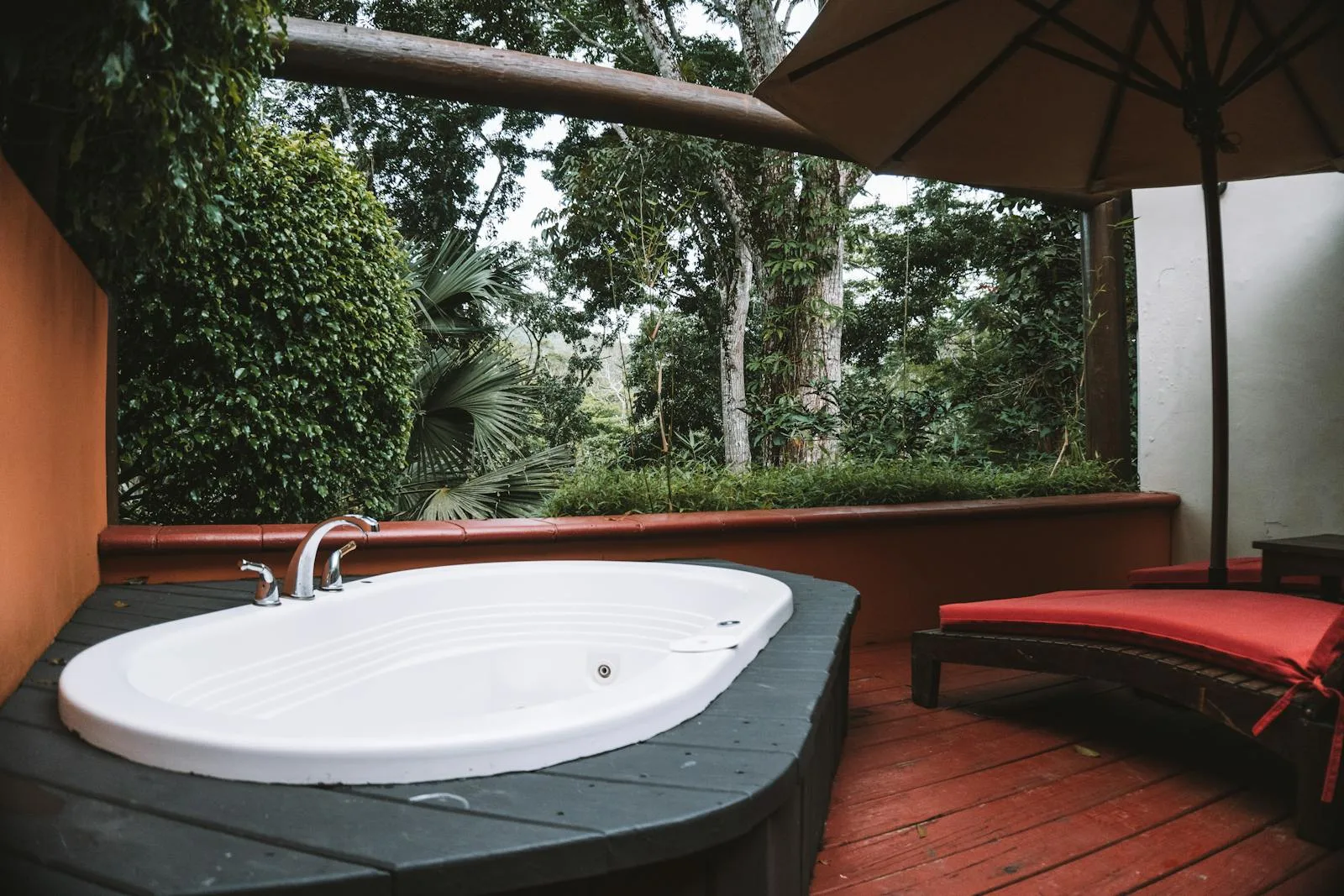
How to Choose the Best Hot Tub Steps
Not all steps work with all tubs. Before you spend anything, check these five things — they’ll save you a return trip to the post office.
- Height match — measure from the ground to the top of your hot tub’s rim. Most acrylic spas sit 75–95 cm high. Inflatable tubs like the Lay-Z-Spa range are shorter, around 60–70 cm. A two-step unit suits most rigid tubs; inflatables often only need a single-step platform.
- Tread width — narrow treads (under 20 cm) feel dodgy when your feet are wet. Look for at least 25 cm width per tread. If older family members or children will use the tub, wider is always better.
- Weight capacity — cheap steps often max out at 120 kg. That’s fine for one person, but if you’re bracing yourself while climbing out, you’re putting more force through the step than your body weight alone. Aim for 150 kg+ rated steps.
- Material and weather resistance — your steps live outdoors year-round. Resin and marine-grade polymer last. Untreated softwood rots within two seasons. If you go wooden, make sure it’s pressure-treated or hardwood like teak.
- Non-slip surface — this is non-negotiable. Smooth plastic or varnished wood around a hot tub is a trip to A&E waiting to happen. Textured treads, rubber inserts, or anti-slip coating are what you want.
One thing that catches people out: if your tub sits on a slightly raised base or deck, you need to subtract that height when choosing steps. A 90 cm tub on a 10 cm base pad in practice needs steps for 80 cm. Sounds obvious, but the number of reviews mentioning “steps too tall for my setup” suggests plenty of people miss it.
Best Hot Tub Steps for Rigid and Acrylic Spas
These are the workhorses — built for full-size spas from brands like Jacuzzi, HotSpring, and Platinum Spas.
Confer Plastics Resin Multi-Step
This is the one you’ll see recommended in nearly every hot tub forum, and for good reason. It’s made from UV-stabilised resin, weighs about 7 kg, and the treads are wide enough to stand on comfortably with both feet. Height adjusts to suit most tubs between 75–95 cm.
- Price: about £90–£120 from Amazon UK
- Pros: rock-solid feel, textured non-slip treads, doesn’t fade in UV, adjustable height
- Cons: looks functional rather than stylish, limited colour options (grey or brown)
- Best for: most rigid hot tub owners who want reliability over aesthetics
Leisure Concepts SmartStep
A step up in looks — quite literally. The SmartStep has a contemporary design with rounded edges and a built-in storage compartment under the top step. Handy for stashing a small bottle of sanitiser or a thermometer. The non-slip surface works well, though a few owners note it can get slippery if algae builds up (a quick scrub with dilute bleach sorts that out).
- Price: about £130–£160 from specialist spa retailers like Hot Tub Suppliers or AllSpa
- Pros: storage compartment, attractive design, solid build
- Cons: pricier than basic options, storage lid can be fiddly in cold weather
- Best for: owners who want steps that look part of the setup, not an afterthought
Spa World Deluxe Two-Tier Steps
A budget option that punches above its weight. At around £50–£70, these resin steps won’t win design awards, but they’re stable, lightweight, and do the job. The treads have a basic textured finish. The main trade-off is they feel slightly hollow compared to the Confer, and the weight capacity (130 kg) is lower.
- Price: about £50–£70 from eBay or Amazon UK
- Pros: cheap, functional, easy to move
- Cons: feels less premium, lower weight capacity, limited colour choices
- Best for: anyone on a tight budget or with a secondary tub in a holiday let
Best Steps for Inflatable Hot Tubs
Inflatable tubs like the Lay-Z-Spa range sit lower to the ground, so you don’t need tall steps. But you do still need something — stepping over a soft, inflated wall while wet is awkward and risks damaging the tub.
Bestway Non-Slip Step Platform
Designed specifically for Lay-Z-Spa tubs but works with any inflatable. It’s essentially a single, wide platform step — about 36 cm wide and 23 cm tall. The surface has a proper anti-slip texture, and it’s heavy enough (around 4 kg) not to slide on a patio.
- Price: about £35–£50 from Argos, Amazon UK, or B&Q
- Pros: purpose-built for inflatables, wide tread, genuinely non-slip
- Cons: single height only (no adjustment), looks basic
- Best for: Lay-Z-Spa owners and anyone with a tub under 70 cm high
CleverSpa Universal Step
Similar concept to the Bestway, with a slightly more modern look. The tread surface is good, and it’s compatible with most inflatable brands. Slightly more compact than the Bestway, which is either a pro (easier to store) or a con (less foot space) depending on your priorities.
- Price: about £30–£45 from Argos or The Range
- Pros: compact, affordable, decent non-slip surface
- Cons: narrower tread than the Bestway, may feel small for larger feet
- Best for: CleverSpa or Canadian Spa owners, or anyone wanting minimal footprint
Hot Tub Surrounds: Worth the Investment?
Steps get you in and out. A surround transforms your entire setup. If you’re putting a hot tub in your garden for the long term — and if you’ve spent £3,000–£8,000 on the tub itself — spending another £200–£1,000 on a proper surround is money well spent. It hides the tub’s shell, creates a finished look, and gives you somewhere to set a drink, a towel, or your phone. For related guidance, see our Hot Tub Water Hardness: Why It Matters guide.
There are three main approaches to hot tub surrounds in the UK:
Ready-Made Surround Panels
Companies like SpaCaddy and Spa Chill sell modular panel kits that wrap around your tub. These are typically composite or resin panels that slot together, giving you a uniform look without any woodworking skills.
- Price: about £300–£600 for a full kit
- Pros: quick to install (an afternoon job), uniform finish, weather-resistant
- Cons: limited to standard tub sizes, can look a bit “flat” compared to timber builds
Composite Decking Surrounds
Building a surround from composite decking boards (brands like Trex, Cladco, or Millboard) gives the warmth of wood without the maintenance headaches. You’ll need basic DIY skills or a willing friend with a mitre saw. The boards sit on a simple timber frame, and you can incorporate a step into the surround itself.
According to the Timber Decking and Cladding Association, composite decking typically lasts 25–30 years with minimal maintenance — far outlasting treated softwood. That’s especially relevant for a hot tub surround, where constant exposure to splashed water and chemicals would destroy untreated timber within a few years.
- Price: about £400–£900 for materials (boards + timber frame), depending on tub size
- Pros: premium look, low maintenance, huge colour range, can be custom-shaped
- Cons: higher material cost, needs basic carpentry, heavier than panel kits
Timber Surrounds (Cedar or Pressure-Treated)
The classic look. Western red cedar is the gold standard for hot tub surrounds — it’s naturally resistant to rot, smells great, and weathers to a silver-grey patina. Pressure-treated softwood is the budget alternative, but it needs re-staining every 1–2 years or it goes green.
- Price: cedar surround materials about £500–£1,200; pressure-treated about £200–£500
- Pros: natural appearance, cedar smells fantastic, can be built to any size
- Cons: cedar is expensive, softwood requires ongoing maintenance, timber expands and contracts with moisture
If you’re investing in a surround, think about access panels. Your tub’s pump, heater, and plumbing need to be accessible for servicing. A solid surround with no removable panels means you’ll be unscrewing the whole thing when the pump needs attention — ask me how I know. Build in at least one hinged or removable section.
Confer Resin vs Leisure Concepts SmartStep: Which Should You Buy?
This is the head-to-head most people end up weighing. Both are solid, both fit most standard rigid tubs, and both have non-slip treads. Here’s where they differ:
- Build quality: both excellent, slight edge to Confer for sheer sturdiness
- Looks: SmartStep wins easily — it looks intentional rather than industrial
- Storage: SmartStep has a hidden compartment; Confer doesn’t
- Price: Confer is £30–£40 cheaper on average
- Availability: Confer is easier to find on Amazon UK; SmartStep often needs ordering from specialist retailers
The verdict: if you care about appearance and the surround storage is useful, the SmartStep justifies the premium. If you just want solid, reliable steps and you’re going to build a surround anyway (which will hide them), save the money and go Confer.
For anyone still choosing their hot tub, factor step and surround costs into your total budget from the start. It’s one of those extras that people forget about until after delivery day.
Safety Tips for Hot Tub Steps
The Health and Safety Executive’s guidance on managing hot tubs focuses mainly on water quality, but safe access matters too — especially if children or elderly family members use the tub. A few things worth building into your routine:
- Check treads regularly. Algae and biofilm build up on any outdoor surface. A weekly wipe with dilute bleach or hot tub surface cleaner keeps treads grippy.
- Add a grab rail if possible. Wall-mounted or freestanding grab rails (about £25–£60 from Screwfix or B&Q) make a massive difference. Not glamorous, but neither is a broken wrist.
- Light the area. Solar-powered deck lights (from about £15 for a four-pack at Amazon UK) around the steps make evening soaks much safer. You don’t need a floodlight — just enough to see where you’re putting your feet.
- Consider a non-slip mat at the base. A rubber outdoor mat below the steps stops them sliding on wet paving. About £10–£15 from B&Q or Wickes.
- Keep the path clear. Flip-flops, toys, garden hose — anything between the house and the tub is a trip hazard when you’re walking back in the dark in a towel. If you’re serious about your hot tub setup, take a look at insulation and winter prep too, since icy conditions around the tub are a genuine hazard from November to March.
Steps and surrounds handle access; lighting changes how the area feels after dark. Our guide to choosing hot tub lighting covers safer, calmer evening use.
Frequently Asked Questions
What height should hot tub steps be? Match the step height to your tub's rim height minus any base the tub sits on. Most rigid spas need two steps covering 75–95 cm total. Inflatable tubs usually only need a single platform step of 20–25 cm.
Can I use any steps with a hot tub or do they need to be specific? You can use generic steps, but purpose-built hot tub steps have non-slip treads, weather-resistant materials, and appropriate weight ratings. A standard household step stool isn't designed for wet, barefoot use and could be dangerous.
How much should I spend on hot tub steps in the UK? Budget options start around £30–£50 for inflatable tub steps. Quality two-tier steps for rigid spas cost £90–£160. A full surround with integrated steps runs from £300 to over £1,000 depending on materials.
Do I need a handrail with my hot tub steps? It's not legally required for domestic use, but strongly recommended if children, elderly people, or anyone with mobility issues will use the tub. Freestanding spa handrails cost about £40–£80 from Amazon UK or specialist retailers.
What material is best for hot tub steps? UV-stabilised resin is the most practical choice — it won't rot, doesn't need painting, and handles moisture well. Cedar is the premium wood option. Avoid untreated softwood or anything with a smooth, glossy finish.
The Bottom Line
The best hot tub steps UK buyers can get depend on what you’re working with. For rigid acrylic spas, the Confer Plastics Resin Multi-Step is the no-brainer pick — sturdy, adjustable, and about £100. If looks matter, upgrade to the Leisure Concepts SmartStep for £130–£160. Inflatable tub owners should grab the Bestway Non-Slip Step Platform for £35–£50 and call it done.
If you’re thinking bigger, a composite or cedar surround turns a hot tub from a garden appliance into a proper feature. Budget £400–£900 for composite materials, and remember to build in access panels for servicing.
Whatever you choose, non-slip treads and decent lighting around the steps are the two things that matter most. Everything else is aesthetics — and while aesthetics are nice, not falling over in the dark in January is nicer.