Foam in a hot tub is usually a residue problem before it is a chemistry mystery. The right foamy hot tub water fix starts with a quick safety check, then works through sanitiser, pH, filters, bather residue and water age in that order.
In This Article
- Quick Diagnosis: Is It Foam or Something Worse?
- The Foamy Hot Tub Water Fix: A 20-Minute Triage
- Why Hot Tub Water Foams in the First Place
- Balance the Water Before Adding More Products
- Clean Filters and Remove Hidden Residue
- When to Drain Instead of Keep Dosing
- How to Stop Foam Coming Back
- Frequently Asked Questions
Quick Diagnosis: Is It Foam or Something Worse?
Foam is only one clue. Before you reach for anti-foam, decide what you are actually looking at. Light white bubbles that appear when the jets run and disappear fairly quickly are usually residue from people, swimwear or cleaning products. Thick foam that sits on the surface, smells stale or comes back every time you turn the pumps on points to overloaded water.
The safe-use check
Do not get in if the water is cloudy, green, slimy, sour-smelling or if your sanitiser reading is low. Hot tubs run warm enough to make poor water care a real hygiene issue, not just an aesthetic one. The HSE guidance on spa-pool infection control is aimed at commercial operators, but the basic principle applies at home too: warm aerated water needs proper disinfection.
Check these first:
- Free chlorine or bromine: if it is near zero, treat that before treating foam.
- pH: water outside the usual 7.2-7.8 range can irritate skin and make sanitiser less reliable.
- Smell: a strong “chlorine” smell often means combined chloramines, not clean water.
- Feel: slippery sides, greasy waterline marks or sticky foam mean residue is building up.
- Water age: if the water has been in for three or four months, the fix may be a drain, not another bottle.
If the main issue is cloudy water rather than surface bubbles, use the dedicated cloudy hot tub water guide first. If several things are wrong at once, the broader common hot tub problems guide is the better starting point.
Foam after a party is different from foam every week
Foam after six people have used the tub with sun cream, hair product and detergent-washed swimwear is annoying, but not unusual. Foam that returns after one careful soak is more useful diagnostically. It tells you the water or filters are already carrying residue.
I would treat one-off foam as a maintenance warning. I would treat repeat foam as a reset warning. That distinction saves money because anti-foam is cheap, but endlessly adding it to tired water is just hiding the problem.
The Foamy Hot Tub Water Fix: A 20-Minute Triage
The best foamy hot tub water fix is not “add defoamer and hope”. Defoamer can make the surface look better in minutes, but it does not remove detergent, oils, cosmetics or dissolved solids. Use it only after the basic checks below.
Step-by-step triage
- Turn the jets off and wait two minutes. If the bubbles collapse quickly, you may just be seeing normal aeration. If the foam sits there like washing-up bubbles, keep going.
- Skim the surface. Use a clean spa net or a jug to remove the worst foam. This removes some residue instead of pushing it back through the filter.
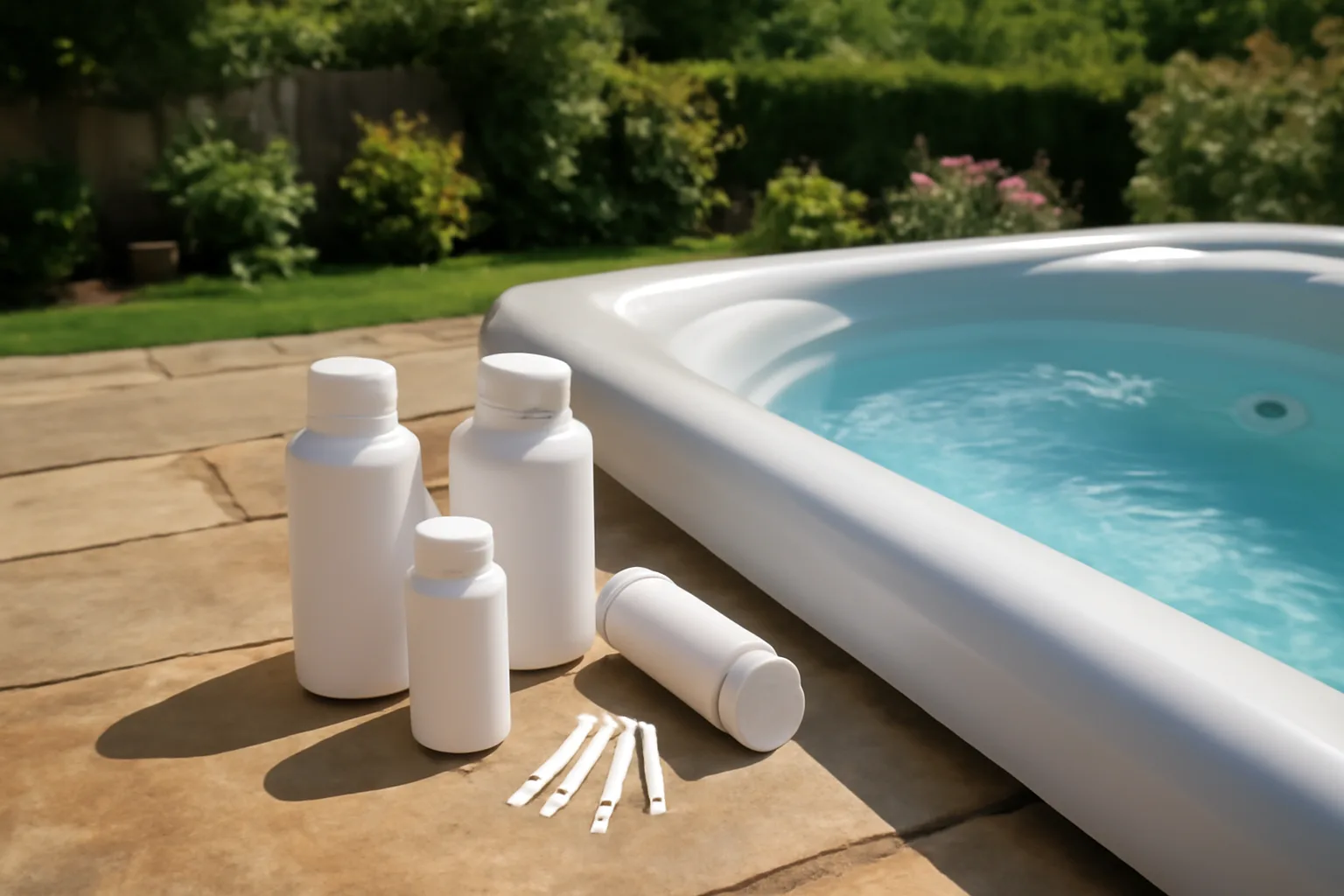
- Test the water. Use fresh strips or a liquid kit. A decent strip kit is about £8-£15 from Amazon UK, Screwfix or a hot tub dealer; liquid kits cost more, usually £20-£35, but are easier to trust if strips have been left damp.
- Correct alkalinity, then pH. If both are out, alkalinity first. Give the water time to circulate between adjustments rather than throwing in several products together.
- Check sanitiser. If chlorine or bromine is low, dose according to your product label and leave the cover open while it circulates.
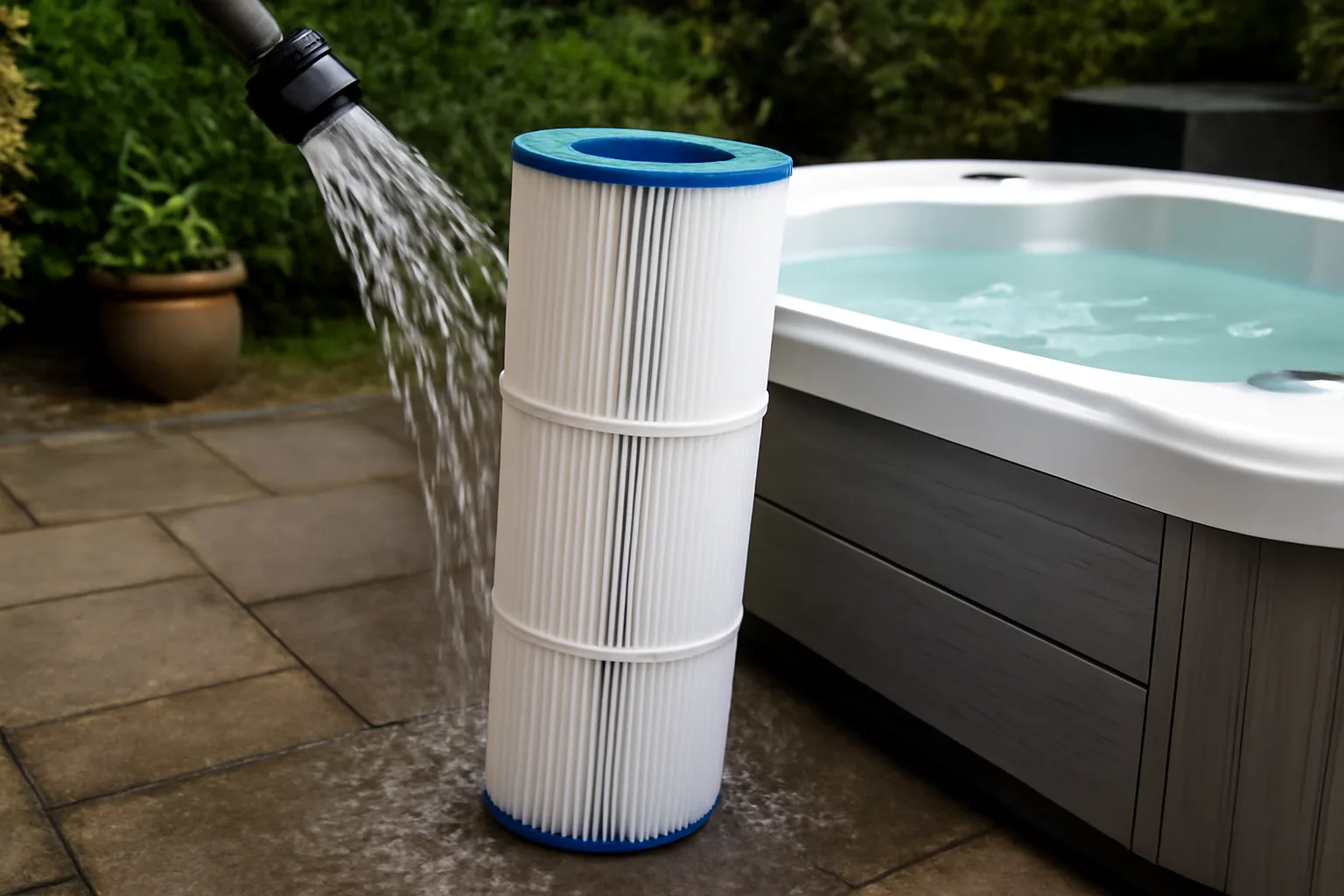
- Rinse the filter. A quick hose rinse is not a full clean, but it removes enough surface grease to improve flow.
- Use anti-foam only if the water now tests acceptably. A 500ml bottle is usually £6-£12 from Hot Tub Barn, Amazon UK or local pool-and-spa shops. Use the smallest label dose.
The order matters. If you add defoamer first, you can make the tub look calm while the water is still under-sanitised or badly balanced. That is how people end up soaking in water that feels fine for ten minutes and then irritates skin afterwards.
What I would buy first
For most owners, I would keep three low-cost items in the cupboard: a fresh test-strip tub, a cartridge cleaner and one bottle of anti-foam. That is about £25-£40 all in. I would not buy clarifier, fragrance pearls, enzyme blends and “miracle” spa rescue products on the same day. Too many additives can become part of the foam problem.
The hot tub chemicals beginner guide covers the basic kit properly. For this foam job, the useful extras are modest: defoamer for a quick knock-down, filter cleaner for the real clean-up, and non-chlorine shock or chlorine shock if your routine calls for it.
Why Hot Tub Water Foams in the First Place
Foam forms when surfactants reduce the surface tension of the water. In plain English, soaps and oily residues let bubbles hold their shape. The jets create the bubbles; the residue lets them hang around.
The usual culprits
Most foam comes from people, not from the tub:
- Laundry detergent in swimwear: this is the big one. A freshly washed swimming costume can carry enough detergent to foam a small spa.
- Body lotion and moisturiser: even “non-greasy” lotions leave film in hot water.
- Sun cream and fake tan: summer tubs foam faster because bathers bring more product in.
- Hair products: conditioner, gel and styling cream all survive a quick dip.
- Cheap or overused chemicals: some budget additives work, but they can leave more carrier residue than better products.
- Old water: dissolved solids build up over weeks until the tub foams easily.
Based on owner complaints, detergent-washed swimwear is the most under-rated cause. People rinse before getting in, then put on a costume loaded with laundry product. The tub gets blamed, but the washing machine did half the damage.
Why inflatable tubs foam sooner
Inflatable hot tubs often foam sooner than rigid tubs because they have smaller filter systems, less powerful circulation and more flexible surfaces for residue to cling to. They are still worth owning, but they are less forgiving after heavy use.
If you have a Lay-Z-Spa or Intex, budget for more frequent filter rinsing and shorter water life. A two-pack of replacement cartridges is usually £8-£15, and I would rather replace a tired cartridge than waste £20 of chemicals trying to drag old water back into shape.
Why soft water can feel slippery
Very soft water can foam more readily, especially if calcium hardness is low. Many UK areas have hard mains water, but not all. Parts of Scotland, Wales, the North West and South West can be softer, and owners there sometimes chase foam with sanitiser when hardness is part of the feel.
Calcium hardness increaser is usually £8-£14 per tub. Do not add it blind. Test first, check your hot tub manual, then dose slowly. Too much calcium creates scale, which is a different nuisance altogether.
Balance the Water Before Adding More Products
Balanced water will not magically remove detergent, but poor balance makes foam harder to solve. If pH, alkalinity and sanitiser are wandering, every other fix becomes less predictable.
The testing order I trust
Use this order because it stops you chasing false readings:
- Total alkalinity: aim for the range on your chemical label, often around 80-120 ppm.
- pH: most domestic spa products aim around 7.2-7.8.
- Sanitiser: chlorine and bromine targets vary by product, so follow the tub and chemical instructions.
- Calcium hardness: check this if water feels slippery, foams often or you live in a soft-water area.
BISHTA’s water treatment factsheet is useful because it reminds owners that a residual sanitiser still matters even when a tub has ozone, minerals or other backup systems. Those extras do not replace the measurable basics.
Do not overcorrect
Most home-owner water problems get worse when someone panics and adds three products within ten minutes. Raise alkalinity, circulate, retest. Adjust pH, circulate, retest. Sanitise, circulate, retest. It feels slow, but it avoids the expensive spiral where the test strip looks different every time you dip it.
For pricing, pH Plus and pH Minus are usually £7-£12 per 1kg bottle. Alkalinity increaser is similar. Chlorine granules are often £10-£18 for 1kg, bromine tablets nearer £18-£30 depending on brand and tub size. If you are buying all of that at once, the bill can easily hit £45-£70, so it pays to know which reading is actually wrong.
Shock has a place, but it is not a foam eraser
Shock treatment oxidises organic waste. It can help after heavy use, especially if the tub smells stale or the sanitiser has been fighting body oils all evening. It is not a magic sponge for detergent. If swimwear residue is the cause, shock may improve the water but foam can still come back until you clean the filter and change habits.
The hot tub shock guide goes deeper on timing and dose. For a foamy tub, I would shock only when the test results or smell justify it, not every time a few bubbles appear.
Clean Filters and Remove Hidden Residue
Filters are where foam problems either get solved or quietly come back. A cartridge can look fine from the top and still be holding greasy residue deep in the pleats.
Quick rinse versus proper clean
A hose rinse removes loose debris. It does not fully remove oils, lotions and detergent. For that, use a cartridge cleaner spray or soak. Spray cleaners are about £6-£10 and work well for a quick monthly clean. Soak solutions are usually £8-£15 and suit a deeper clean every few weeks.
The useful routine is simple:
- Weekly: remove the cartridge and rinse between the pleats with a hose.
- Monthly: use a filter-cleaner spray, leave it for the label time, then rinse hard.
- Every water change: soak the cartridge or rotate to a clean spare.
- Every few months: replace cheap cartridges that stay grey, greasy or misshapen.
If you only own one cartridge, buy a second. It is dull advice, but it changes the job. A spare cartridge costs about £8-£25 depending on the tub, and it lets one dry fully while the other is in use.
Clean the waterline
Foam residue often shows as a greasy tide mark. Wipe the waterline with a spa-safe surface cleaner and a soft cloth. Do not use washing-up liquid, bathroom cleaner, cream cleaner or scented sprays. They can damage acrylic and leave exactly the residue you are trying to remove.
Waterline cleaner is usually £7-£12. A microfibre cloth is fine; keep it only for the hot tub. If the line feels sticky after wiping, rinse the cloth and go round again. The first pass often just spreads the film.
Pipe residue is the hidden version
If foam returns after balanced water and clean filters, suspect the pipework. Biofilm and residue inside the plumbing can break away when the jets run. That is why some tubs look calm until you turn the pumps on, then foam like a bubble bath.
Pipe flush products are usually £10-£18 and should be used before draining, not after refilling. This overlaps with the full drain and clean hot tub guide, so the short version is: dose the flush, run the jets as directed, drain the water, clean the shell, rinse, refill and rebalance.
When to Drain Instead of Keep Dosing
There is a point where the cheapest fix is fresh water. That feels wasteful, but a domestic hot tub might hold 800-1,500 litres. In most UK homes, the water cost is lower than another round of chemicals and a week of irritation.
Drain if these signs line up
One sign alone does not always mean drain. Several together usually do:
- Foam returns within one or two uses after filtering, balancing and defoamer.
- Water is older than 10-12 weeks in a heavily used family tub.
- The water feels dull or sticky even when it looks clear.
- You keep correcting pH and it drifts again quickly.
- The filter gets greasy fast after each clean.
- There is a stale smell from the jets when you start the pumps.
My rule is simple: if I have tested, cleaned the filter, corrected the water and still do not want to put my arm in it, I drain. No spreadsheet required.
The cost comparison
Anti-foam at £6-£12, shock at £8-£18, filter cleaner at £6-£15 and pH products at £7-£12 each can add up quickly. If the water is already old, spending £30 to avoid a drain is usually false economy.
For a rigid hot tub, a planned drain every three to four months is normal. For an inflatable tub with children, guests or frequent summer use, six to eight weeks can be more realistic. The weekly and monthly water-care schedule is worth following because it stops foam becoming a weekend rescue job.
Do not drain into a flower bed
Let sanitiser levels drop according to your product guidance, then drain responsibly. Avoid sending chemically treated water across planting beds, ponds or neighbouring patios. If you are unsure, check your hot tub manual and local water advice. It is a boring detail until a line of scorched plants tells you otherwise.
How to Stop Foam Coming Back
Prevention is mostly habit. The products help, but the best fix is reducing what gets into the tub in the first place.
House rules that work
These are the rules I would actually bother enforcing:
- Rinse before using the tub: a quick shower removes moisturiser, deodorant and hair product.
- Rinse swimwear in plain water: do not wash hot tub swimwear with normal detergent every time.
- Keep the cover clean: underside grime drips back into the water when the cover heats up.
- Ban bubble bath and bath oils: sounds obvious, still happens.
- Use spa-safe fragrances only, if at all: even then, use sparingly.
- Keep a spare filter dry and ready: rotating filters is cheaper than fighting dirty water.
Children are not the problem; sun cream, garden dirt and snack-sticky hands are. For family use, I would rinse filters more often and change water sooner instead of trying to run a holiday-let level of water load on a domestic routine.
Products worth keeping
For a normal UK owner, I would keep:
- Fresh test strips: £8-£15, replaced before they get damp or expired.
- Filter cleaner: £6-£15, spray or soak depending on patience.
- Anti-foam: £6-£12, useful for a one-off cosmetic knock-down.
- Non-chlorine shock or chlorine shock: £8-£18, depending on your sanitiser system.
- A spare cartridge: £8-£25 for many inflatable tubs, more for some rigid spas.
The best hot tub water test kits article is the better place to compare strips and liquid kits. For foam prevention, the important bit is not buying the most advanced kit; it is using a kit you trust often enough to catch drifting water before it turns into froth.
The bottom line
If the water is new, tests well and foams after a busy soak, skim, rinse the filter and use a small dose of anti-foam. If the water is old, smells odd or keeps foaming after clean filters and correct readings, drain it. A hot tub is meant to be relaxing. Spending three evenings negotiating with tired water is not relaxation; it is admin in swim shorts.
Frequently Asked Questions
Is foamy hot tub water safe to use? Not until you test it. Light foam with correct sanitiser, pH and clear water is usually residue rather than danger. Foam with cloudy, smelly, slimy or low-sanitiser water means stay out and fix the water first.
What is the fastest foamy hot tub water fix? Turn the jets off, skim the foam, test the water, correct balance, rinse the filter and then use a small label dose of anti-foam if the readings are safe. Anti-foam alone only hides the symptom.
Can too much chlorine cause foam? High chlorine is not the usual cause of stable foam. Foam more often comes from detergent, cosmetics, oils, dirty filters or old water. Strong chemical smell can mean combined chloramines, so test before adding more sanitiser.
How much does hot tub anti-foam cost in the UK? Most 500ml anti-foam bottles cost about £6-£12 from Amazon UK, hot tub dealers and pool-and-spa shops. It is useful to keep one bottle, but repeat foam needs cleaning or draining, not endless dosing.
Why does my inflatable hot tub foam so quickly? Inflatable tubs have smaller filters and less powerful circulation than many rigid tubs. They also get heavy family use. Rinse filters often, rotate cartridges and expect shorter water life if the tub is used several times a week.
Should I drain my hot tub if foam keeps coming back? Yes, if the water is old or foam returns after proper testing, balancing and filter cleaning. Use a pipe flush before draining if the jets smell stale or foam appears as soon as the pumps start.