The Clearwater 4-in-1 150-pack is the best hot tub water test kit for most UK owners. It covers the routine sanitizer, pH and alkalinity checks needed between water changes without making each test a project. Keep a tablet comparator such as the Lovibond for confirming doubtful chlorine or pH readings, and consider the PoolLab 2.0 only when repeatable multi-parameter testing justifies the extra cost and reagent routine.
In This Article
- Test kits compared
- Six test-kit reviews
- Testing formats explained
- What to measure
- How to test properly
- Common mistakes
- Final verdict
- Frequently Asked Questions
Best Hot Tub Water Test Kits at a Glance
Strips win for fast routine checks; tablet comparators are useful for confirming colour-pad readings; photometers replace visual colour matching with an instrument reading but still require correct sampling, clean cells and fresh reagents.
| Kit | Verdict | Format | Main role |
|---|---|---|---|
| EASYTEST Hot Tub Test Strips 150 Pack | Best budget bulk strips | Strips | Free chlorine/bromine, pH and alkalinity |
| Clearwater 4-in-1 Test Strips 150 Pack | Best overall strips | Strips | Routine domestic hot-tub checks |
| LaMotte 4-Way Insta-Test Plus | Best premium strips | Strips | Adds total hardness |
| AquaChek Spa 6-Way Test Strips | Best multi-parameter strips | Strips | Broad spa-water screening |
| Lovibond Chlorine and pH Pool Tester | Best tablet comparator | Comparator | Free chlorine and pH confirmation |
| PoolLab 2.0 Photometer | Best premium digital kit | Photometer | Detailed multi-parameter testing |
No test kit tells you how much chemical to add without the hot tub’s water volume and the product instructions. Test first, adjust one factor at a time, circulate the water and retest before bathing.
The Six Best Hot Tub Water Test Kits
1. EASYTEST 150 Pack — Best Budget Bulk Strips
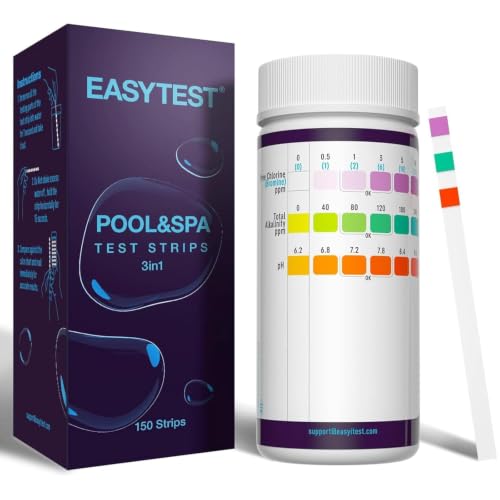
This large pack covers free chlorine or bromine, pH and total alkalinity: the three routine readings most owners check frequently. It suits a busy inflatable or acrylic spa where low cost encourages regular testing rather than rationing strips.
The product title calls it “3 in 1” while listing chlorine and bromine as alternatives, not two independent sanitizer measurements. It does not replace a hardness test or a more precise confirmation when colours sit between chart blocks.
- Best for: Free chlorine/bromine, pH and alkalinity.
- Main limitation: results still depend on correct technique and fresh supplies.
2. Clearwater 4-in-1 150 Pack — Best Overall Strips

Clearwater is the sensible everyday choice for owners using common chlorine or bromine routines. The 150-strip tub provides enough tests for regular use, and the colour chart keeps the workflow quick before and after heavy bathing.
Like all strips, colour matching depends on lighting, timing and storage. Read at the stated interval and keep the lid closed; steam and damp fingers can spoil unused pads.
- Best for: Routine domestic hot-tub checks.
- Main limitation: results still depend on correct technique and fresh supplies.
3. LaMotte 4-Way Insta-Test Plus — Best Premium Strips

LaMotte adds total hardness alongside sanitizer, pH and alkalinity, making it more useful when scale or corrosive water is a concern. The selected bundle contains two 50-strip tubs, so one can remain sealed while the other is in use.
Hardness changes less rapidly than sanitizer, so the extra pad is not needed at every daily check. The higher cost only makes sense when the broader reading prevents a separate test.
- Best for: Adds total hardness.
- Main limitation: results still depend on correct technique and fresh supplies.
4. AquaChek Spa 6-Way — Best Multi-Parameter Strips

AquaChek is the broadest strip option here, covering chlorine or bromine, pH, total alkalinity and hardness within one routine. It is useful when filling from a different water source or tracking several balance factors after a water change.
More pads mean more colours to interpret and do not guarantee laboratory precision. Confirm an unexpected result before making a large chemical correction.
- Best for: Broad spa-water screening.
- Main limitation: results still depend on correct technique and fresh supplies.
5. Lovibond Chlorine and pH Tester — Best Tablet Comparator

The Lovibond kit uses DPD and phenol-red tablets to compare free chlorine and pH against fixed colour standards. It is a useful second method when a strip result looks doubtful or sanitizer control matters after heavy use.
It covers only free chlorine and pH, so bromine users and full water-balance checks need other reagents. Rinse the cells with sample water, use the correct tablet and never handle reagents with wet fingers.
- Best for: Free chlorine and pH confirmation.
- Main limitation: results still depend on correct technique and fresh supplies.
6. PoolLab 2.0 Photometer — Best Premium Digital Kit

The PoolLab 2.0 uses three cuvettes and optical readings for multiple parameters, reducing the guesswork of matching subtle colours by eye. It suits owners managing more than one spa or anyone willing to follow a repeatable reagent-based process.
The exact listing is currently scarce, and ownership means buying the correct reagents, cleaning cells and following zeroing and timing instructions. A photometer is not maintenance-free and does not compensate for poor sampling.
- Best for: Detailed multi-parameter testing.
- Main limitation: results still depend on correct technique and fresh supplies.
Strips vs Comparators vs Photometers
Test Strips
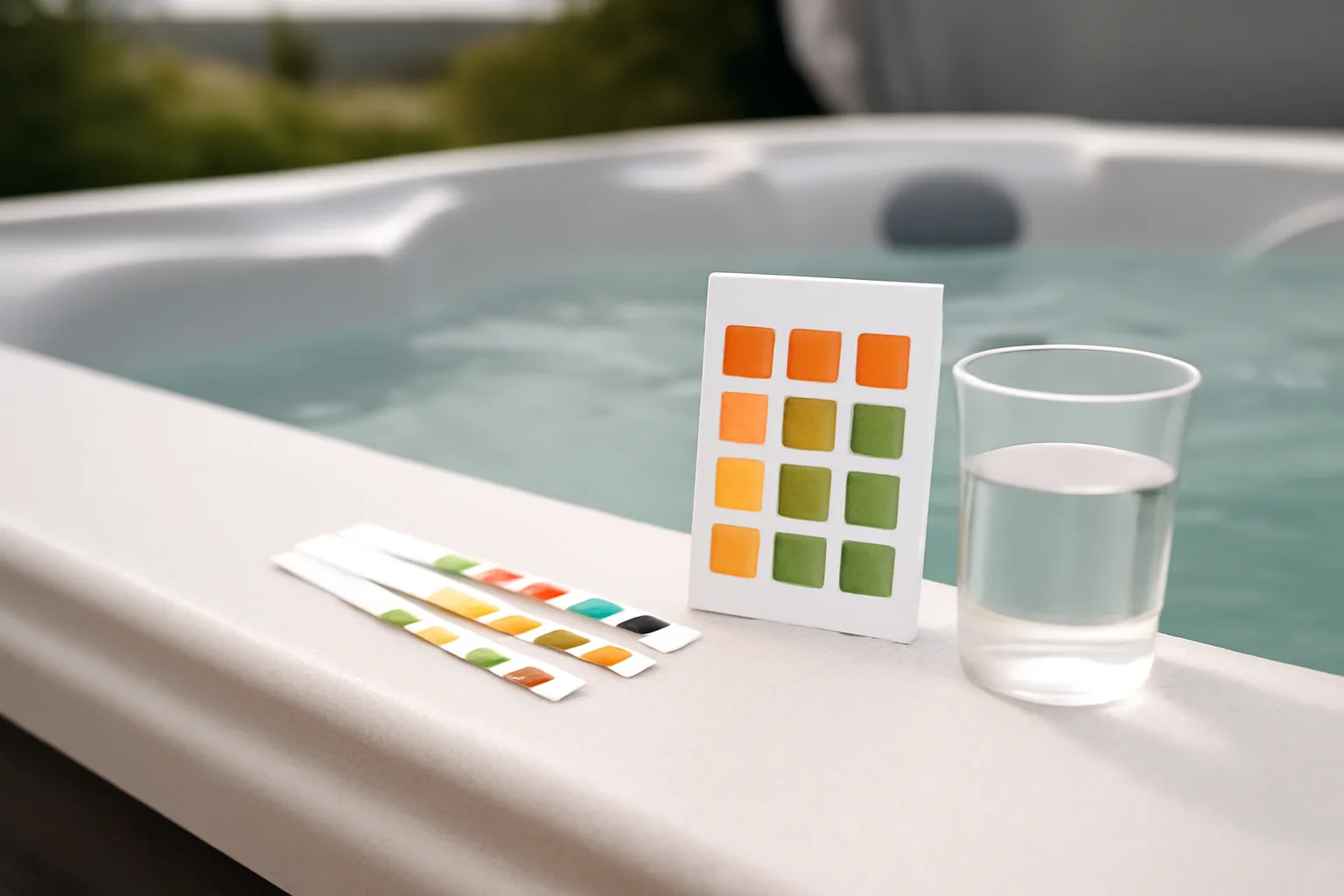
Strips are fastest and cheapest for routine checks. Their weakness is resolution: lighting, wet charts and reading too early or late can change the apparent result. Use the same method each time and look for trends rather than pretending each colour block is an exact laboratory value.
Tablet Comparators
A comparator dissolves a reagent in a measured sample and matches the resulting colour against fixed standards. It takes longer but can confirm chlorine and pH more clearly. Use tablets made for that exact test; visually similar reagents are not interchangeable.
Photometers
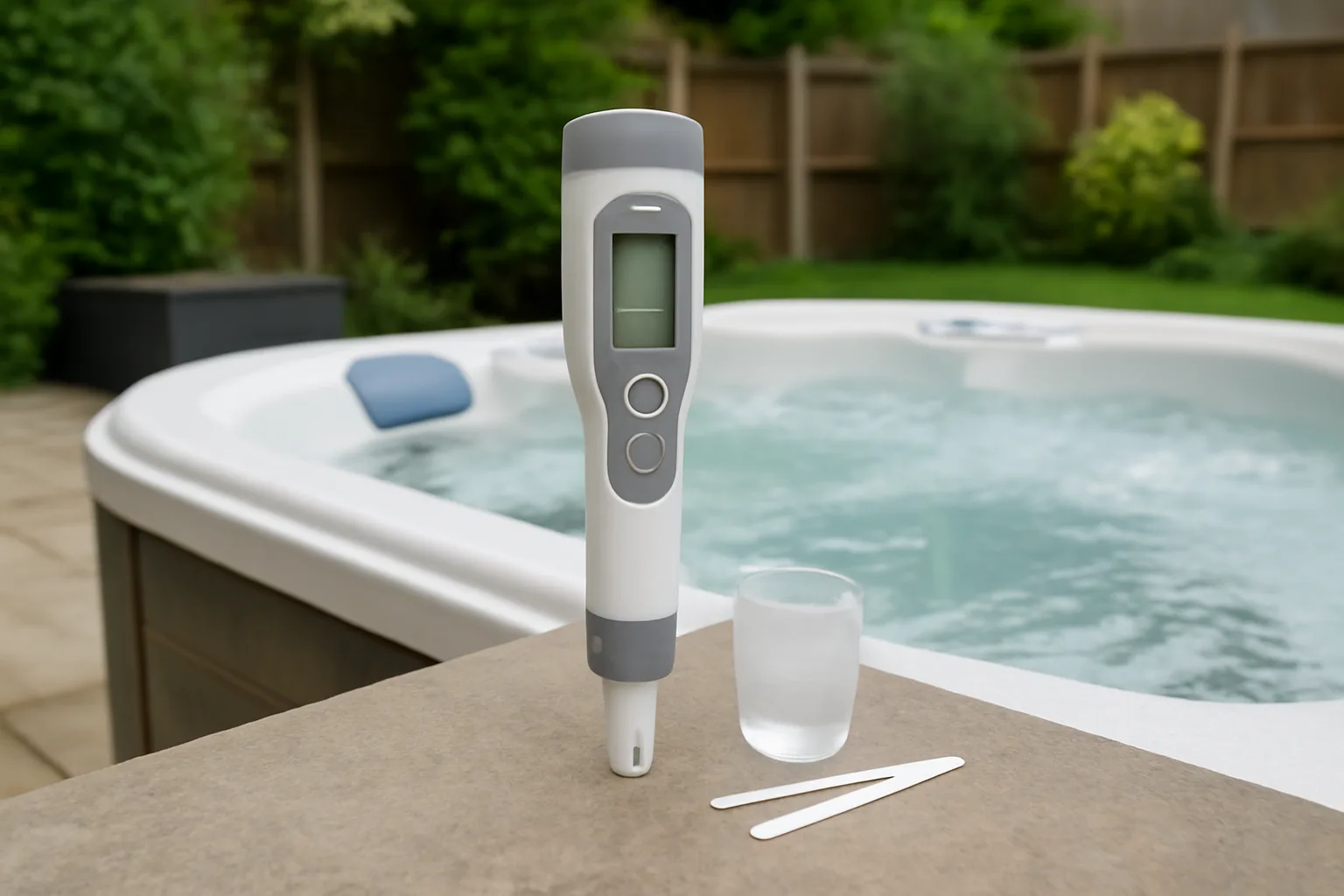
A photometer measures the sample optically. It can improve repeatability, especially for colour-vision difficulties, but only when cuvettes are clean, bubbles are removed, reagents are in date and the device is zeroed correctly.
What Your Test Kit Needs to Measure
- Sanitizer: free chlorine or bromine must match the system you actually use.
- pH: affects comfort, sanitizer performance and the tendency towards scale or corrosion.
- Total alkalinity: helps explain why pH is stable or keeps drifting.
- Calcium hardness: changes more slowly but matters for scaling and water balance.
- Other parameters: cyanuric acid is primarily relevant where stabilised chlorine is used; do not assume every pool parameter matters equally in a covered hot tub.
Follow the sanitizer and balance ranges stated by your hot-tub and chemical manufacturers. The Health and Safety Executive’s spa-pool guidance is aimed at commercial systems, but it usefully explains why disinfection, pH control, circulation and verification work together rather than as isolated numbers.
How to Test Hot Tub Water Properly
- Circulate first: avoid sampling stagnant water immediately after the cover comes off.
- Sample away from jets: use water representative of the tub rather than a chemical dosing point.
- Follow the timing exactly: dipping longer or reading late changes strip colours.
- Use daylight or neutral light: coloured bathroom lighting makes comparison unreliable.
- Record unusual results: confirm them with a second strip or another method before a large correction.
- Retest after adjustment: allow chemicals to circulate for the period stated on their labels.
Never mix spa chemicals together or add water to concentrated chemicals. Store them separately, dry, ventilated and out of reach of children. The label on the treatment product—not a generic online calculator—is the authority for dosing and safe waiting periods.
Common Testing Mistakes
- Using the wrong sanitizer scale: chlorine and bromine targets are not the same.
- Touching test pads: moisture and chemicals on fingers contaminate them.
- Testing immediately after dosing: concentrated water near a jet can mislead.
- Chasing every small colour difference: repeated chemical additions can destabilise the water.
- Keeping strips in the spa cabinet: heat and humidity shorten useful life.
- Trusting a digital number blindly: dirty cells, expired reagents and poor zeroing still create errors.
Final Verdict
Choose the Clearwater 4-in-1 150-pack for routine home use. EASYTEST offers strong bulk value, while LaMotte and AquaChek make sense when hardness or broader screening is useful. Add the Lovibond comparator when you want a second method for chlorine and pH.
The PoolLab 2.0 is the premium choice for owners prepared to maintain a reagent-based testing routine. It is unnecessary for most single hot tubs, where frequent careful strip testing and measured chemical changes beat an expensive device used badly.
Frequently Asked Questions
How often should hot tub water be tested?
Test frequently enough to catch sanitizer and pH changes, especially before use, after heavy bathing and after adding chemicals. Follow the hot-tub and treatment-product instructions.
Are test strips accurate enough?
They are suitable for routine screening when stored and read correctly. Confirm an unexpected or borderline result before making a large adjustment.
Can pool test strips be used in a hot tub?
Only when their parameters and ranges match the sanitizer system and spa guidance. A pool strip may include irrelevant tests or omit hardness.
Is a digital hot tub tester better?
A photometer can reduce subjective colour matching, but it still needs clean cells, correct reagents, calibration or zeroing and careful timing.
Should I test chlorine or bromine?
Test the sanitizer actually used in the tub. Do not read a chlorine value as if it were a bromine target.
Why do two test strips give different results?
Differences can come from storage, sampling location, dip time, reading time, lighting or a result sitting between colour blocks.