Hot tub biofilm removal is not solved by throwing in another scoop of chlorine and hoping the water clears. If there is slime in the pipework, brown flakes after the jets run, a greasy waterline or sanitiser that keeps vanishing overnight, you need to purge the plumbing, drain the tub, clean the filters and restart the water properly.
In This Article
- What Hot Tub Biofilm Looks Like
- Why Biofilm Survives Normal Sanitiser
- The Hot Tub Biofilm Removal Process
- Filters, Jets and Hidden Areas to Clean
- Resetting Water Chemistry After a Purge
- What to Buy in the UK
- How to Stop Biofilm Coming Back
- Frequently Asked Questions
What Hot Tub Biofilm Looks Like
Biofilm is a sticky layer of organic build-up that lives on wet surfaces. In a hot tub, the annoying part is not the shell you can see. It is the pipework, jets, filter pleats and damp corners that stay warm, dark and wet between uses.
The usual clues are easy to mistake for ordinary water problems:
- White, grey or brown flakes: they appear after the pumps run, often after shocking or refilling.
- Slippery shell or waterline: the acrylic feels greasy even after you have wiped it.
- Musty smell: not just a strong chlorine smell, but a stale wet-plastic smell from the plumbing.
- Sanitiser drops fast: chlorine or bromine reads fine after dosing, then falls to almost nothing by the next morning.
- Cloudiness that returns: the water improves after treatment, then looks tired again once people use the tub.
If the water is only cloudy after heavy use, start with our cloudy hot tub water guide. If the issue is foam on the surface, the foamy hot tub water guide is the better first stop. Biofilm is different because the problem keeps coming back from inside the system.
The white-flake trap
White flakes are not always biofilm. They can also be calcium scale, especially in hard-water areas. Scale tends to feel gritty between your fingers. Biofilm tends to smear, float in stringy pieces or feel slimy.
That difference matters. Scale is a water-balance and descaling problem. Biofilm needs a plumbing purge. If you only lower pH or add clarifier to a biofilm issue, you may make the water look better for a day while leaving the pipework dirty.
When to treat it as urgent
Treat suspected biofilm as urgent if the tub has been left warm with low sanitiser, bought second-hand, stored wet, used by lots of people, or run for months without a pipe purge. A brand-new tub can still arrive with manufacturing residue in the plumbing, so I would purge a new spa before the first proper soak if the dealer has not already done it.
The HSE guidance on spa-pool systems is written for commercial operators, but the principle applies at home too: warm aerated water needs proper control because it can support microbial growth if neglected. Domestic hot tubs are simpler, but the water is still warm, recirculated and shared.
Why Biofilm Survives Normal Sanitiser
Normal chlorine or bromine works in the water. Biofilm is a surface problem. Once a sticky layer forms inside plumbing, it can protect dirt and microbes from the sanitiser moving past it.
That is why a test strip can show you dosed the water correctly, while the tub still smells stale after the jets run. The sanitiser is being consumed by the organic load. You keep feeding the water more chemicals, the reading keeps dropping, and the hidden layer stays put.
Pipework gives it shelter
Hot tub plumbing is not one neat hose. There are bends, air lines, manifolds, jet backs and dead spots where water movement is weaker. If the tub is used at 37-40°C, loaded with body oils and then left with low sanitiser, those sheltered areas are ideal for build-up.
Inflatable hot tubs can get it too. They have less complex pipework than acrylic spas, but the liner folds, pump housing, filter area and warm stagnant water can still hold grime. The fix is usually simpler, but you still need to clean beyond the visible water.
More shock is not the full answer
Shocking has a place. I use it after a purge and refill, and it is useful after heavy use. But shock alone is not a pipe cleaner. It may loosen flakes, which can make the water look worse, then you still have to remove the material it has disturbed.
If you have already shocked twice and the flakes keep appearing, stop repeating the same fix. You need a purge product, a drain, physical cleaning and clean filters.
The Hot Tub Biofilm Removal Process
The cleanest way to remove biofilm is to purge before you drain. That sounds backwards if the water looks rough, but the purge needs water in the system so it can circulate through the pipework and push the muck out.
Set aside half a day. You do not need to stand over it every minute, but do not start at 9pm unless you enjoy draining a spa in the dark. For most home tubs, expect to spend about £15-£35 on purge cleaner, £8-£20 on filter cleaner and perhaps £20-£60 on fresh filters if yours are tired.
Step-by-step purge
- Remove pillows, floating dispensers and accessories. Clean them separately with warm water and a mild spa-safe cleaner. Do not leave headrests sitting in purge water.
- Take out the filters. Either soak them in filter cleaner while the purge runs, or replace them if the pleats are grey, crushed or oily.
- Top the water up above the jets. The pump must not pull air while the purge product is circulating.
- Add the pipe-cleaning product at the label dose. Ahh-some, AquaFinesse Spa Clean and similar purge cleaners are stronger than normal surface cleaners, so measure properly.
- Run all pumps and air controls. Open diverter valves, water features and jets so the treated water reaches as much plumbing as possible.
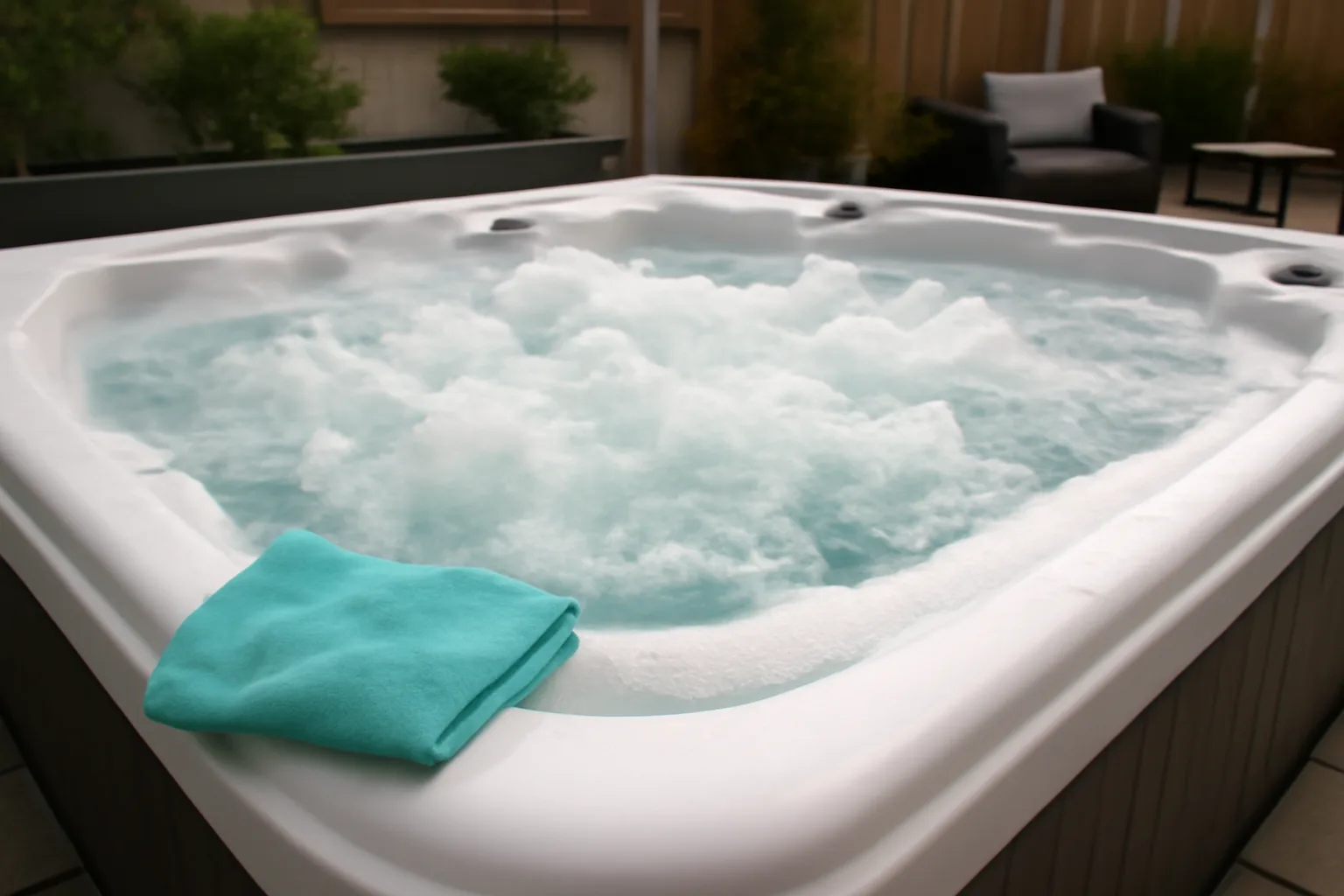
- Wipe the scum as it appears. A microfibre cloth or kitchen roll works better than letting sticky brown foam dry on the shell.
- Drain fully. Use the drain valve or a submersible pump. A basic dirty-water pump from Screwfix or Amazon UK costs about £45-£90 and saves a lot of waiting on larger spas.
- Rinse and wipe the shell. Pay attention to the waterline, jet faces, suction covers and filter housing.
- Refill through the filter area if your manufacturer recommends it. This helps reduce air locks on many acrylic spas.
The first purge can look horrible. Brown foam, black specks and stringy residue are unpleasant but useful: they prove the cleaner is pulling material out of the plumbing rather than leaving it behind.
If the purge brings out a lot of muck
If the water turns into a swamp after the first purge, repeat it before refilling for use. That is annoying, but cheaper than filling 1,000-1,500 litres, dosing it, discovering more flakes and draining again two days later.
A second purge is most likely on:
- Second-hand tubs: you do not know the previous owner’s water-care habits.
- Holiday-let or party tubs: high bather load creates more oils, sweat, make-up and detergent residue.
- Tubs left idle: warm stagnant water is the enemy.
- Spas with old filters: the filters can feed grime back into clean water.
If you are also planning a full seasonal shutdown, pair this with our hot tub winterising guide so you do not leave dirty water sitting in pipework over winter.
Filters, Jets and Hidden Areas to Clean
The pipe purge does the job you cannot do by hand. After that, you need to clean the parts you can reach. This is where people rush, then wonder why the fresh fill goes dull within a week.
Filters
Filters are the main repeat offender. They trap body oils, hair products, detergent residue from swimming costumes and the fine debris released during a purge. Rinsing them under a garden tap is useful weekly maintenance, but it is not the same as a proper clean.
For biofilm removal, I would do one of three things:
- Good filters under six months old: soak overnight in a cartridge cleaner, rinse between every pleat, then let them dry before reuse.
- Oily or grey filters: replace them. A pair of common hot tub cartridges is often about £30-£70 from Hot Tub Barn, Happy Hot Tubs, Amazon UK or the tub manufacturer.
- Inflatable spa filters: replace more readily. Lay-Z-Spa and similar cartridges are usually cheap enough, often about £10-£25 for multipacks.
Do not put hot tub filters through a dishwasher. The heat can damage the filter fabric and glue, and detergent residue is the last thing you want back in spa water.
Jets, pillows and covers
Biofilm likes edges. Remove adjustable jet faces if your model allows it without tools and clean behind them with a soft brush. Wipe around suction covers, waterfall slots, cup holders and the filter compartment. If there are grey rings around jet nozzles, do not assume the purge has handled them.
Pillows need special attention because they sit above warm damp water. Take them off, clean behind them and let them dry fully. If the vinyl is cracked or sticky, replacement pillows can cost anywhere from £25 to £90 each depending on brand, which is irritating but still better than keeping a mouldy headrest.
Hot tub covers can also hold smells. Wipe the underside with a mild cleaner, rinse it and let it air. If the cover is waterlogged, heavy and musty, you may be fighting a losing battle. Replacement covers commonly sit around £250-£500 in the UK, so it is worth cleaning the old one first, but not worth pretending a saturated cover is fine.
Resetting Water Chemistry After a Purge
Once the tub is refilled, treat it as a new start. Do not assume the old dosing pattern will work. Fresh UK tap water varies by region, and a purge can leave the shell clean but the water unbalanced.
Balance before you relax
Start with total alkalinity, then pH, then sanitiser. If you chase chlorine or bromine before pH and alkalinity are in range, the readings can swing around and make the first week harder than it needs to be.
A sensible fresh-fill sequence is:
- Test the tap water. Use strips or a liquid kit before adding anything.
- Adjust alkalinity first. Many tubs behave better around the manufacturer’s stated range, often roughly 80-120 ppm.
- Adjust pH. Aim for the range on your chemical label, commonly around 7.2-7.6.
- Add sanitiser. Use chlorine granules, bromine tablets or your chosen system at the recommended start-up level.
- Run the pumps and retest. Give the water time to mix before trusting the reading.
- Shock if needed. After a biofilm purge, I prefer a clean start with a non-chlorine shock or chlorine shock depending on the system.
If pH is your recurring headache, the separate guide to lowering pH in a hot tub covers that in more depth. Here, the key point is order: purge first, then refill, then balance.
Chlorine or bromine after biofilm?
Either can work. Chlorine is cheaper and quick to correct. Bromine is steadier in warm water and often suits people who dislike the sharper chlorine smell. The bigger mistake is switching sanitiser systems during a dirty-water episode and then blaming the new system for old biofilm.
For most owners, I would restart with the system you already understand, get the water stable for two weeks, then decide whether a change makes sense. Our chlorine vs bromine hot tub guide compares the two without turning this clean-up job into a sanitiser debate.
What to Buy in the UK
You do not need a cupboard full of miracle bottles. You need a proper pipe purge, a filter-cleaning plan, reliable testing and enough basic chemicals to restart the water.
Pipe purge products
Ahh-some Hot Tub/Jetted Bath Plumbing & Jet Cleaner is the one I would buy first for a stubborn biofilm case. The manufacturer’s product page explains that it is designed for jetted plumbing systems, which is exactly the job here. UK pricing varies because it is often imported, but expect roughly £25-£45 for a small tub or gel depending on retailer and size.
AquaFinesse Spa Clean is another common option, often around £15-£25 per sachet or treatment. Lo-Chlor Spa Pipe Flush and similar pipe cleaners usually sit around £10-£20. The cheaper ones can be fine for routine maintenance, but for a tub with repeated flakes I would spend the extra on the stronger purge product before wasting money on another failed refill.
Filters, tests and cleaning kit
For a complete reset, budget like this:
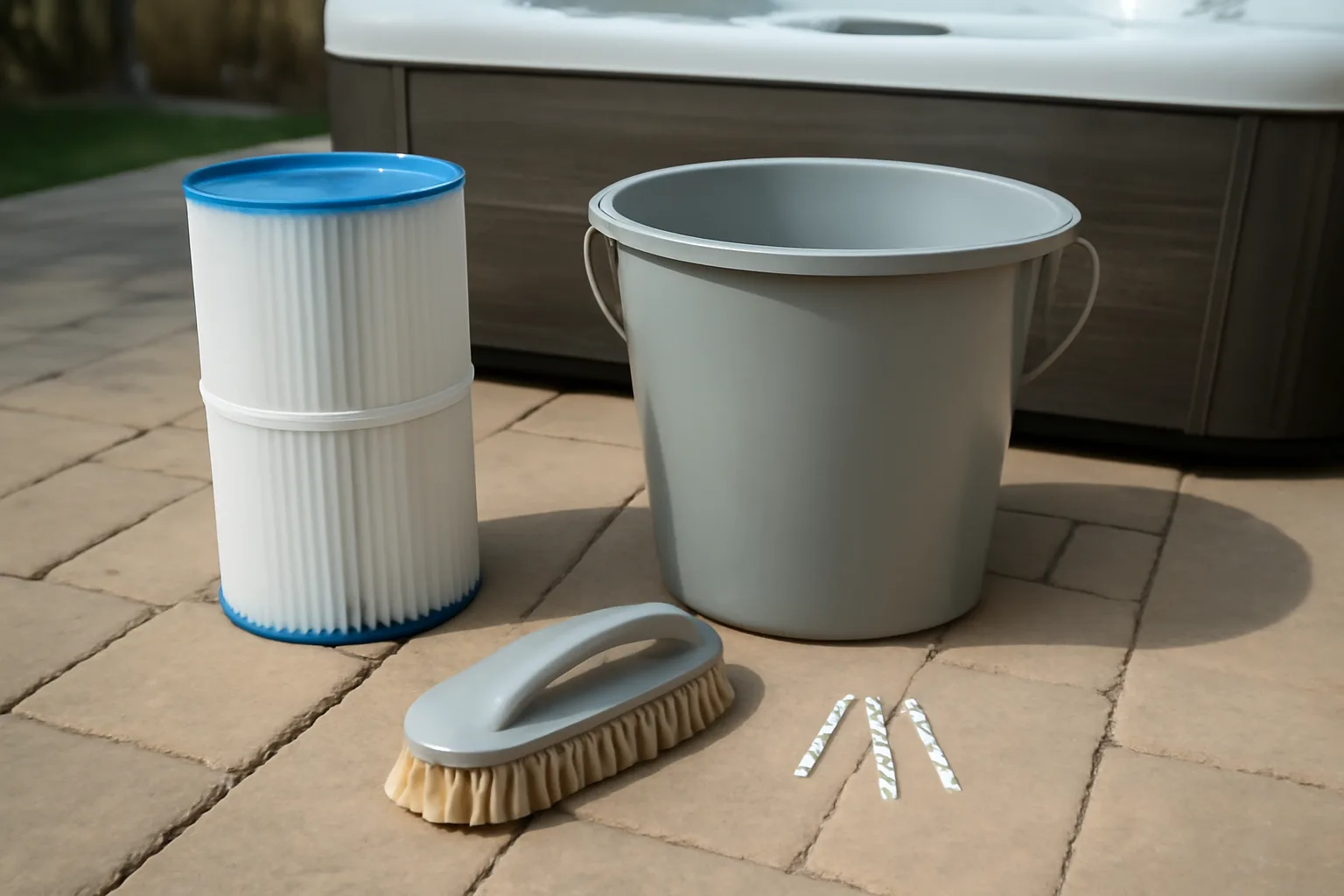
- Pipe purge: about £15-£45 from Amazon UK, Hot Tub Barn, Happy Hot Tubs or specialist spa shops.
- Filter cleaner: about £8-£20 for spray or soak cleaner.
- Replacement filters: about £10-£25 for inflatable-spa multipacks, £30-£70 for many acrylic-spa cartridge sets.
- Test strips: about £8-£15 for a tub of 50, or £25-£60 for a better liquid kit.
- Microfibre cloths and soft brush: about £5-£15 from B&Q, Screwfix, supermarkets or Amazon UK.
- Submersible pump: about £45-£90 if you want faster draining than the built-in valve.
If you are buying chemicals from scratch, a starter kit may make more sense than individual bottles. Our hot tub chemicals starter kit guide covers the usual chlorine, bromine, pH and alkalinity bundles.
What I would not buy
I would not buy clarifier as the main fix for suspected biofilm. Clarifier can help gather fine particles after the real work is done, but it will not clean hidden pipework. I would also avoid household bleach, washing-up liquid, bathroom limescale sprays and scented cleaners. They can damage surfaces, foam badly or leave residues that fight your sanitiser.
Do not mix chemical brands blindly either. Stick to one water-care system where possible and read the labels. A £12 bottle used correctly is better than a £60 pile of half-understood chemicals fighting each other.
How to Stop Biofilm Coming Back
Biofilm usually comes back because the tub gets warm, under-sanitised and loaded with organic residue. Prevention is not glamorous, but it is less work than another drain-down.
The routine that works
Keep the routine boring:
- Test before use: especially before children, guests or a long soak.
- Shower first when practical: sun cream, moisturiser and fake tan are brutal on spa water.
- Keep swimwear detergent low: rinse costumes without fabric conditioner.
- Clean filters weekly: rinse between pleats and rotate a dry spare set if you can.
- Shock after heavy use: do it before the water has a chance to sit dirty overnight.
- Purge on a schedule: every 3-4 months for many home tubs, sooner for heavy-use spas.
If your tub is mostly used at weekends, the danger period is Monday to Thursday. The water looks quiet, but the residue from Saturday night is still there. Test and correct after use, not three days later.
Watch the early warnings
The early warning sign I trust most is sanitiser demand. If the tub suddenly needs much more chlorine or bromine to hold the same reading, something is consuming it. That might be heavy use, a dirty filter, poor pH control or the start of biofilm.
Do not wait until flakes appear. Clean the filters, check pH, shock after use and plan a purge at the next water change. If the tub has already had a messy biofilm episode, I would do the next purge early rather than trying to stretch the water for another month.
Bottom line
The fix is not complicated, but it is physical. Purge the plumbing, remove the released muck, drain fully, clean the filters and hidden areas, then restart the water with proper balance. If you only keep adding sanitiser to dirty pipework, you are paying for chemicals to fight yesterday’s grime.
For most UK owners, the sensible kit is a decent purge cleaner, clean filters, a reliable test kit and enough discipline to shock after heavy use. That costs less than one wasted refill and saves the misery of lifting brown flakes out of water you were hoping to sit in.
Frequently Asked Questions
What is the fastest way to remove hot tub biofilm? Use a proper pipe purge product while the tub is full, run every pump and jet, wipe away released residue, drain fully, clean the filters and shell, then refill and rebalance the water.
Can chlorine kill hot tub biofilm? Chlorine helps control the water, but established biofilm can cling inside plumbing where normal dosing does not remove it properly. You still need a purge cleaner and a drain-down.
Do I need to replace my hot tub filters after biofilm? Replace them if they are oily, grey, damaged, old or still smell after soaking. If they are fairly new, soak them in cartridge cleaner, rinse between the pleats and let them dry before reuse.
Why do flakes appear after shocking my hot tub? Shock can loosen biofilm or scale, so flakes may appear when pumps run. If they smear or feel slimy, treat the tub as a biofilm problem and purge the pipework before refilling.
How often should I purge a hot tub to prevent biofilm? Many home hot tubs benefit from a plumbing purge every 3-4 months, usually at water-change time. Heavy-use tubs, second-hand spas and tubs with repeated water problems may need it sooner.
Can an inflatable hot tub get biofilm? Yes. Inflatable tubs have simpler plumbing, but warm water, filters, pump housings and liner folds can still collect organic build-up if sanitiser drops or cleaning is missed.