A cold towel is the fastest way to ruin a good hot tub session. The best hot tub towel warmer uk setup is usually a simple bucket-style warmer indoors or under cover, paired with proper changing robes outside, rather than a permanently exposed electric heater beside the tub.
In This Article
- Quick Verdict: What To Buy First
- Best Hot Tub Towel Warmers And Robes UK
- How To Choose A Hot Tub Towel Warmer UK
- Where To Put It Safely Outside
- Robes, Towels And Storage That Actually Work
- Running Costs, Cleaning And Winter Use
- What I Would Buy For Different Setups
- Frequently Asked Questions
Quick Verdict: What To Buy First
If I were setting up a UK garden hot tub from scratch, I would buy a waterproof changing robe before buying a powered towel warmer. A good robe works every time, needs no socket, and matters more on the walk back to the house than a towel that was warm for the first 30 seconds.
Best overall, I would choose a mid-size bucket towel warmer kept in a dry place plus a proper waterproof changing robe. That pairing gives you the warm-towel treat without pretending a normal indoor appliance belongs on wet decking.
For most homes, the sweet spot is:
- One proper changing robe per regular user: budget robes start around £35-£60, decent Decathlon-style robes sit around £80-£110, and premium Dryrobe or Red Equipment robes are usually £150-£180.
- Two thick bath sheets per person: expect £12-£25 each from Dunelm, John Lewis, M&S or Next.
- A bucket towel warmer kept indoors or in a dry outbuilding: most UK options on Amazon UK and marketplace retailers sit around £60-£130.
- A waterproof deck box or bench storage: Keter-style boxes from B&Q, Argos or Amazon UK are commonly £45-£120 depending on size.
That last point matters. A towel warmer is not an outdoor appliance unless the manufacturer explicitly says it is suitable for outdoor use. A normal bathroom towel bucket plugged into an extension lead on wet decking is not clever; it is just making the electrician wince from three streets away.
The best hot tub towel warmer uk choice is therefore less about finding the fanciest gadget and more about building a warm, dry handover: robe on hook, towel close by, warmer protected from rain and splashes, and a clear route back indoors. If you are still planning the whole layout, pair this with our guide to choosing the right hot tub size, because a cramped patio leaves nowhere sensible for robes and storage.
Best Hot Tub Towel Warmers And Robes UK
This is not a category with one perfect product. Towel warmers, heated airers, robes and storage boxes do different jobs, so the right answer depends on where your hot tub sits and how often you use it. It sits alongside comfort accessories such as hot tub drink holders and trays, but towels and robes are more about getting out comfortably than making the soak feel fancier.
Best Overall: Bucket-Style Towel Warmer
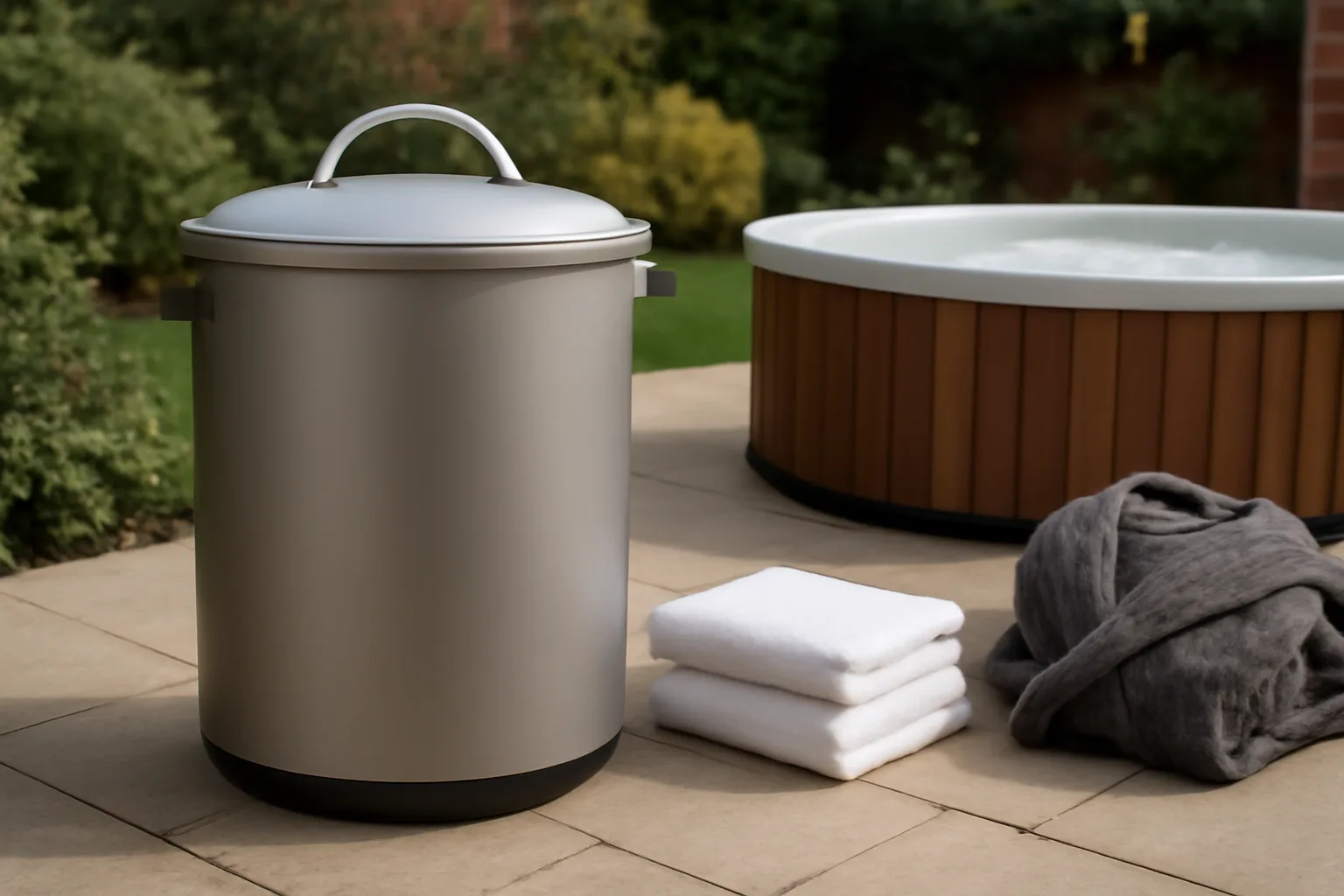
For pure comfort, a bucket-style towel warmer is the one I would choose. These look like a lidded bin, take one or two bath towels, and usually run on a 20-60 minute timer. The better ones heat more evenly than a rail because the towel sits inside a warm chamber rather than touching a few hot bars.
Typical UK price: about £60-£130 from Amazon UK, Wayfair or bathroom accessory retailers. The cheaper £50-£70 models are fine for one towel, but they often feel light and plastic. Around £90-£120 usually buys a larger 18-20 litre bucket with auto shut-off, timer controls and enough room for a bath sheet or light robe.
Pros and cons:
- Best for: couples, winter soaking, and anyone who uses the hot tub after dark.
- Watch out for: capacity claims. “Two oversized towels” often means two neatly folded towels, not two thick bath sheets and a robe.
- Where I would put it: in a utility room, boot room, garden room or dry covered area, then carry the warm towel out just before getting in.
The mistake is treating it like a hot tub accessory that lives outside. Unless the listing clearly says outdoor-rated, assume it is an indoor electrical product.
Best Budget Option: Thick Towels Plus A Dry Storage Box
If you do not want another electric gadget, spend the money on better towels and storage. Two thick cotton bath sheets per person will do more for comfort than one heated towel that gets dropped on damp paving.
Expect to pay about £12-£18 per towel at Dunelm or M&S, £18-£30 at John Lewis, and less if you catch supermarket homeware offers. Look for 500-650gsm towels: below that they dry fast but feel thin; above that they feel plush but can stay damp for ages in winter.
Pair them with a waterproof storage box. A small Keter or similar garden storage box is often £45-£80 at B&Q, Argos or Amazon UK. It keeps towels off the floor and gives you somewhere sensible to dump robes after use.
This is the boring answer, but it works. In a small UK garden, boring often beats clever.
Best Premium Robe: Dryrobe Or Red Equipment
Premium changing robes make sense if you use the hot tub through winter, have a long walk back indoors, or spend weekends around swimming, paddleboarding or kids’ sport as well. They are bulky, but they earn their space.
Dryrobe Advance long sleeve robes are usually around £165-£180 in the UK, while Red Equipment Pro Change Robe EVO models are commonly about £159.95 direct from Red. Both use a weather-resistant outer shell and warm lining, and both are much better after a January soak than a dressing gown pretending to be useful.
The real advantage is wind protection. A towel dries you; a robe stops you shivering while you find slippers, lock the cover clips and wonder why you live somewhere with sideways rain.
Best Value Robe: Decathlon-Style Changing Robe
For most families, I would start with Decathlon. Its adult waterproof changing robes are often around £80-£110 depending on the model and retailer, with Argos sometimes listing Decathlon 950 surf ponchos at about £106. Decathlon’s own changing robe range is built around warmth, weather resistance and changing room privacy, which suits hot tub use nicely.
You lose some premium feel compared with Dryrobe or Red, but the cost difference matters when you need two adults’ robes and maybe kids’ sizes too. A £100 robe that gets used twice a week is better value than a £175 robe that everyone is too precious about hanging by the back door.
Best For Drying Between Uses: Heated Airer Or Towel Rail
A heated airer is not a towel warmer in the luxury-spa sense, but it is very useful if your hot tub towels are always damp the next morning. Lakeland Dry:Soon-style heated airers are typically £80-£200 depending on size, with larger three-tier models holding a proper family load. Dunelm and Beldray-style heated airers often sit around £55-£120.
Use one indoors after the soak, not next to the tub. It helps dry towels and robes before they start smelling musty, especially in winter when radiators are already full of normal laundry.
How To Choose A Hot Tub Towel Warmer UK
Choosing a hot tub towel warmer uk setup comes down to capacity, heat time, safety and where the towel actually waits while you are in the water.
Capacity Matters More Than Wattage
Most buyers look at power first. I would look at physical capacity. A 20 litre bucket warmer that takes one bath sheet properly is more useful than a smaller high-wattage unit that forces you to fold towels into a dense lump.
For two adults, aim for:
- Minimum capacity: one large bath sheet or two smaller towels.
- Better capacity: one bath sheet plus one lightweight robe.
- Family setup: two warm towels ready first, with dry robes on hooks rather than trying to heat everything.
If a product page only shows hand towels, be suspicious. Hot tub use needs big towels, not flannels.
Timer And Auto Shut-Off Are Non-Negotiable
A towel warmer should have an auto shut-off. Most bucket models offer 15, 30, 45 or 60 minute timers. That is enough for pre-warming before you get in, and it avoids leaving an appliance running while everyone gets distracted by drinks, chemicals or bedtime.
Based on owner reviews, the units people keep using are the ones with simple controls. One button, clear timer, easy lid. Touch panels and app controls sound smart until your hands are cold and wet.
Heat Feel Is Different From Drying
A bucket warmer makes a towel feel warm; it is not designed to dry a soaked towel from scratch. If you put a damp towel in, you may get a warm damp towel out. That is worse, frankly.
Use this sequence instead:
- Start with a dry towel: warm it before the soak, not after it is wet.
- Use a robe outside: put it on as soon as you step out, then dry properly under cover.
- Dry towels afterwards: use an indoor heated airer, radiator rail or normal airer in a ventilated room.
That setup sounds less glamorous than a giant outdoor heated cabinet, but it is cheaper and less likely to end with damp towels folded into a sad pile.
Running Cost Is Usually Small
Most domestic towel warmers are a short-use appliance. If a unit draws roughly 400-500W and runs for 30 minutes, you are using around 0.2-0.25kWh. At a rough UK electricity rate of 25-30p per kWh, that is about 5p-8p per warm-up.
The bigger cost is buying something you stop using because it is awkward. If the warmer lives upstairs in a bathroom and the hot tub is at the end of the garden, it will become cupboard clutter by October.
Where To Put It Safely Outside
The safest place for most towel warmers is not outside. It is inside, close to the exit route, with the warm towel carried out just before use.
The HSE spa-pool guidance is mainly about water hygiene and commercial/domestic-type spa systems used in business settings, but it is a useful reminder that hot tubs combine warm water, electrical kit and wet surfaces. Adding another powered appliance near that zone should be done with a bit of caution.
Avoid Extension Leads Around The Tub
Do not run a normal indoor extension lead across wet paving or decking for a towel warmer. Even if it works once, it is a bad habit. Outdoor sockets should be properly installed, weather protected and RCD protected. If you are already reviewing power supply, read the separate guide to hot tub electrical requirements in the UK before adding another appliance to the area.
For a normal home setup, I prefer:
- Indoor socket: warmer in utility room or kitchen, towel carried out when ready.
- Covered garden room: only if the appliance stays dry and the electrics are suitable.
- No socket needed: robe hooks and waterproof towel storage near the tub.
Electric bathroom towel rails are made for bathroom zones and fixed installation, not casual outdoor hot tub use. Heater retailers often refer to IPX4/IP44 ratings for splash-prone bathroom areas, but that does not automatically make a product suitable for a rainy patio.
Keep Warm Towels Dry Until Exit
Warmth disappears quickly when a towel sits in cold damp air. If you warm towels indoors, put them in a lidded basket, insulated bag or dry box near the door. If your tub is under a pergola, hooks with a small roof overhang can work well.
Do not drape towels over the hot tub cover while bathing. Covers collect condensation and chemical residue, and a towel sliding into the water is annoying enough to ruin the mood.
Think About The Exit Route
In winter, the cold bit is not always getting out of the water. It is the 12 steps across paving, the wet feet, and the faff of opening a back door with cold hands. For colder months, this setup works best with the insulation ideas in our hot tub winterising guide, because warm towels cannot compensate for a poorly prepared tub area.
Put robes where you can reach them without standing in wind. Add non-slip mats where people step out. Keep slippers or sliders by the door. None of this is fancy, but it is what makes the setup feel well thought through.
Robes, Towels And Storage That Actually Work
Robes and towels are not afterthoughts. They are the difference between a hot tub you use in November and a hot tub you look at through the window.
Robe Types
There are three realistic robe choices:
- Towelling robe: cheap and absorbent, usually £25-£60, but poor in wind and drizzle.
- Waterproof changing robe: usually £80-£180, warm outside, better for winter and family use.
- Fleece dressing gown: cosy indoors, weak when wet, and not ideal for stepping across a patio.
For a hot tub, waterproof changing robes are the best all-rounder. They do not dry you as well as a towel, so you still want a bath sheet, but they stop the instant chill.
Towel Size And Material
Buy bath sheets, not standard bath towels, if adults use the tub regularly. A bath sheet is usually around 90 x 150cm or larger, while a normal bath towel can feel skimpy once you are wet and cold.
Cotton towels feel best, but thick cotton takes longer to dry. Microfibre towels dry faster and pack smaller, but they lack that hotel-towel comfort. For home hot tub use, I would use cotton bath sheets and accept the drying time.
Storage Near The Tub
A waterproof garden box is worth it if your hot tub is more than a few steps from the back door. Look for enough capacity for towels, robes and spare filters or test strips, but keep chemicals separate and sealed.
Good practical options:
- Small deck box: £45-£80, fine for towels and slippers.
- Bench storage box: £90-£180, useful if you want seating as well.
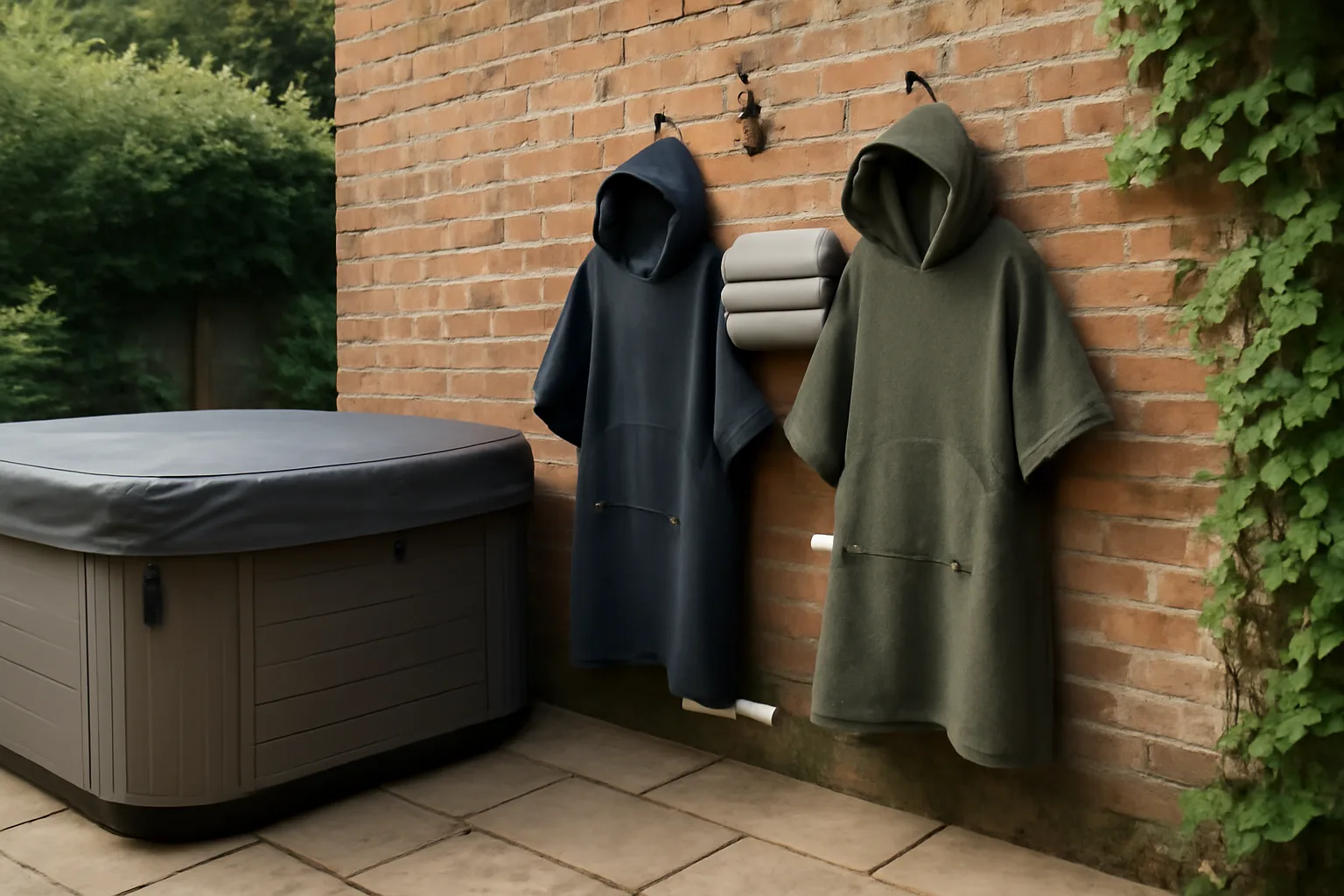
- Wall hooks under cover: £10-£30, best for robes that need airflow.
Do not store damp robes in a sealed box overnight. They will smell. Hang them indoors or under cover until fully dry. If you need a safer step-out point as well as robe storage, the buying guide to hot tub steps and surrounds is worth reading before you buy hooks, mats and boxes separately.
Running Costs, Cleaning And Winter Use
The ongoing cost of a towel warmer is low if you only run it before use. The maintenance problem is moisture.
Electricity Use
A bucket warmer used twice a week for 30 minutes may cost roughly 40p-65p a month at common UK electricity prices. That is not the expensive part of hot tub ownership. Compare that with the tub itself, which can use many kWh depending on insulation, water temperature and weather.
Still, do not leave it running as background heat. Warm the towel, switch it off, use the towel.
Cleaning The Warmer
Only put clean, dry towels into the warmer. If the inside gets damp, leave the lid open after use so it can air. Wipe the interior occasionally with a dry cloth, and follow the manufacturer’s cleaning instructions if there is any fragrance holder or removable insert.
Avoid essential oils unless the product specifically allows them. Oils can mark towels and leave residue inside the warmer.
Winter Routine
Winter is where this setup earns its keep. My preferred routine is:
- Before soaking: put one towel per person in the warmer for 20-30 minutes.
- While soaking: keep robes hanging under cover, not on damp ground.
- After getting out: robe first, towel second, then slippers or sliders.
- Afterwards: hang towels and robes indoors with airflow.
If you use your hot tub in freezing weather, focus on surfaces too. A warm robe will not save you from slipping on icy paving.
What I Would Buy For Different Setups
The best setup is the one you will actually use. Here is how I would spend the money.
For A Couple Using The Tub Weekly
Buy one £80-£120 bucket warmer, two decent bath sheets each, and two mid-range waterproof robes. Total spend: roughly £260-£420 depending on robe choice.
I would not bother with a wall-mounted heated towel rail unless you already have a garden room or changing area where it can be installed properly.
For A Family Hot Tub
Skip the idea of warming every towel at once. It gets expensive and messy. Buy a large storage box, four to six bath sheets, and robes for the people who feel the cold most. Add a heated airer indoors if towels pile up after weekends.
Total spend: roughly £180-£500, with robes driving most of the cost.
For A Holiday Let Or Guest Setup
For rentals, keep it simple and robust. Provide dry hooks, storage, clear towel instructions and enough spare towels. If you provide a powered warmer, it needs clear usage guidance and a sensible safe location.
The HSE HSG282 spa-pool guidance includes advice for commercial-type spa systems and domestic-type hot tubs used in business settings, so holiday-let owners should treat the whole hot tub area as something to manage properly, not just decorate nicely.
My Final Pick
For most UK homes, I would buy a mid-size bucket towel warmer at about £90-£120, two proper waterproof changing robes, and a lidded outdoor storage box. That combination gives you warm towels, wind protection and somewhere dry to keep everything.
If the budget is tight, buy robes first. A robe helps every time you get out. A towel warmer is lovely, but it is the luxury layer.
Frequently Asked Questions
Can you use a towel warmer outside next to a hot tub? Usually no, unless the manufacturer clearly states it is suitable for outdoor use. Most bucket towel warmers are indoor appliances, so keep them dry and away from splashes.
What is the best hot tub towel warmer uk option for most homes? A 18-20 litre bucket-style towel warmer at about £90-£120 is the best comfort buy, but only if you can use it in a dry indoor or covered location.
Are changing robes worth it for hot tubs? Yes, especially in UK winter. A waterproof changing robe stops wind chill on the walk back indoors and is often more useful than a heated towel.
How many towels do you need for a hot tub? Allow two large bath sheets per regular user. One can be ready for the next soak while the other dries properly indoors.
Can a heated airer replace a towel warmer? It can dry towels after use, but it will not give the same instant warm-towel feel. A heated airer is better for drying; a bucket warmer is better for pre-warming.
Where should hot tub robes be stored? Hang them under cover near the tub during use, then dry them indoors afterwards. Avoid leaving damp robes sealed inside a storage box overnight.