Low pH in a hot tub is not a minor number on a test strip. It makes the water acidic, can irritate eyes and skin, weakens sanitiser control, and can start attacking metal parts, seals and heater components if you leave it alone. The fix is usually simple: test properly, check total alkalinity, add pH increaser in small measured doses, circulate, then retest after the water has mixed.
In This Article
- Quick Answer: When to Raise pH
- Test pH and Alkalinity First
- How to Raise pH in a Hot Tub Safely
- How Much pH Plus to Use
- Why pH Keeps Dropping
- Product Costs and What to Buy
- Safety Mistakes to Avoid
- Frequently Asked Questions
Quick Answer: When to Raise pH
Raise pH when your hot tub water tests below 7.2. Most domestic spa chemical brands aim for a working pH range of roughly 7.2 to 7.6, with some commercial guidance allowing a slightly wider upper limit. I would treat 7.2-7.6 as the practical home-owner target because it keeps the water comfortable and gives chlorine or bromine a fair chance of doing its job.
The reading that matters
A single pale test strip is not enough to panic over. Test again with a fresh strip, good light and dry hands. If the second strip still shows 7.0 or lower, deal with it before anyone gets in.
Low pH usually shows up with:
- Sharp-smelling water that feels harsher than normal
- Eye or skin irritation after short dips
- Sanitiser readings that seem unstable
- Metal staining or corrosion risk on heaters, jets and ladders
- Foam or cloudiness when low pH is paired with poor balance elsewhere
The target is not to chase a perfect strip colour. The target is stable, comfortable water that sits in range after the pumps have mixed it. That distinction saves a lot of chemical waste.
Do not raise pH blindly
If the water reads 7.1 once but total alkalinity is already high, throwing in pH Plus can send the whole tub seesawing. If pH is low and alkalinity is also low, pH increaser may only be part of the fix. This is why the next step matters more than the tub-owner folklore of “add a capful and hope”.
For wider water-care context, keep this alongside our hot tub water care schedule and hot tub chemicals for beginners. The scope here is narrower: how to raise pH in a hot tub when the reading is confirmed low.
Test pH and Alkalinity First
pH tells you how acidic or alkaline the water is right now. Total alkalinity tells you how much resistance the water has to pH movement. In normal owner language: pH is the number you are trying to correct; alkalinity is the stabiliser that decides whether the correction holds.
Use a decent test method
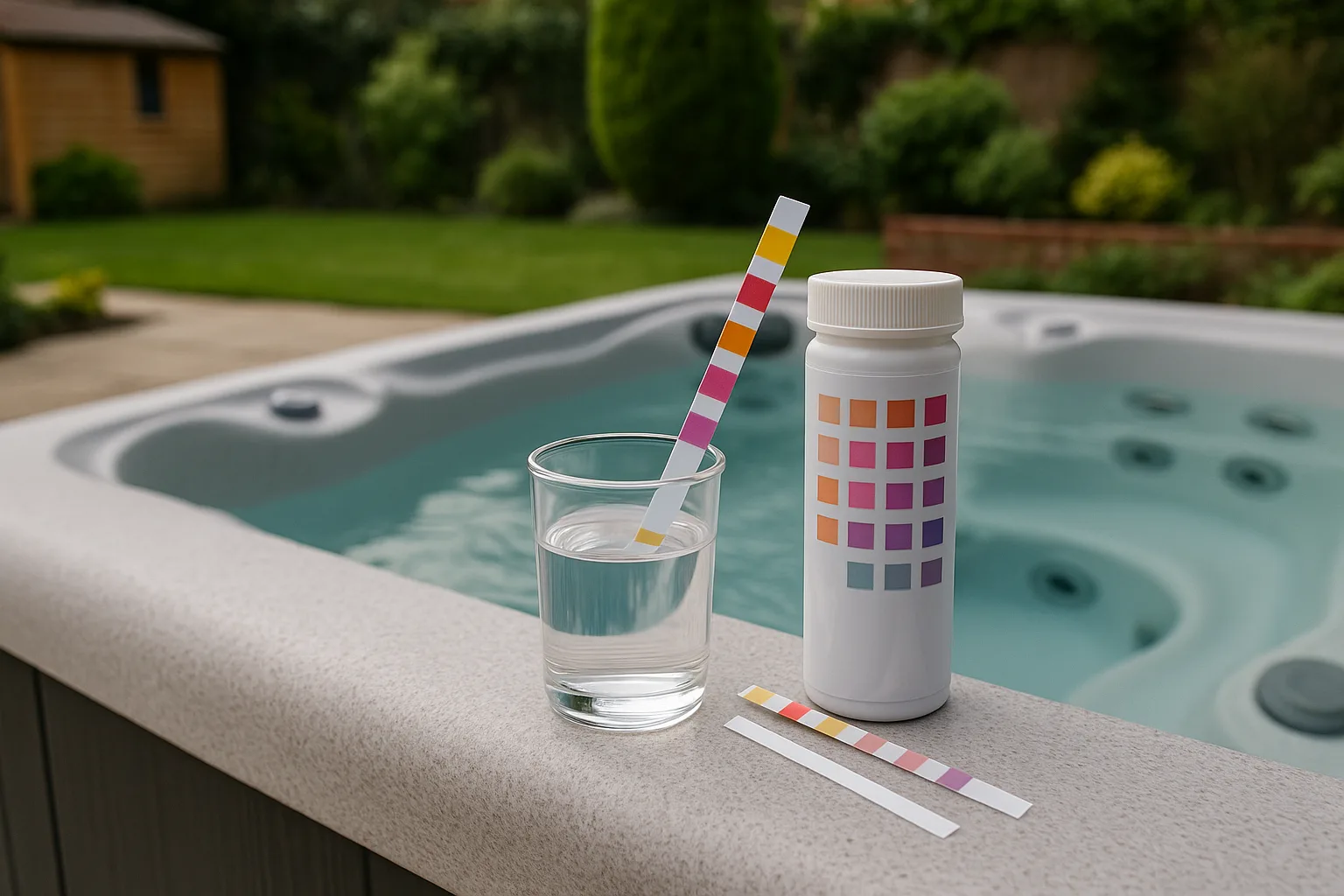
Cheap dip strips are fine for routine ownership, but they need careful handling. Keep the tub running for a few minutes, take the sample away from a jet, dip for the time stated on the tub, and read it immediately. Do not wave a strip around, leave it on the side, then compare colours two minutes later. That is how people over-dose a perfectly fixable tub.
Better options in the UK:
- Basic 3-way or 4-way strips: about £8-£15 for 50 strips from Amazon UK, Lay-Z-Spa, B&Q or garden/leisure retailers
- AquaChek-style spa strips: usually £10-£18, worth it if you want clearer colour blocks
- Digital pH meters: about £12-£25, useful only if you calibrate them and store the probe properly
- Liquid drop kits: around £15-£30, slower but often easier to read than vague strips
For most domestic tubs, I would use good strips twice a week and a liquid kit when the readings look odd. The mistake is not choosing strips versus liquid; it is testing once, misreading it, and then adding chemicals as if the number was gospel.
Read total alkalinity before dosing
Total alkalinity is usually kept around 80-120 ppm for domestic hot tubs, though product labels and tub manuals can vary. If alkalinity is very low, pH will drop again quickly after you raise it. If alkalinity is very high, pH may resist correction or drift upward later.
Use this basic logic:
- Low pH, low alkalinity: raise alkalinity first or use an alkalinity increaser, then fine-tune pH.
- Low pH, normal alkalinity: use pH Plus in small doses.
- Low pH, high alkalinity: retest carefully and avoid heavy pH dosing; you may need a more patient correction cycle.
- pH keeps moving every day: look for underlying causes such as fresh fill water, heavy use, rainwater, aeration or chemical conflicts.
Our hot tub water hardness guide covers another balance number that matters because hard water and low pH can create a different set of problems from soft water and low pH.
How to Raise pH in a Hot Tub Safely
The safest way to raise pH is measured, dissolved and gradual. Most pH increasers are granular alkaline products, often sodium carbonate based. They work, but they are not magic dust. Add too much and you move from acidic water to cloudy, scale-prone water in one afternoon.
Step-by-step method
- Test the water properly. Confirm pH is below 7.2 and check total alkalinity at the same time.
- Check your tub volume. A small inflatable tub may hold 600-800 litres; a rigid 5-6 person tub can be 1,200-1,600 litres or more.
- Calculate a small dose. Use the product label first. As a rough guide, many products use about 10g per 1,000 litres to move pH by around 0.1.
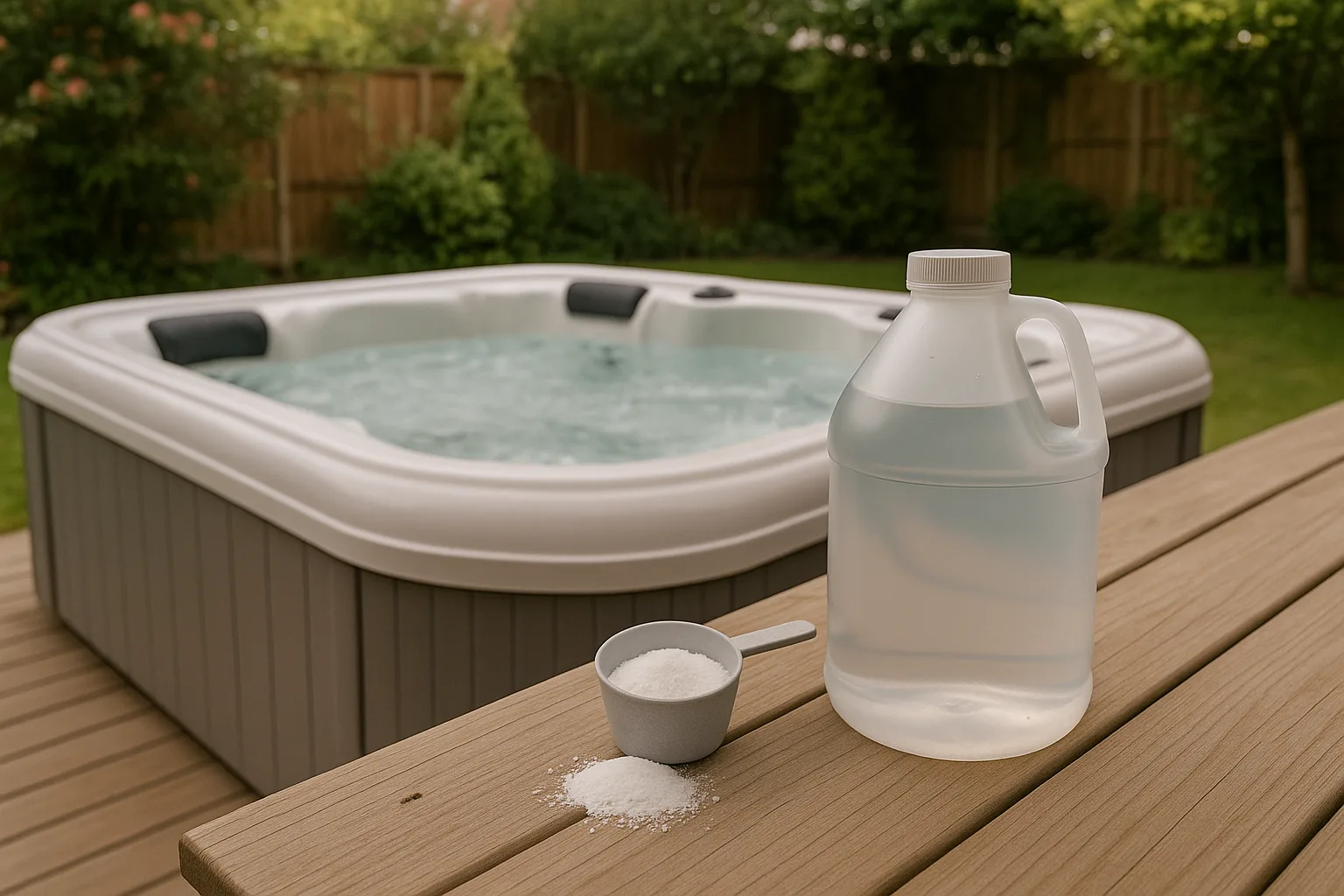
- Pre-dissolve the granules. Add the granules to a clean plastic jug or bucket of warm water, not the other way round.
- Pour slowly with the pumps running. Add the dissolved solution near moving water so it spreads through the tub.
- Leave the cover open briefly. Give the chemical fumes and water surface a chance to settle, especially if you have just opened the tub.
- Circulate for several hours. Four hours is a sensible minimum before judging the result.
- Retest before adding more. If it is still low, repeat with another small dose.
Do not add pH Plus while people are in the tub. Do not mix it in the same jug with chlorine, bromine, shock, clarifier or anything else. I keep a dedicated plastic measuring scoop and jug for spa chemicals because guessing from a kitchen spoon is asking for a bad afternoon.
Why small doses beat one big dose
Hot tub water has a small volume compared with a swimming pool, so every chemical dose lands hard. A tablespoon too much in a 700-litre inflatable spa is not the same mistake as a tablespoon too much in a 20,000-litre pool. Small corrections let you sneak up on the right number without overshooting.
The other reason is mixing. pH increaser can create a temporary high-pH pocket before it disperses. If you test too soon, you may think the whole tub is high and start adding pH Minus. That is how people end up chasing the strip all weekend.
How Much pH Plus to Use
The label wins. Always. Different products vary in concentration and instructions, so use the dose printed on your tub of pH increaser. That said, a useful owner rule is about 10g per 1,000 litres to raise pH by 0.1, which matches common UK spa dosing guidance such as the Lay-Z-Spa pH Plus and pH Minus dosage guide.
Example doses by tub size
Here is a practical starting point for a normal low-pH correction:
- 600-litre inflatable hot tub: about 6g to lift pH by 0.1
- 800-litre inflatable hot tub: about 8g to lift pH by 0.1
- 1,000-litre hot tub: about 10g to lift pH by 0.1
- 1,200-litre hot tub: about 12g to lift pH by 0.1
- 1,500-litre rigid hot tub: about 15g to lift pH by 0.1
So if a 1,000-litre tub reads 7.0 and you want to reach about 7.4, the maths suggests roughly 40g in total. I would not add all 40g in one hit unless the product label specifically says to. Add 20g, circulate, retest, then decide if it needs the second half.
Lay-Z-Spa publishes a simple dose table showing 6g for 600 litres, 8g for 800 litres, 10g for 1,000 litres and 12g for 1,200 litres to move pH by 0.1, which is a useful sanity check for inflatable spa owners.
When the maths does not behave
pH correction is not always perfectly linear. If alkalinity is low, fresh water is unusual, or the tub has had heavy use, the first dose may appear to do less than expected. That does not mean the product is weak. It usually means the water balance is being pulled around by other factors.
If pH refuses to rise after two careful dose-and-retest cycles, stop adding pH Plus and look at alkalinity, water age and sanitiser. Our cloudy hot tub water guide is useful if the water also looks dull, milky or foamy.
Why pH Keeps Dropping
If low pH keeps coming back, do not blame the brand of pH Plus first. Something is usually driving the water acidic or making the balance unstable.
Common causes in UK hot tubs
- Low total alkalinity: the most common reason pH will not hold.
- Fresh fill water: mains water varies by region, and some areas start with lower alkalinity than others.
- Rainwater getting in: heavy rain can dilute and shift hot tub water, especially with loose covers or open soak sessions.
- Heavy use: sweat, body oils, cosmetics and detergents from swimwear all change the water.
- Frequent shock dosing: some shock products can pull pH down depending on the chemistry.
- Over-correcting high pH: too much pH Minus often creates the low-pH problem you are now trying to fix.
- Old water: if the tub has been topped up repeatedly for months, correction gets less predictable.
In our own testing routine, low alkalinity is the thing I check before blaming anything else. If alkalinity is below range, pH correction can look successful in the evening and then be wrong again by the next morning.
When to drain instead of dose
If the tub is very low, smells poor, has visible slime, or has been heavily used over several weeks, a drain and refill can be cheaper than fighting it with chemicals. Water is not free, but neither are wasted test strips, pH Plus, shock and clarifier.
As a rough UK cost, filling a 1,000-litre hot tub may cost only a few pounds in metered water, but heating that fresh water is the bigger expense. Our hot tub electricity usage guide explains why a refill is not costless, especially in winter. Still, I would rather refill than spend £20 of chemicals trying to rescue tired water that should have been changed a fortnight ago.
Product Costs and What to Buy
pH increaser is not a product category where I would overpay for branding. You want a reputable spa or pool chemical, clear dosing instructions, sealed packaging and a size you will use before it clumps.
Sensible UK options
Current UK prices vary by retailer, but these are realistic examples:
- ClearWater pH Plus 1kg: about £8.99 from Lay-Z-Spa, often £12.99 from Bestway or Liberty Games.
- AquaSPArkle Spa pH Plus 1kg: around £7.50 from Discount Pool Products, with Amazon UK listings often around £11.99.
- Generic pH Plus granules: commonly £7-£10 per 1kg from eBay or pool-chemical sellers, but check the seller and label quality carefully.
- Alkalinity increaser: usually £9-£15 per 1kg, useful if low alkalinity is the real reason pH keeps falling.
- Test strips: £8-£18 for a tub of 50, and you will use them faster than you expect in the first month.
My pick for most owners would be ClearWater or AquaSPArkle 1kg granules. They are widely available, not silly money, and the labels are clear enough for normal domestic use. If you have a Lay-Z-Spa, the ClearWater/Lay-Z-Spa route is easy because their dosage guide is written around common inflatable spa volumes.
What not to buy
Avoid unlabelled tubs of powder, bargain bundles with no clear instructions, and anything that looks like it has been repacked in someone’s garage. Spa chemicals do not need to be fancy, but they do need to be traceable. Saving £3 is not clever if the product gives vague dosing and you end up draining the tub.
You also do not need a giant 5kg commercial tub unless you are managing several spas. For a single family hot tub, 1kg is normally plenty. Stored dry and sealed, it lasts well; left damp in a shed, it turns into a brick.
Safety Mistakes to Avoid
The Health and Safety Executive treats spa-pool systems as a recognised source of infection risk in business settings, and its HSG282 spa-pool guidance exists because hot, aerated water needs proper control. A domestic garden hot tub is not the same as a hotel spa, but the lesson still applies: warm water, people and poor chemical discipline are a bad mix.
The mistakes I would not risk
- Adding pH Plus and chlorine together: dose separately and allow circulation time.
- Using kitchen utensils: keep chemical tools separate from food tools.
- Dosing with the cover closed immediately: trapped chemical vapour is hard on covers and unpleasant when reopened.
- Letting children handle test strips or granules: keep chemicals locked away and dry.
- Ignoring low sanitiser because pH looks better: pH balance does not replace chlorine or bromine.
- Bathing straight after dosing: wait until the product has circulated and the test readings are back in range.
If you are running a holiday-let tub, the bar is higher than normal home ownership. HSE guidance on spa-pool systems covers commercial-type systems and domestic-style tubs used as part of a business, including holiday parks and rental units. In that setting, written checks, dosing records and a defined maintenance routine matter.
Final check before anyone gets in
Before using the tub again, I want pH in range, sanitiser in range, water clear enough to see the seats, and no strong chemical smell. If pH is back at 7.2-7.6 but chlorine or bromine is wrong, the tub is not ready. Read our chlorine vs bromine guide if you are still deciding which sanitiser system suits your routine.
The boring approach works: test, dose small, circulate, retest. It is cheaper than over-correcting and safer than guessing.
Frequently Asked Questions
What pH should a hot tub be? Aim for about 7.2 to 7.6 for normal domestic hot tub use. If your product manual gives a slightly different range, follow the manual, but do not let pH sit below 7.2.
Can I use baking soda to raise pH in a hot tub? Baking soda mainly raises total alkalinity. It can lift pH a little, but if pH is low and alkalinity is already fine, a proper pH increaser is usually the cleaner fix.
How long after adding pH Plus can I use the hot tub? Let the pumps circulate for at least several hours, then retest. Do not get in until pH and sanitiser are both back in range and the water is clear.
Why does my hot tub pH keep dropping? Low total alkalinity, rainwater, heavy use, fresh fill water, shock dosing and overuse of pH Minus are common causes. Test alkalinity before adding more pH Plus.
Can low pH damage a hot tub? Yes. Acidic water can irritate bathers and increase the risk of corrosion on metal components, heater parts, seals and fittings if it is left unchecked.
Should I raise alkalinity or pH first? If total alkalinity is low, correct that first, then fine-tune pH. If alkalinity is already in range and pH is low, use pH Plus in small measured doses.