Best hot tub covers UK: start with the tub, not a “universal” cover label. A rigid hard-shell spa needs a lid that matches its shell width, corner radius, hinge and skirt. An inflatable tub needs a compatible lid or top cover first; a thermal jacket goes over that setup and is not a rigid-lid replacement. If the measurements do not match, choose the maker’s replacement or a made-to-measure cover instead of buying the closest-looking pick.
Our four product examples solve different fit problems: a fixed-size rigid cover, a medium square thermal jacket, an extra-large round thermal jacket and a Miami replacement top cover. This is a research-led comparison of maker information and exact products. We have not fitted these covers or measured heat retention, weather resistance or durability ourselves.
In This Article
- Covers at a glance
- Four fit-first cover options
- How to measure and check fit
- Insulation, care and safety
- The bottom line
- Frequently asked questions
Best Hot Tub Covers UK: at a glance
Use the table to identify the type of cover you need. Its dimensions describe the particular product shown, not a size that can be stretched across other tubs.
| Cover | Type and size | Choose it for | Skip it when |
|---|---|---|---|
| Canadian Spa Deluxe | Rigid square lid; 213 × 213 cm | A matching hard-shell spa after checking corner radius and hinge | Your shell needs a different size or model-specific fitting |
| Lay-Z-Spa medium square thermal | Inflatable-spa jacket; 180 × 71 cm | A compatible medium square inflatable tub with its lid already in place | Your tub is round, taller or outside the maker’s compatibility list |
| Lay-Z-Spa extra-large round thermal | Inflatable-spa jacket; 216 × 80 cm | A compatible larger round inflatable tub with its lid in place | You need a replacement lid or a smaller-diameter jacket |
| Lay-Z-Spa Miami top cover | Model-specific outer top cover | Replacing a damaged Miami top cover after matching model and year | The inflatable inner lid is missing or your Miami version differs |
None of the four is a general substitute for a made-to-measure lid. Check the maker’s compatibility guide and the exact seller’s return terms before ordering; large rigid covers in particular can be costly to return after opening or trying to fit them.
Four hot tub cover options, by fit
1. Canadian Spa Deluxe — fixed-size rigid replacement
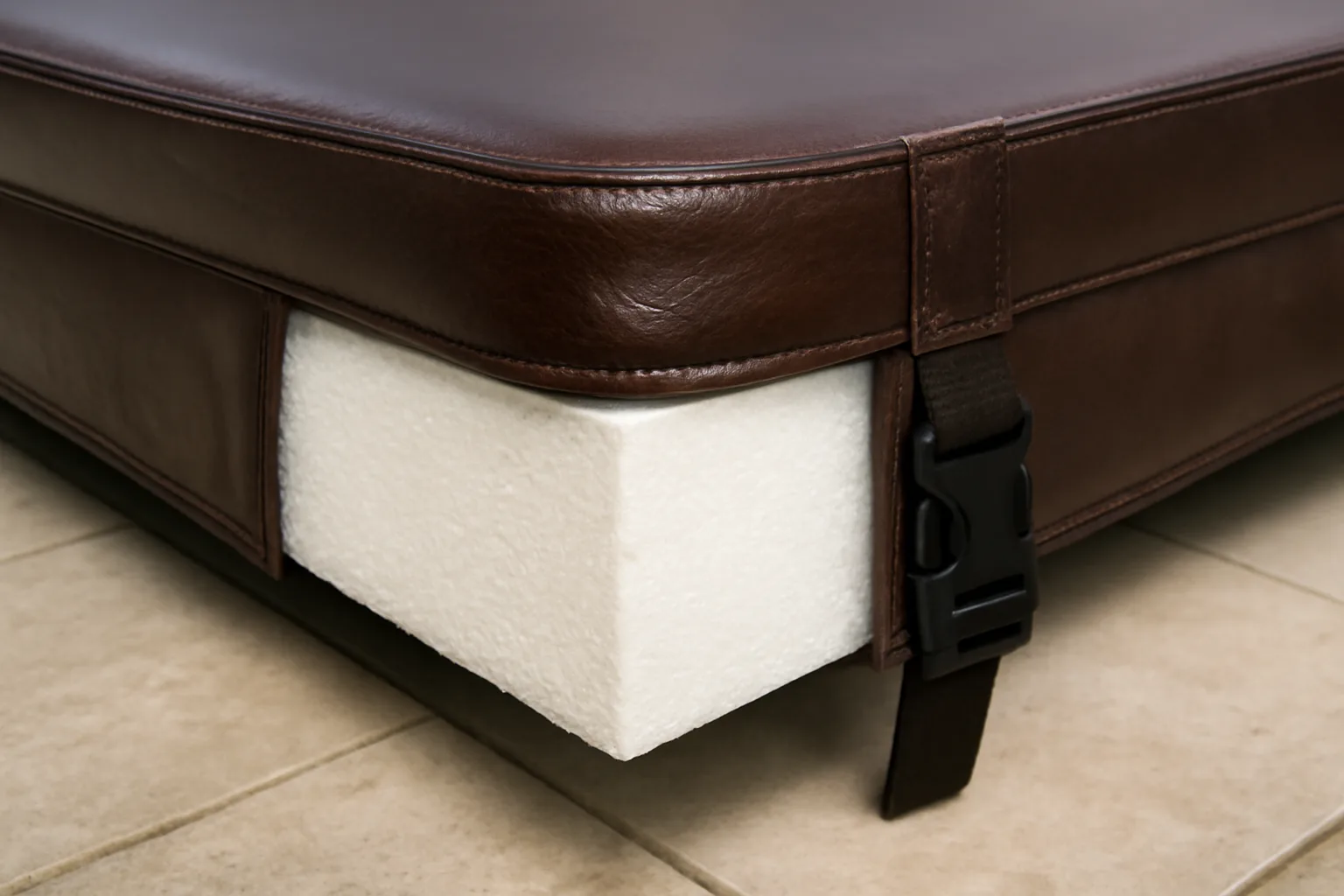
The Canadian Spa Deluxe is a foam-core, rigid square cover listed at 213 × 213 cm. It is the relevant type for a hard-shell acrylic spa, not an inflatable Lay-Z-Spa. Its fixed dimensions are the advantage only when they match your shell, corner radius and fold direction. Canadian Spa also sells model-specific replacement covers; start there if you know your spa model rather than assuming that a square measurement alone establishes fit.
- Choose: your hard-shell spa’s measured lip, corners and hinge suit this particular rigid lid.
- Skip: you have an inflatable tub, an unusual shell or uncertain measurements; request a maker or custom quote instead.
- Main compromise: a substantial fixed-size purchase with little tolerance for an incorrect measurement.
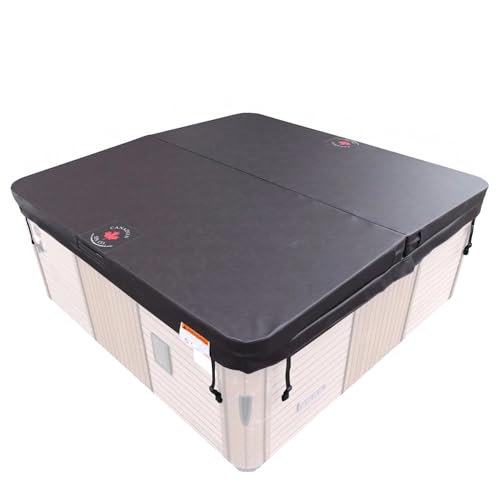
Check the exact dimensions, radius, hinge, strap positions, seller and return or collection charges before ordering.
2. Lay-Z-Spa medium square thermal — square inflatable tubs
This 180 × 71 cm Lay-Z-Spa thermal jacket is for compatible square inflatable spas. Lay-Z-Spa’s product information describes an insulated cover that fits over the inflated, filled tub with its normal lid and cover in place. That distinction matters: it adds an outer thermal layer; it does not replace a punctured inflatable lid or a failed hard-shell foam core. The maker’s page labels the product square but contains a contradictory “round” line, so confirm the BW60319 code and compatibility with Lay-Z-Spa before relying on the description. Check your exact tub model, height and pump access as well.
- Choose: you own a compatible medium square inflatable spa and want an additional outer layer.
- Skip: your tub is round or its existing lid needs replacement first.
- Main compromise: the fixed square size and height make compatibility more important than a “universal” label.

Confirm the model and outer dimensions, pump opening and current offer; a fit claim for one Lay-Z-Spa size does not transfer to another.
3. Lay-Z-Spa extra-large round thermal — larger round inflatable tubs
The round 216 × 80 cm thermal jacket serves a different shape and size from the square pick. Lay-Z-Spa lists it for compatible round inflatable tubs up to those outer dimensions and says it is used with the inflated lid and normal cover already fitted. Its straps secure an extra outer layer, but the maker’s efficiency figure is a test claim, not a saving we have measured in a UK garden. Do not size up casually: a loose jacket is harder to secure and may leave gaps.
- Choose: you have a compatible large round inflatable spa and need the matching outer thermal size.
- Skip: your tub is smaller, square or missing its inner inflatable lid.
- Main compromise: more material to remove and store, with no benefit if the fit is wrong.

Measure the fully inflated outer diameter and height, then check the maker’s compatibility list and the seller’s exact return terms.
4. Lay-Z-Spa Miami top cover — a specific damaged outer cover
This is a replacement outer top cover for a Miami hot tub, not a complete thermal jacket and not the inflatable inner lid. It is a useful lower-commitment fix when the top cover has torn but the inner lid still holds air. Miami covers vary by production year: Lay-Z-Spa identifies version-specific replacements, so confirm your tub’s model and year against the exact product before buying. If the inner lid leaks, replace that component separately.
- Choose: the matching Miami outer top cover is damaged and the inflatable lid remains sound.
- Skip: you need a full insulating jacket or cannot establish compatibility with your Miami year.
- Main compromise: it solves one part failure, not every cover or heat-loss problem.

Check the model year, clip arrangement and exact contents; “Miami” alone is not enough to prove fit.
How to measure and check fit
Hard-shell spas: measure the acrylic shell lip in both directions, then record corner radius, skirt depth, hinge direction and strap or lifter positions. A cover that is slightly too small can leave a gap; a large overhang can interfere with a lifter or straps. If the old lid is warped or waterlogged, use the shell rather than the old cover as your main reference. Send measurements and photos to the maker or custom supplier when a fixed-size option is uncertain. Our hot-tub buying guide explains why shell type matters beyond seating capacity.
Inflatable spas: identify the brand, model, year, shape and fully inflated outer dimensions. Then distinguish the inflatable inner lid, the reinforced top cover, and an optional insulated outer jacket. A jacket cannot repair a leaking inner lid. Lay-Z-Spa’s own compatibility list is more useful than a generic product title, especially when two tubs share a name but differ in year or height.
Returns: check who actually sells the item, whether a cover can be returned after opening or trial fitting, and whether collection carries a charge. A manufacturer’s direct-sale policy may not apply to a marketplace seller. Keep the packaging until you have checked fit without damaging the item.
Insulation, care and safety
For a rigid lid, look beyond thickness: the foam core, vapour barrier, tapered drainage, hinge and seal all affect how the cover behaves. Extra foam is of little use if rainwater enters the core or a poor fit leaves gaps. For an inflatable tub, the normal lid and top cover are the starting point; a correctly sized thermal jacket is an additional layer rather than proof of a particular electricity saving. For broader winter heat-loss measures, see our hot-tub insulation guide.
Clean the underside and seams as the maker instructs, let surfaces dry before storing, and repair small outer tears promptly. A rigid cover that has become heavy or sags into pooled water may have absorbed moisture and deserves inspection rather than another season of guesswork. Keep water chemistry in the manufacturer’s range: excessive vapour and splashes can accelerate cover wear.
Secure straps and clips in wind, but do not treat a cover as a childproof barrier or a surface to stand on. Keep children supervised around a filled tub, and follow the maker’s instructions for safe access, lifting and winter storage. For managed spa facilities, the HSE’s spa-pool guidance addresses wider operation and hygiene; a domestic cover alone is not a water-safety system.
The bottom line
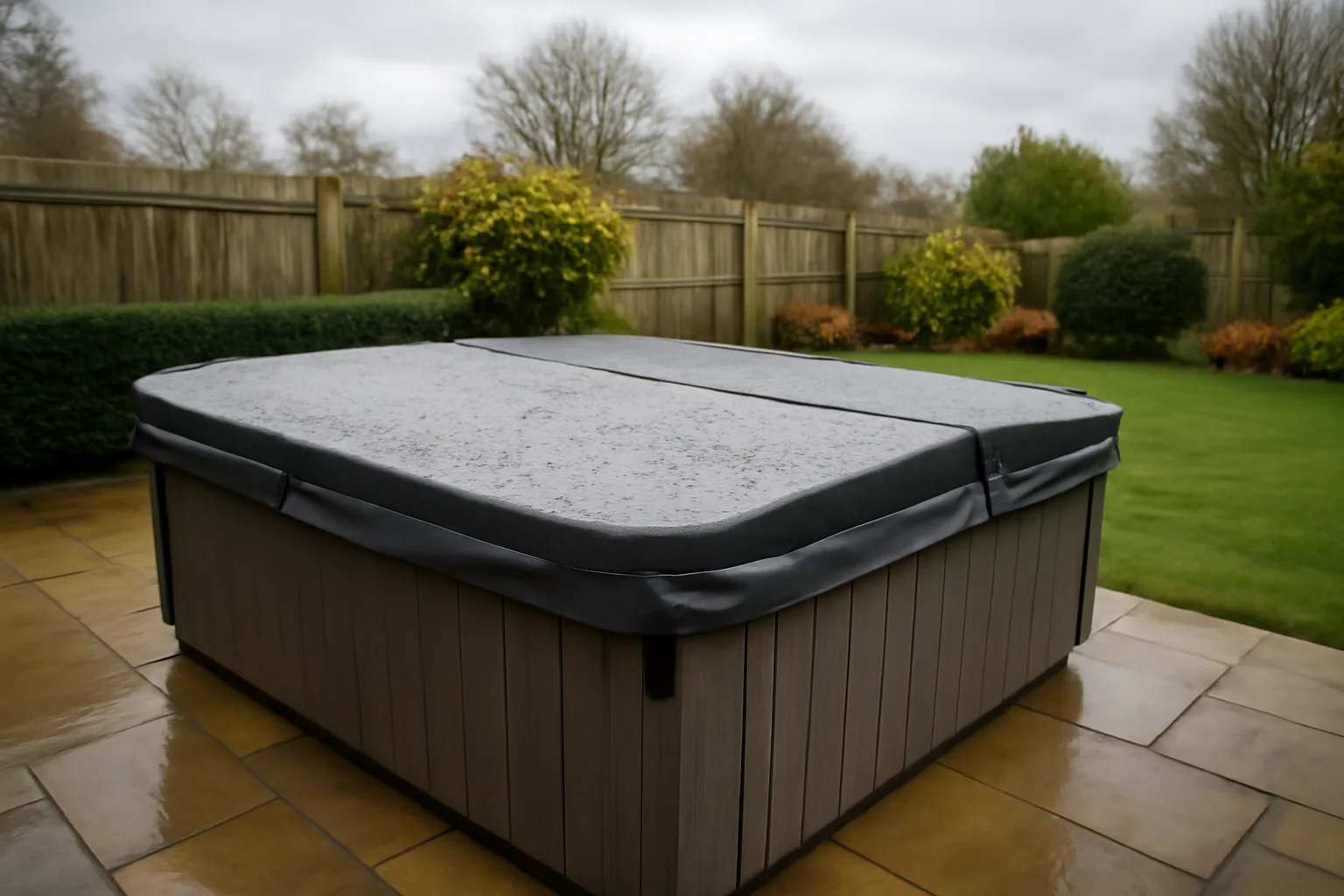
For a hard-shell spa, buy the Canadian Spa Deluxe only if its 213 cm square size and fitting details genuinely match; otherwise choose an OEM or made-to-measure lid. For an inflatable Lay-Z-Spa, check the tub’s shape and dimensions before choosing the medium square or extra-large round thermal jacket. If only a Miami outer top cover has failed, replace that specific part rather than buying an unrelated insulation layer. Fit first, insulation second, seller terms before checkout.
Frequently asked questions
Which cover type does my hot tub need?
A hard-shell acrylic spa needs a rigid, correctly fitted lid. An inflatable tub needs its matching inner lid and top cover; a thermal jacket is an optional extra outer layer. Start with the tub model, shape and measured dimensions.
How do I measure a rigid hot tub cover?
Measure the acrylic shell lip in both directions, then record corner radius, skirt depth, hinge direction and strap or lifter positions. If the old lid is warped, do not rely on its size alone.
Will an inflatable thermal jacket replace a damaged lid?
The jacket goes over the assembled tub and its normal lid and cover. Replace a leaking inflatable lid or torn top cover with the compatible part first.
Can a square 213 cm cover fit any 213 cm spa?
Width and length are only the first check. Corner radius, hinge position, skirt and straps must also match. Ask the maker or a custom-cover supplier when those details are uncertain.
What should I check before ordering?
Confirm the exact tub model and year, measured dimensions, product contents, seller, delivery and used-return or collection terms. Keep the packaging until you can check fit without damaging the cover.