Chlorine vs bromine for hot tubs is mostly a choice between speed, cost and comfort. Chlorine is cheaper and easier to find in UK shops, while bromine is steadier in hot water and often feels less sharp on skin and eyes.
In This Article
- Chlorine vs Bromine for Hot Tubs: The Quick Verdict
- How Chlorine and Bromine Work
- Cost and Availability in the UK
- Smell, Skin and Comfort
- Dosing, Testing and Maintenance
- Safety, Storage and Water Rules
- Which One Should You Choose
- Mistakes to Avoid When Switching
- Frequently Asked Questions
Chlorine vs Bromine for Hot Tubs: The Quick Verdict
If I were setting up a family hot tub on a tight budget, I would start with chlorine granules or tablets. They are cheap, widely stocked and easy to understand. If I were running the tub hot, using it most evenings, or sharing it with someone who complains about the chlorine smell, I would move to bromine.
Chlorine is the better default for most new owners because it is simple to buy and cheaper to correct when the water goes wrong. Bromine is the nicer long-term option for many hot tubs because it copes well with warm water and keeps working more steadily after it reacts with contaminants.
The simple split looks like this:
- Choose chlorine if you want the lowest running cost, quick shock treatment and easy supplies from Amazon UK, B&Q, Screwfix, The Range or hot tub dealers.
- Choose bromine if you use the tub often, run it at 38-40°C, dislike strong chemical smells or want a slower, steadier sanitiser routine.
- Avoid switching casually if your floating dispenser, filter housing or pipework has been used with the other chemical. Mixing residues is not worth the risk.
If you need the basics first, start with our hot tub chemicals for beginners guide. Here, the job is narrower: deciding which sanitiser suits your tub, budget and routine.
How Chlorine and Bromine Work
Both chlorine and bromine are sanitisers. Their job is to kill bacteria and help keep hot tub water safe between drains. Neither one fixes every water problem on its own. You still need the right pH, clean filters, regular testing and sensible bathing habits.
Chlorine is fast and familiar
Chlorine works quickly, which is why it is popular for pools and hot tubs. In a domestic spa, owners usually use chlorine granules for dosing and chlorine tablets in a floating dispenser for slower release.
The appeal is obvious. If the water looks tired after a busy weekend, chlorine shock can lift the sanitiser level fast. If you are new to water care, the instructions on most UK chlorine tubs are easier to follow than the more fiddly bromine starter routines.
The downside is that chlorine can feel harsher when the balance is off. That sharp swimming-pool smell is not always “too much chlorine”; it can be combined chlorine from used-up sanitiser and poor water balance. Still, in a small hot tub, the smell is more noticeable than it would be in a big outdoor pool.
Bromine is slower but steadier
Bromine also sanitises, but it behaves differently in hot water. It is popular in spas because it remains useful at higher temperatures and tends to produce a softer smell. Bromine tablets dissolve slowly in a floating dispenser or feeder, so the routine can feel calmer once the tub is set up.
The catch is start-up. Bromine tablets need a bromide bank in the water, and you still need an oxidiser to activate and refresh the system. Some starter kits make this easy; others assume you already know the language. That is where people get muddled.
If you want a broader view of non-chlorine systems, our hot tub sanitiser systems comparison covers UV, ozone and salt systems. Those systems can support water care, but they do not remove the need to test and maintain sanitiser in a domestic tub.
Cost and Availability in the UK
Chlorine wins on price. It is also easier to find at short notice, which matters when the test strip says your sanitiser is low on a Friday evening and people are already asking when the lid is coming off.
Typical chlorine costs
UK chlorine prices vary by brand and pack size, but realistic ranges are:
- Chlorine granules: about £8-£18 for 1kg from Amazon UK, B&Q, Screwfix, The Range or hot tub dealers.
- Chlorine tablets: about £12-£25 for 1kg, usually 20g tablets for floating dispensers.
- Chlorine shock: about £10-£25 per tub, depending on whether it is standard chlorine shock or a branded spa shock product.
- Test strips: about £7-£15 for 50 strips, though I prefer strips that show pH, alkalinity and sanitiser clearly.
For a small inflatable used a few times a week, chlorine is usually the cheapest sane option. You may spend roughly £6-£15 a month on sanitiser and testing once you already own the basics. Heavy use, bad balance and frequent water changes push that up.
Typical bromine costs
Bromine costs more:
- Bromine tablets: about £18-£35 for 1kg from Amazon UK, hot tub dealers or pool chemical suppliers.
- Bromine starter or activator products: often £10-£25, depending on the system.
- Floating dispenser: about £5-£15 if your tub did not include one.
- Non-chlorine shock or oxidiser: often £12-£30 per tub.
For a hard-shell spa used most days, bromine’s higher price can be worth it because the water feels easier to live with. For a cheap inflatable used during school holidays, chlorine often makes more sense. No judgement. Spending premium chemical money on a tub that is packed away in September is not always clever.
Smell, Skin and Comfort
This is where bromine wins a lot of owners over. Not everyone notices the difference, but people who do notice it tend to care about it.
Chlorine can feel sharper
Chlorine can be perfectly comfortable when pH and alkalinity are right. The problem is that hot tubs are small, warm and heavily loaded compared with their water volume. Two adults, sun cream, hair products and a 40°C soak can change the water fast.
If your pH drifts, chlorine feels harsher. Eyes sting, skin feels tight and the smell gets stronger. Before blaming chlorine itself, check pH and alkalinity. Our guide on how to lower pH in a hot tub explains the correction routine.
Bromine usually smells softer
Bromine has its own smell, but it is usually less sharp than chlorine. Some owners describe it as more “spa-like”, though that is a bit generous when the floater has been left wide open and the level is too high.
For people with sensitive skin, bromine can be the better fit. It is not magic, and it is not a medical treatment for skin issues, but it often feels gentler when the water is maintained well.
The honest point is this: comfort is not just the sanitiser. It is sanitiser plus pH, alkalinity, calcium hardness, filtration, showering before use and not stretching the water past its sensible life. A neglected bromine tub is still a neglected tub.
Dosing, Testing and Maintenance
Chlorine and bromine both need testing. Guessing by smell is how owners end up with cloudy water, irritated skin or a tub that needs a full drain.
Chlorine routine
A simple chlorine routine looks like this:
- Test before use. Check free chlorine, pH and alkalinity with strips or a drop kit.
- Dose with granules if low. Add the product according to the tub volume and label instructions.
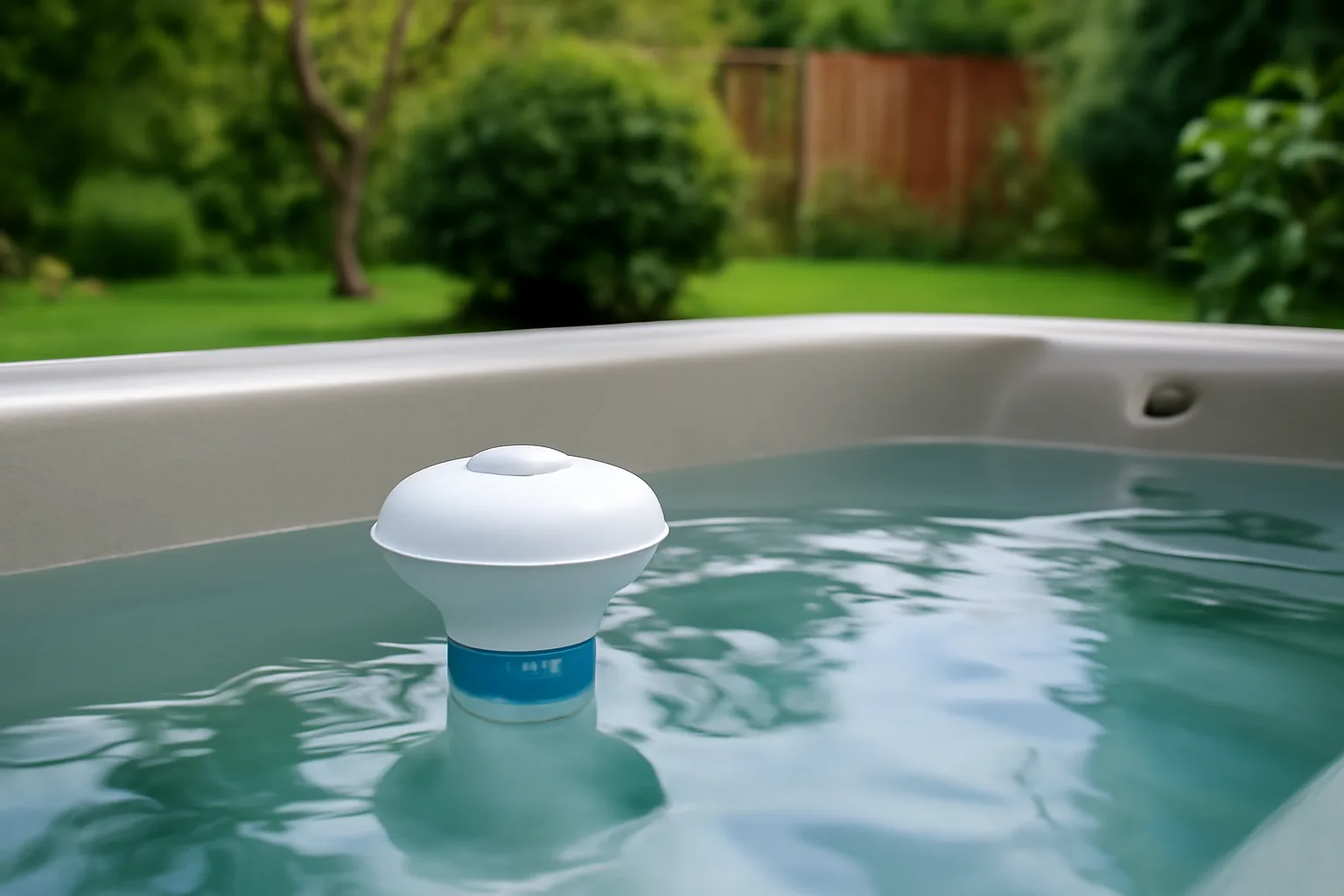
- Keep tablets controlled. Use a floating dispenser opened only enough to maintain the right level.
- Shock after heavy use. Use chlorine shock or spa shock when the water has had a busy session.
- Clean filters weekly. Rinse more often if the tub is used by family or guests.
Our hot tub shock guide covers the shock process in more detail. The key is not to treat shock as a rescue mission every time. If you need to shock constantly, your daily level, pH or filter routine is probably wrong.
Bromine routine
Bromine is less frantic once dialled in. You usually keep bromine tablets in a floater, test regularly, adjust the floater opening, and use an oxidiser to reactivate the bromide reserve.
The annoying part is that bromine can be slower to show changes. If you open the floater too much, the level can creep high. If you close it too much, it may take a while to recover. This is why I like writing down the floater setting that works for your tub. Boring notes beat guessing.
Filter care still matters. Sanitiser cannot do its job well if the filter is clogged with body oils and debris. If your water keeps going dull, read our guides on cleaning hot tub filters and fixing cloudy hot tub water before throwing more chemicals at it.
Safety, Storage and Water Rules
Hot tub chemicals deserve respect. They are useful, not casual cupboard clutter. Store them dry, sealed, upright and away from children, pets, heat and damp.
The HSE warns that spa pools and hot tubs need proper management because warm water can support bacteria if systems are poorly maintained. Domestic owners do not need to run their garden spa like a hotel, but the principle still applies: warm aerated water needs disciplined care.
The HSE’s spa-pool guidance also gives detailed control advice for commercial settings. For a home tub, use it as a seriousness check rather than a shopping list.
Basic safety rules:
- Never mix chlorine and bromine products dry. Do not pour one into a dispenser that has held the other.
- Do not mix chemicals in a bucket unless the label tells you to. Add products to water as directed, not to each other.
- Keep lids tight. Damp chemical tubs degrade faster and can smell awful.
- Use separate measuring scoops. Cross-contamination is an avoidable risk.
- Wait before bathing. Follow the product label after dosing or shocking, then retest.
If you are unsure what has been used in the tub before, drain, clean and restart. That costs water and time, but it is better than guessing with mixed residues.
Which One Should You Choose
The best answer depends on your actual use, not forum arguments. People get strangely tribal about sanitiser. The water does not care. It just needs a maintained level that matches the product and tub.
Choose chlorine if
Chlorine suits you if you want low cost, fast correction and easy supplies. It is my pick for most inflatable hot tub owners, occasional users and anyone still learning water care.
It also suits people who drain often. If you empty and refill every few weeks during summer, chlorine’s lower price and simpler start-up are hard to beat.
Choose bromine if
Bromine suits you if the tub is part of daily life. It is a strong choice for hard-shell spas, tubs kept hot all year, evening soakers and owners who dislike a sharp chlorine smell.
It is also good if you want a slower-release routine and do not mind paying more upfront. Once the bromine system is stable, it can feel less jumpy than chlorine.
My practical pick
For a Lay-Z-Spa or similar inflatable used at weekends, I would buy chlorine granules, chlorine tablets, test strips, pH reducer/increaser and a simple floater. You can get the core set for roughly £35-£70.
For a fixed hard-shell tub used four or more times a week, I would strongly consider bromine tablets, a good floater, reliable test strips and non-chlorine shock. Expect more like £55-£110 to get properly stocked.
If your tub has an ozone or UV system, do not assume that replaces sanitiser. It may reduce demand, but you still need a measurable sanitiser level. That is covered in more depth in our sanitiser systems guide.
Mistakes to Avoid When Switching
Switching can be done, but it should not be casual. The riskiest mistakes are mixing residues, trusting old floaters and failing to rebalance the water.
Reusing the same floater
Do not put bromine tablets into a floater that has been holding chlorine tablets, or the other way round. A new floater is £5-£15. Buy one. This is not the place to save a fiver.
Switching without draining
Some systems allow careful conversion, but most home owners are better off draining, cleaning, rinsing and starting fresh. It gives you a known baseline and removes old residues from the water.
Ignoring pH
Both sanitisers depend on balanced water. If pH is wrong, the tub can feel uncomfortable and sanitiser performance suffers. Check alkalinity too, because pH that bounces around is often an alkalinity problem.
Using pool products blindly
Not every pool chemical is ideal for a hot tub. Spa water is hotter, more concentrated and in closer contact with bathers. Buy products labelled for spas or hot tubs unless you know exactly what you are doing.
Letting the water age too long
Even well-treated water has a lifespan. If it feels dull, foams easily, smells odd or keeps failing tests, drain it. Chemicals are not a substitute for fresh water.
Frequently Asked Questions
Is chlorine or bromine better for hot tubs? Bromine is usually better for frequent hot tub use because it is stable in warm water and often smells softer. Chlorine is better for lower cost, easy buying and quick correction.
Is bromine safer than chlorine? Both can be safe when used correctly. The bigger safety issue is poor dosing, bad storage, mixing products, or using the tub when sanitiser and pH are outside the right range.
Can I switch from chlorine to bromine in my hot tub? Yes, but the safest home-owner route is to drain, clean, refill and use a new floater or feeder. Do not mix chlorine and bromine residues.
Why does my chlorine hot tub smell strong? A strong smell often points to used-up combined chlorine, poor pH balance or dirty water rather than simply too much fresh chlorine. Test the water before adding more.
Does bromine cost more than chlorine? Yes. In the UK, 1kg of chlorine tablets is often around £12-£25, while 1kg of bromine tablets is more like £18-£35.
Can I use bromine in an inflatable hot tub? Usually yes, if the manufacturer allows it and you follow the product label. For occasional inflatable use, chlorine may still be cheaper and simpler.