Hot tub sanitiser systems compared: keep a tested residual sanitiser in the water first. UV and ozone are secondary treatments; they act during circulation but do not replace that residual. A salt system makes chlorine from salt—it does not make a tub chlorine-free. If your spa already has a supported UV or ozone system, maintain that system. For a new installation, choose only after confirming the tub model, plumbing, electrical requirements and warranty with its maker or a qualified technician.
For an ordinary home tub, the least complicated starting point is a sound chlorine or bromine routine, not a retrofit. The three products below serve different owners: AquaSparkle bromine tablets for a compatible tablet feeder, a Hot Spring FreshWater III ozone replacement kit for a matching spa, and an Intex 28530 salt-conversion component for a matching PureSpa pump. They are not interchangeable systems, and none removes the need to test the water. This comparison is based on published product documentation and UK water-care guidance, not hands-on installation or measured sanitiser savings.
In This Article
- Systems at a glance
- Residual sanitiser first
- UV treatment
- Ozone treatment
- Salt chlorine generation
- Three fit-specific products
- Installation and running costs
- The bottom line
- Frequently asked questions
Hot tub sanitiser systems at a glance
| Approach | What it does | Residual in the tub? | Before buying |
|---|---|---|---|
| Chlorine or bromine | Primary, measurable disinfection | Yes, when correctly maintained | Match product, feeder and test method to the tub manual |
| UV-C | Treats water passing through a properly designed unit | No | Match complete unit or replacement part to the exact spa |
| Ozone | Treats water in the circulation path | No dependable bathing-water residual | Confirm plumbing, injector, supply and model compatibility |
| Salt chlorine generator | Produces chlorine from added salt | Yes—chlorine, if output and chemistry are correct | Confirm the spa supports the exact salt system |
These are treatment methods, not four brands of the same device. BISHTA’s water-treatment guidance says a residual sanitiser must be maintained even with an ozonator or other backup treatment. UV is likewise a secondary process, according to PWTAG. Do not use a claimed percentage reduction in chemicals as a dosing instruction.
Start with a measured residual sanitiser
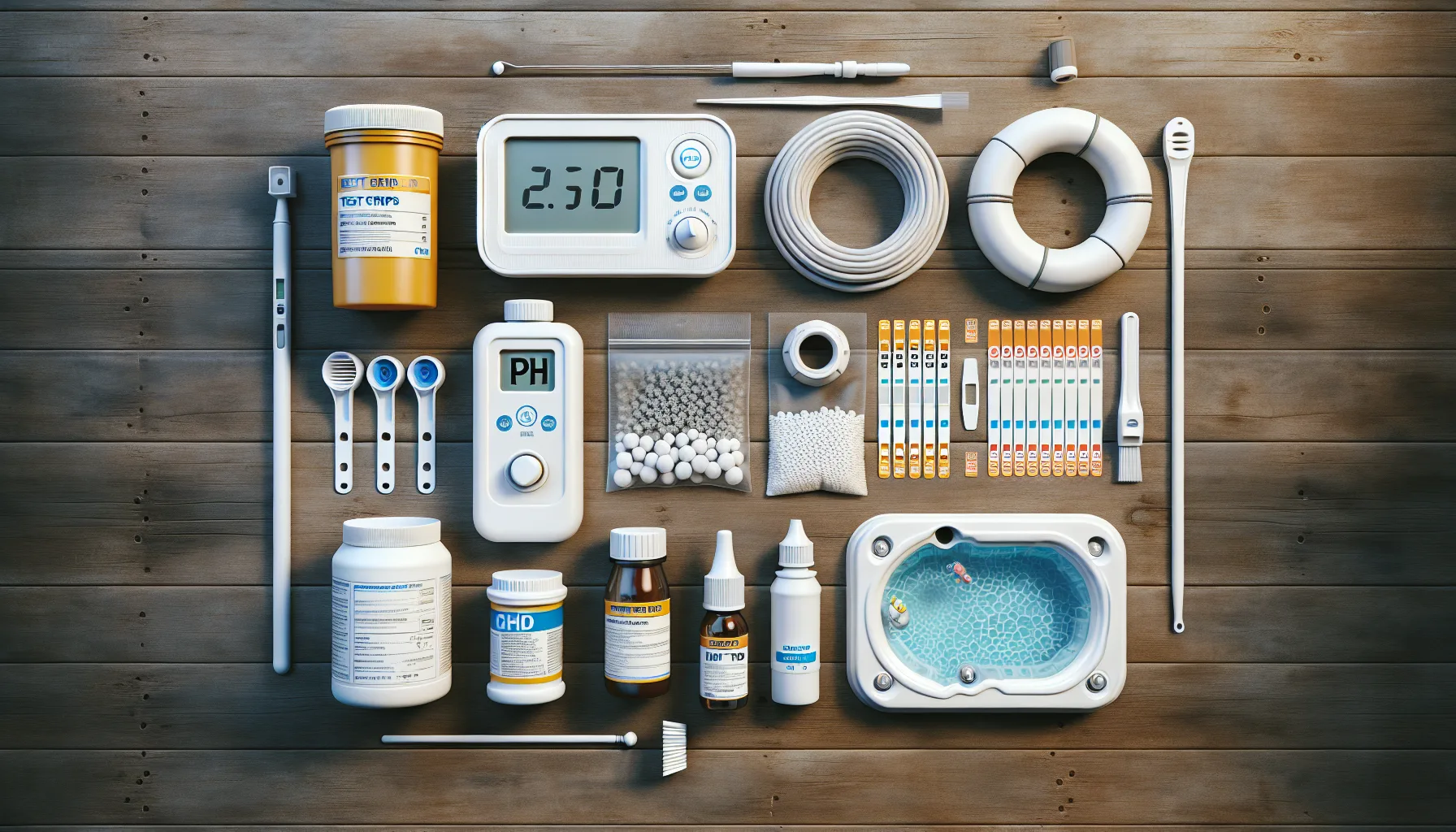
Warm, recirculating water needs consistent testing and water care. Chlorine and bromine are common residual sanitisers; the suitable product, level and test schedule depend on the tub and treatment programme. BISHTA’s home-hot-tub checks give ranges for bromine and different chlorine types, along with pH checks. Follow the tub and chemical instructions, and do not bathe when readings are outside the safe operating range.
A dispenser can make a tablet routine convenient, but it does not measure or guarantee the residual. Use the product only as its label permits, test with a suitable kit, and keep the feeder away from a surface it could damage. Never mix neat chlorine and bromine products. Our beginner’s hot-tub chemicals guide covers the wider testing and balancing routine. If you are still choosing a spa, the hot-tub buying guide explains why water-care support belongs on the pre-purchase checklist.
UV: useful secondary treatment, not a chemical substitute
A correctly specified UV-C chamber exposes circulating water to light inside a closed unit. It can supplement primary disinfection, but water elsewhere in the tub still needs its prescribed residual. Performance depends on the unit, flow, lamp condition and maintenance; an arbitrary UV lamp or a pond clarifier is not a hot-tub sanitiser retrofit.
If your spa has a factory UV system, identify the exact model and service part before ordering. Jacuzzi’s ClearRay support requires power to be isolated for lamp work and specifies model maintenance. A UV bulb is a replacement component, not a complete UV system; the wrong part can create fit and safety problems. For a new UV installation, use the tub maker or a qualified spa technician to specify the complete unit.
Ozone: check the existing system before replacing it
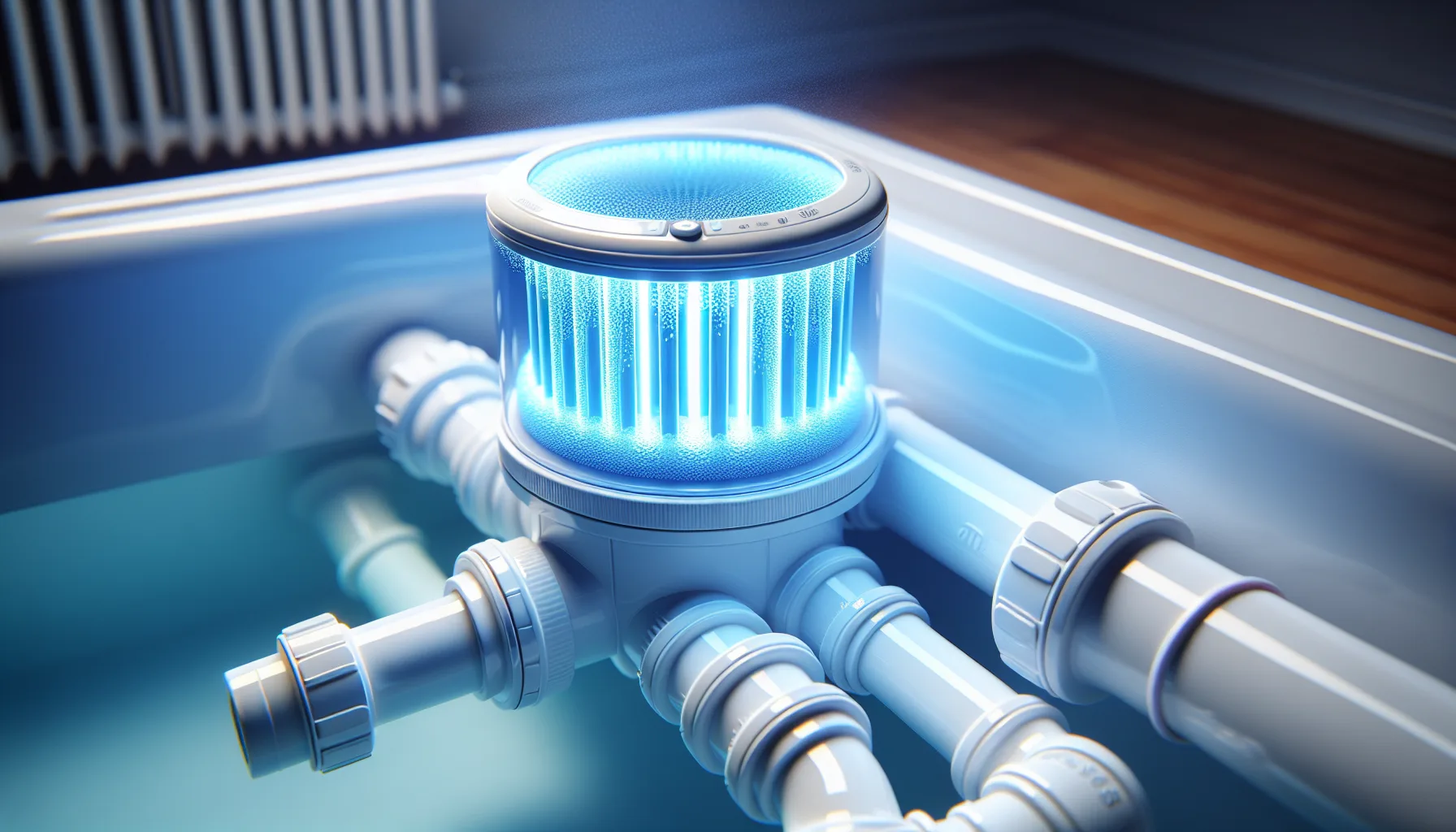
Ozone can help treat water in the circulation circuit, but it does not provide a dependable residual throughout the bathing water. A working ozonator still requires testing and primary disinfection. Claims that every owner can halve chemical use, extend filter life or lower the residual to a fixed minimum are not supported by the presence of an ozonator alone.
Before replacing a unit, identify the spa model and the old ozonator part number, connector, supply, tubing, injector and check valve. Those details determine whether a kit fits; the label “universal” is not enough. Do not sniff at an outlet to test performance. Ozone exposure can harm health, as HSE’s ozone guidance explains. Follow the maker’s diagnostic procedure or ask a service technician.
Salt: automated chlorine production for compatible tubs
A salt system uses an electrolytic cell to produce chlorine from added salt. That chlorine is the residual disinfectant; a salt spa is not chlorine-free or maintenance-free. You still need to test water chemistry and adjust the system as its manual directs. Do not add salt to a tub simply because a conversion part is sold separately.
Hot Spring notes that salt systems are not compatible with every hot tub. Compatibility is also model-specific within a brand and can change by year. Our salt-water versus chlorine guide explains the distinction in more detail. If your tub manufacturer does not approve a salt system, stay with its supported water-care method.
Three fit-specific products worth considering
Start with what your tub already supports. A product below may be sensible for one owner and entirely unsuitable for another. None is a substitute for testing, and the UV route is deliberately handled through a model-matched service part rather than a generic add-on.
1. AquaSparkle bromine tablets — residual-sanitiser routine
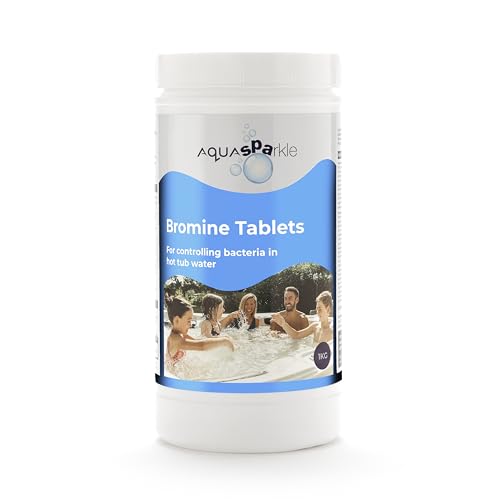
AquaSparkle’s 1 kg bromine tablets are a practical consumable for an owner already using a compatible bromine tablet feeder. Bromine remains in the water between filtration cycles, unlike UV or ozone. The useful decision is whether your tub instructions and testing kit support this treatment, not whether tablets promise effortless care.
Use only the dispenser and dose method stated on the label and tub manual. Test bromine and pH; a slow-release tablet cannot tell you what the water contains at bathing time. If your current programme is chlorine-based, do not switch by mixing neat products or dropping bromine tablets into a chlorine feeder.
- Choose: your tub uses a bromine-tablet routine and you already have the right feeder.
- Skip: your spa requires a different sanitiser or you have not checked the changeover procedure.
- Check: label directions, feeder compatibility, test strips and current water readings.
2. Hot Spring FreshWater III 72602 — matching ozone kit
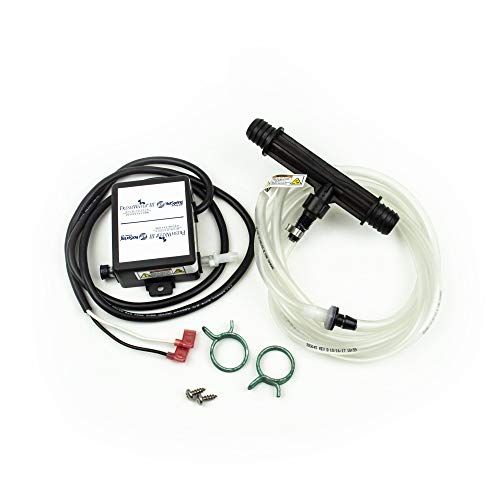
The FreshWater III 72602 is a complete ozone kit intended for particular Hot Spring-family spas. It is a replacement or supported upgrade candidate only after the existing equipment and the spa’s exact model and year are confirmed. The kit image shows tubing and injector parts; that does not mean it fits every hot tub or removes the need for a residual sanitiser.
Have the part number and electrical configuration checked before ordering. A spa technician should assess the check valve, injector and installation rather than assuming a plug-and-play swap. This is a poor buy for a tub without documented FreshWater III compatibility.
- Choose: your Hot Spring service information specifies the 72602 kit.
- Skip: you are seeking a universal ozonator for an unverified tub.
- Check: exact model/year, part number, supply, plumbing and installer advice.
3. Intex 28530 — PureSpa salt conversion component
The Intex 28530 is a salt-conversion component for a compatible PureSpa pump. Intex describes the 28530E as a PureSpa conversion kit with an electrolytic cell. The linked UK part is marked 28530; confirm with Intex support that its exact SKU fits your UK pump and model year before buying. Do not infer compatibility from “PureSpa” alone.
Once installed under the maker’s instructions, the cell generates chlorine; it does not eliminate chlorine testing or pH control. Check the required salt and operating procedure for your specific pump. For an unrelated hard-shell spa, this part is not a general retrofit solution.
- Choose: Intex confirms this part for your specific PureSpa pump.
- Skip: you own another brand or cannot establish exact compatibility.
- Check: pump label, model year, UK part number and manufacturer instructions.

Installation, upkeep and total cost
Do not choose a system on an assumed percentage of chemical savings. Costs vary with the tub, water use, replacement parts, installation and electricity. A factory-fitted UV lamp may need periodic replacement; an ozonator has its own service interval; a salt cell is a consumable. Ask for a written quote for the complete compatible setup and its service parts, then compare that with the water-care routine you already maintain.
Plumbing and electrical work around a spa should follow the manufacturer’s instructions and be handled by a suitable professional. Do not open a powered UV housing or improvise an ozone injection point. Whatever treatment you choose, keep filters clean and the cover in good condition; our filter-cleaning guide and cover guide cover those separate jobs.
The bottom line
For most owners, the best first purchase is a reliable residual-sanitiser and testing routine. Keep an existing UV or ozone unit serviced if the tub supports it; choose the FreshWater III kit only for a confirmed compatible spa. Consider the Intex 28530 only for a confirmed compatible PureSpa pump. None of these is a universal upgrade, and none justifies bathing with an untested or inadequately disinfected tub.
Frequently Asked Questions
Can UV replace chlorine or bromine in a hot tub?
UV treats circulating water inside a correctly designed unit but leaves no residual throughout the tub. Keep the primary sanitiser at the level prescribed for your spa and treatment programme, and test it regularly.
Does a salt system make a hot tub chlorine-free?
A salt chlorine generator makes chlorine from salt. The convenience is production within a compatible system, not the absence of chlorine. You still need to test the residual and water balance.
Which hot tubs can use the Intex 28530 part?
It is a PureSpa conversion component, not a universal salt system. Ask Intex to confirm the exact UK pump and model-year compatibility before ordering, then follow its instructions for installation and salt.
How do I know whether an ozone kit fits my spa?
Check the tub model and year against the manufacturer’s specified part number, plus connector, power supply, injector and check valve. A service technician can confirm the installation; a generic compatibility claim or product photo is not enough.
Can I judge an ozonator by its smell?
Smell is not a safe or dependable diagnostic test. Use the manufacturer’s checks or a qualified technician. If ozone is escaping into the air, exposure may be harmful.