Draining and cleaning a hot tub properly is half preparation, half patience. The job is not difficult, but rushing it leaves dirty pipework, foamy refill water, or a puddle running across the patio. If you want to drain clean hot tub step by step without making a mess, plan for a dry afternoon, get the right hose or pump ready, and clean the hidden parts before you refill.
In This Article
- When to Drain and Clean a Hot Tub
- What You Need Before You Start
- How to Drain and Clean a Hot Tub: Step-by-Step
- Cleaning the Shell, Jets, Cover and Filters
- Refill, Balance and Restart the Water
- Mistakes That Make the Job Messier
- When to Pay for a Professional Clean
- Frequently Asked Questions
When to Drain and Clean a Hot Tub
Most home hot tubs need a full drain and clean every three to four months. Heavy family use, holiday-let turnover, oily bathers, foam, cloudy water, and repeated chemical corrections can bring that forward. If the water still smells stale after you have shocked it, cleaned the filter and balanced the pH, the water is telling you it has had enough.
The key difference is this: a normal water-care session treats the water, while a drain clean removes the water, pipe residue, grime around the waterline and the build-up hiding in fittings. That is why it sits alongside your normal hot tub water care schedule rather than replacing it.
The signs the water is past saving
Drain the tub rather than chasing readings for another week if you see two or more of these:
- Persistent foam: Usually caused by detergent, body oils, cosmetics or swimwear residue.
- Dull or cloudy water: If a shock dose and clean filter do not recover it, old water may be saturated with dissolved solids.
- Gritty surfaces: Scale or dirt around the shell means the cleaning job now needs physical wiping, not only dosing.
- Chemical drift: If pH and sanitiser keep moving after correction, the water may be overloaded.
- Musty pipe smell: A stale smell from jets points towards biofilm or residue inside the plumbing.
If the water only needs a sanitiser reset, use the hot tub shock process first. If that does not recover it, the drain clean hot tub step by step job is the better use of your time.
Domestic tubs versus holiday lets
A privately used garden hot tub has more flexibility, but hygiene still matters. Commercial and holiday-let spa pools are held to a higher standard; the Health and Safety Executive’s spa-pool systems guidance explains why warm aerated water needs active control of infectious-agent risk.
For a domestic tub, the practical lesson is simple: do not let warm water sit for months because it still looks passable. If the tub has been unused, covered and warm, treat the next drain clean as overdue.
What You Need Before You Start
You can drain and clean a hot tub with the built-in drain valve, but a submersible pump makes the job much quicker. Built-in drains are slow and often leave more water in the footwell. A pump is the one tool I would buy if you plan to keep the tub for years.
Kit and UK prices
Expect these rough UK prices:
- Submersible clean-water pump: About £45-£70. Screwfix regularly lists domestic submersible pumps around the £55 mark, and hot tub specialists such as Happy Hot Tubs sell 400W pump-and-hose options from about £56.
- Lay-flat hose or garden hose: About £10-£25 from Screwfix, B&Q or Amazon UK, depending on length.
- Hot tub pipe flush: About £10-£18 for a 500ml bottle. AquaSPArkle Hot Tub Flush is often around £12-£14 on Amazon UK.
- Surface cleaner: About £8-£15 for a hot tub-safe cleaner. Avoid household bathroom sprays unless your manufacturer says they are safe for acrylic shells.
- Filter cleaner: About £8-£15 for a spray or soak. A spare filter cartridge is usually £20-£60 depending on the tub.
- Microfibre cloths and non-scratch sponge: About £5-£10.
- Wet vacuum: Useful but optional. Hire can be £20-£35 a day, while basic wet-and-dry vacs start around £45-£70.
- Fresh test strips or drops: About £8-£18.
Do not use abrasive pads, washing-up liquid, bleach, patio cleaner or pressure-washer detergent inside the shell. They either scratch the surface or leave residue that foams for days.
Where the water can go
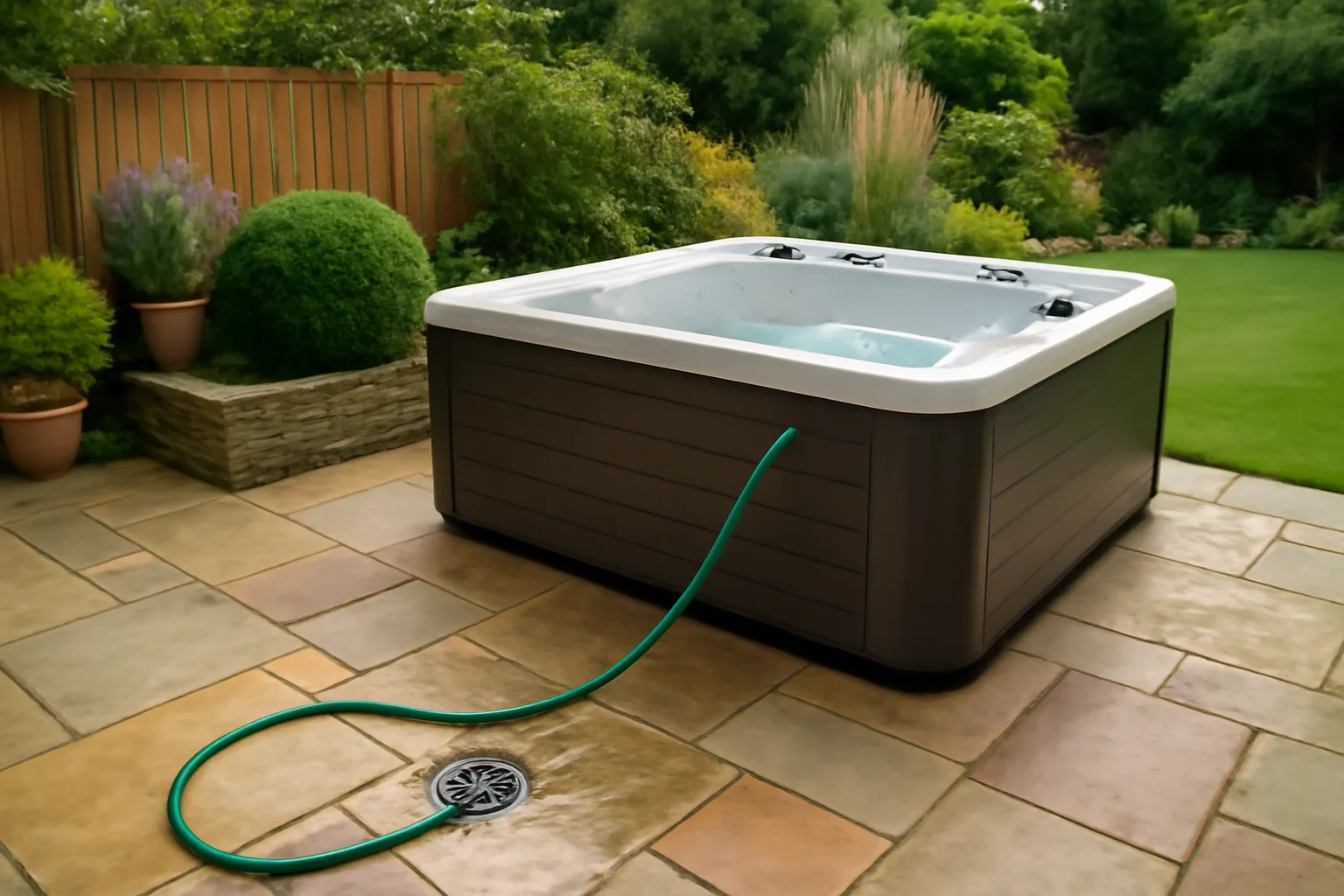
Plan the drain route before pulling a plug. A 1,000-1,500 litre hot tub can flood a small patio bed, lift mulch, or run towards a neighbour’s boundary if the fall is wrong. Let sanitiser drop to a low level first, then send the water to a suitable drain or planted area only if your local setup and product guidance allow it.
If you use bromine, chlorine, clarifiers or flush products heavily, be cautious with lawns and ponds. Warm chemical water is not something you want running into a fish pond, vegetable bed or surface water drain.
How to Drain and Clean a Hot Tub: Step-by-Step
This is the core drain clean hot tub step by step process I would use for a normal domestic garden tub. The timings vary by model, but the order should stay the same.
The full sequence
- Read the manual for shut-down instructions. Some tubs want power off before draining; others have model-specific valve positions. Follow the manufacturer before any general advice.
- Remove accessories and loose items. Take out pillows, floating dispensers, drink trays, headrests and any steps that block access.
- Add pipe flush while the tub is still full. Dose it according to the bottle, run the jets as directed, and expect some grim foam. That is the point.
- Turn the power off at the isolator. Do this before the water level drops below the suction intakes. Running pumps dry is an expensive mistake.
- Connect the pump or drain hose. Put the outlet end somewhere that can cope with the flow.
- Drain most of the water. A pump can empty many tubs in 20-45 minutes. The built-in drain can take several hours.
- Scoop or wet-vac the last water. Pumps rarely remove every puddle from footwells and seats.
- Wipe the shell, waterline and jets. Use hot tub-safe cleaner and a non-scratch cloth.
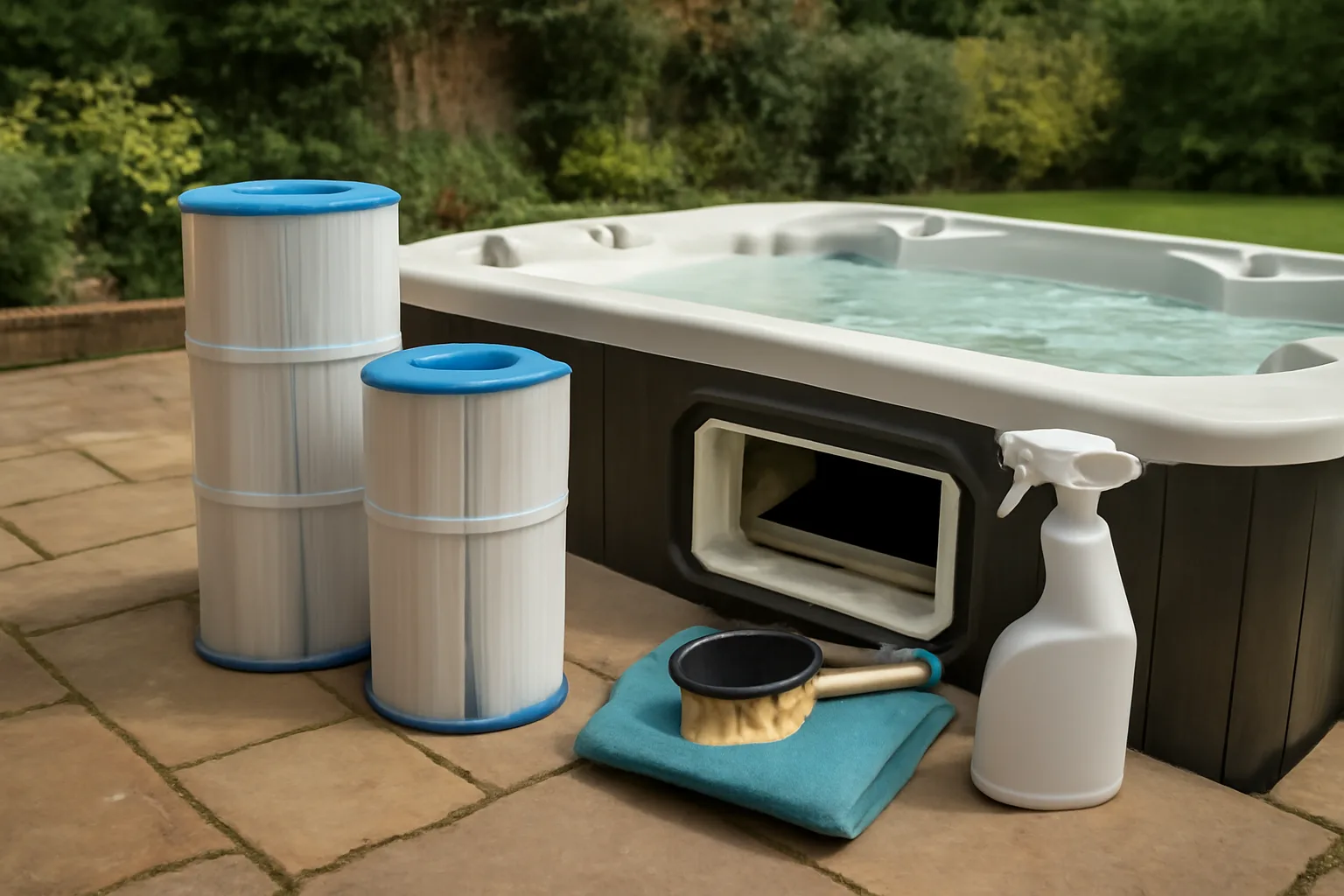
- Clean or replace filters. Rinse first, then use filter cleaner if needed.
- Refill through the filter housing where possible. This helps push air out of the plumbing.
- Restart, heat and balance. Bring the water up to temperature, then test and correct in the right order.
How long it takes
Allow three to five hours for a careful DIY clean, excluding heat-up time. The drain itself may be under an hour with a pump, but shell wiping, filter cleaning and refill checks take longer than people expect.
A first-time drain clean is slower because you are learning the hose route, isolator, drain valve and refill behaviour. Once you have done it once, it becomes a repeatable maintenance job rather than a saga.
Cleaning the Shell, Jets, Cover and Filters
The empty shell is where the job either becomes useful or cosmetic. A quick wipe of the seats is not enough if the waterline, jets and cover have been ignored.
Shell and waterline
Work from the top down. Spray cleaner onto the cloth rather than soaking the shell, especially near control panels and speakers. Pay attention to:
- Waterline scum: Body oils and sun cream usually collect here.
- Seat edges: Dirt hides where the moulded seat meets the footwell.
- Jet surrounds: Wipe around each fitting, but do not force anything that is not designed to turn.
- Suction covers: Check for hair, leaves or grit.
For scale, use a product designed for spa acrylic rather than vinegar unless the manual allows it. Some acrylic finishes and metal trim dislike acidic cleaners. A £10 spa surface cleaner is cheaper than a damaged shell.
Filters and filter housing
If the filter is grey, oily or crushed, replace it. Cleaning a collapsed cartridge is false economy. A typical domestic hot tub cartridge costs about £25-£50, though large or branded sets can be more.
If the cartridge still has life in it, rinse between the pleats with gentle hose pressure, then use a filter-cleaning spray or overnight soak. The full method is covered in the dedicated hot tub filter cleaning guide, so do not turn this drain day into a chemistry lesson. The aim here is to stop old dirt going straight back into fresh water.
Cover, pillows and exterior panels
Clean the underside of the cover while the tub is empty. It often holds condensation marks, mildew spots and chemical smell. Use a mild spa-safe cover cleaner, wipe dry, then leave it open for a short air-out if the weather allows.
Pillows vary. Some pop off easily; others tear if you pull them cold. If they are removable, rinse and wipe them away from the shell. If they feel brittle, replacement pillows are usually £20-£60 each, so be gentle.
Exterior panels only need a wash-down unless there is mould or leaf staining. Avoid blasting cabinet vents with a pressure washer. Water inside the equipment bay is the sort of clever idea that becomes a bill.
Refill, Balance and Restart the Water
Refilling looks simple, but this is where airlocks and bad first readings start. Put the hose into the filter compartment if your manual recommends it. That sends water through the plumbing and reduces the chance of trapped air.
Refill checks
Before switching the tub back on, check:
- Water level: Fill to the marker or the middle of the skimmer opening, not below the filters.
- Drain valve: Make sure it is closed and not weeping.
- Filters: Refit them clean and seated correctly.
- Jets: Open them unless the manual says otherwise.
- Equipment bay: Look for drips once water is back in the plumbing.
If you see water under the cabinet after refilling, stop and check unions before heating. A hand-tightened union can loosen during a drain-down, especially after winter.
Balancing order
Once the tub is full and circulating, test the water before adding everything at once. Adjust total alkalinity first if your kit measures it, then pH, then sanitiser. Hot tub pH usually wants to sit around 7.2-7.6, but follow your chemical kit and manufacturer.
If pH is high after refill, use the method in how to lower pH in a hot tub rather than throwing in random doses. If you are still learning the chemical names, the hot tub chemicals beginner guide keeps that part separate from this physical clean. If the water turns cloudy soon after the refill, check the filter, pH and sanitiser before assuming the drain clean failed; the cloudy hot tub water guide is the better troubleshooting route.
First heat-up
Heating fresh cold tap water can take 12-24 hours in a hard-shell tub and longer in some inflatable models, especially in winter. Keep the cover on, air controls closed and jets off unless you need circulation for chemicals.
Do not use the tub until sanitiser is in range and the water is clear. That sounds obvious, but the first warm evening after a drain is when people get impatient.
Mistakes That Make the Job Messier
Most drain-clean problems come from trying to save 15 minutes. The job is simple; it just punishes shortcuts.
Draining before flushing the pipework
Pipe flush works while the tub is full and circulating. If you remember it after the water has gone, you have missed the best chance to move residue out of the plumbing. You can still clean the shell, but the first refill may foam sooner.
Running pumps with low water
Never let the main pumps run once the water drops below the intakes. Dry running can damage seals and pumps, and replacement hot tub pumps are not cheap. A circulation pump or jet pump can cost roughly £150-£350 before labour.
Using normal household cleaners
Bathroom cleaner, washing-up liquid and scented sprays are bad hot tub cleaners. They can leave foam, damage surfaces, or react badly with sanitiser. Use spa-safe products and rinse any residue before refilling.
Forgetting the cover
A dirty cover can make a fresh refill smell old within days. Clean the underside, check stitching, and look for waterlogging. If the cover is heavy, sagging and saturated, a replacement insulated cover can easily be £250-£500, but it may save heat and stop stale condensation dripping back in.
Not checking the drain route
A pump outlet can move water fast. Do not point it at gravel, a flower bed edge, a neighbour’s fence line or a slope that runs back towards your house. Stay nearby for the first few minutes and check where the water actually goes.
When to Pay for a Professional Clean
DIY is fine for a healthy domestic tub. Pay for help when the tub has been neglected, smells bad after a flush, has visible black biofilm, has been used in a rental setting, or has a leak you cannot trace.
UK hot tub companies tend to price a drain, flush and clean from about £150-£250, with fuller service visits often around £250-£400 depending on travel, inspection depth and whether filters or parts are included. CleanMyHotTub lists cleaning packages from £169, while some regional full-service packages sit nearer £299. Those prices are not silly if the alternative is wasting a whole Saturday and still being unsure.
Good reasons to book one
Book a service if:
- The tub came with the house: You do not know its water-care history.
- It has been off for months: Stagnant warm pipework needs caution.
- You run a holiday let: Hygiene duties and guest turnover change the risk.
- There is a fault code: Cleaning will not fix a failing pump, heater or sensor.
- The cover or cabinet smells damp: A proper inspection may find the source.
For a normal owner, I would still learn the DIY process. Even if you book an annual service, knowing how to drain clean hot tub step by step makes routine ownership cheaper and less mysterious.
The simple rule
Drain and clean the tub when the water stops responding normally, after heavy use, or every three to four months as a baseline. Use pipe flush before draining, turn the power off before the water drops, clean the shell and filters properly, then refill through the filter area and balance the new water in order.
The best low-cost upgrade is a submersible pump at about £50-£60. The best habit is not leaving stale water in the plumbing for months. Get those two right and a hot tub drain clean becomes a manageable maintenance job, not a grim annual rescue mission.
Frequently Asked Questions
How often should I drain and clean a hot tub? Most domestic hot tubs need draining and cleaning every three to four months, sooner if the water foams, smells stale, looks cloudy or has had heavy use.
Can I drain hot tub water onto the garden? Sometimes, but only with care. Let sanitiser drop first, avoid ponds and vegetable beds, and do not send chemically treated water towards a neighbour’s property or surface water drain.
Do I need a pump to drain a hot tub? No, but a submersible pump is much faster than the built-in drain. Expect to pay about £45-£70 for a clean-water pump suitable for most domestic tubs.
Should I use pipe flush every time I drain the tub? Use pipe flush when the water smells stale, foams easily, has been in for months, or the tub has had heavy use. For light-use tubs, every other drain may be enough if the water has stayed clean.
What cleaner should I use on the hot tub shell? Use a hot tub-safe surface cleaner and a soft cloth or non-scratch sponge. Avoid washing-up liquid, bleach, abrasive pads and general bathroom cleaners.
Can I refill and use the hot tub the same day? You can refill it the same day, but use depends on heat-up time and water balance. Do not bathe until the water is clear, warm and the sanitiser and pH readings are in range.