You’ve spent the best part of five grand on a swim spa, the installation crew has just left, and you’re staring at a 4,000-litre body of water thinking “now what?” The jets work, the temperature’s climbing, but nobody handed you a maintenance manual that actually makes sense. Swim spas need more attention than a standard hot tub — more water, more filtration, more chemical management — and getting it wrong means cloudy water, damaged equipment, and an expensive repair bill. For related guidance, see our Swim Spa Running Costs: What to Expect guide. For related guidance, see our Swim Spa vs Pool: Cost, Space & Practicality guide.
In This Article
- Swim Spa vs Hot Tub Maintenance: Key Differences
- Daily Maintenance Routine
- Weekly Water Testing and Chemical Balance
- Monthly Deep Maintenance
- Filter Care and Replacement
- Water Changes: When and How
- Seasonal Maintenance Calendar
- Common Swim Spa Problems and Fixes
- Maintenance Costs: What to Budget
- Frequently Asked Questions
Swim Spa vs Hot Tub Maintenance: Key Differences
If you’ve owned a hot tub before, you already have the basics. But swim spas introduce specific challenges that catch people off guard.
Volume and Chemical Demand
A typical hot tub holds 1,000-1,500 litres. A swim spa holds 3,000-6,000 litres. That extra volume means more chemicals per treatment, longer circulation times, and slower temperature recovery. Your chemical costs roughly triple compared to a standard hot tub.
Dual-Zone Complications
Many swim spas have separate zones — a swim area at 26-28°C and a hot tub section at 37-39°C. Each zone may have independent heating, filtration, and chemical demands. The temperature difference creates condensation and thermal stress on the divider barrier, which needs periodic inspection.
Higher Filtration Demands
Swimming generates more debris than sitting. Hair, skin cells, sunscreen, and sweat load the filters faster. Most swim spa manufacturers recommend running filtration cycles twice as long as a hot tub — typically 8-12 hours daily rather than 4-6.
Daily Maintenance Routine
This takes about five minutes and prevents 90% of problems.
Check the Basics
- Glance at the temperature display — it should match your set point (±1°C is normal)
- Check the water level — swim spas lose water through splash-out during swimming. Top up if it’s below the skimmer line
- Remove any visible debris from the surface — leaves, insects, anything floating
- Ensure the cover is properly secured when not in use
After Every Swim Session
- Shower before entering — sunscreen, deodorant, and body oils are the number one cause of foamy, cloudy water. A 30-second rinse makes a massive difference
- Run the jets for 5 minutes after exiting — this circulates the water through the filters and disperses any body oils
- Replace the cover — UV exposure degrades water quality and burns through sanitiser faster
We’ve been maintaining a dual-zone swim spa for over a year now, and the single biggest lesson is that the pre-swim shower habit eliminated about 70% of our water clarity issues. It sounds trivial but it genuinely transforms the maintenance burden.
Weekly Water Testing and Chemical Balance
Essential Test Parameters
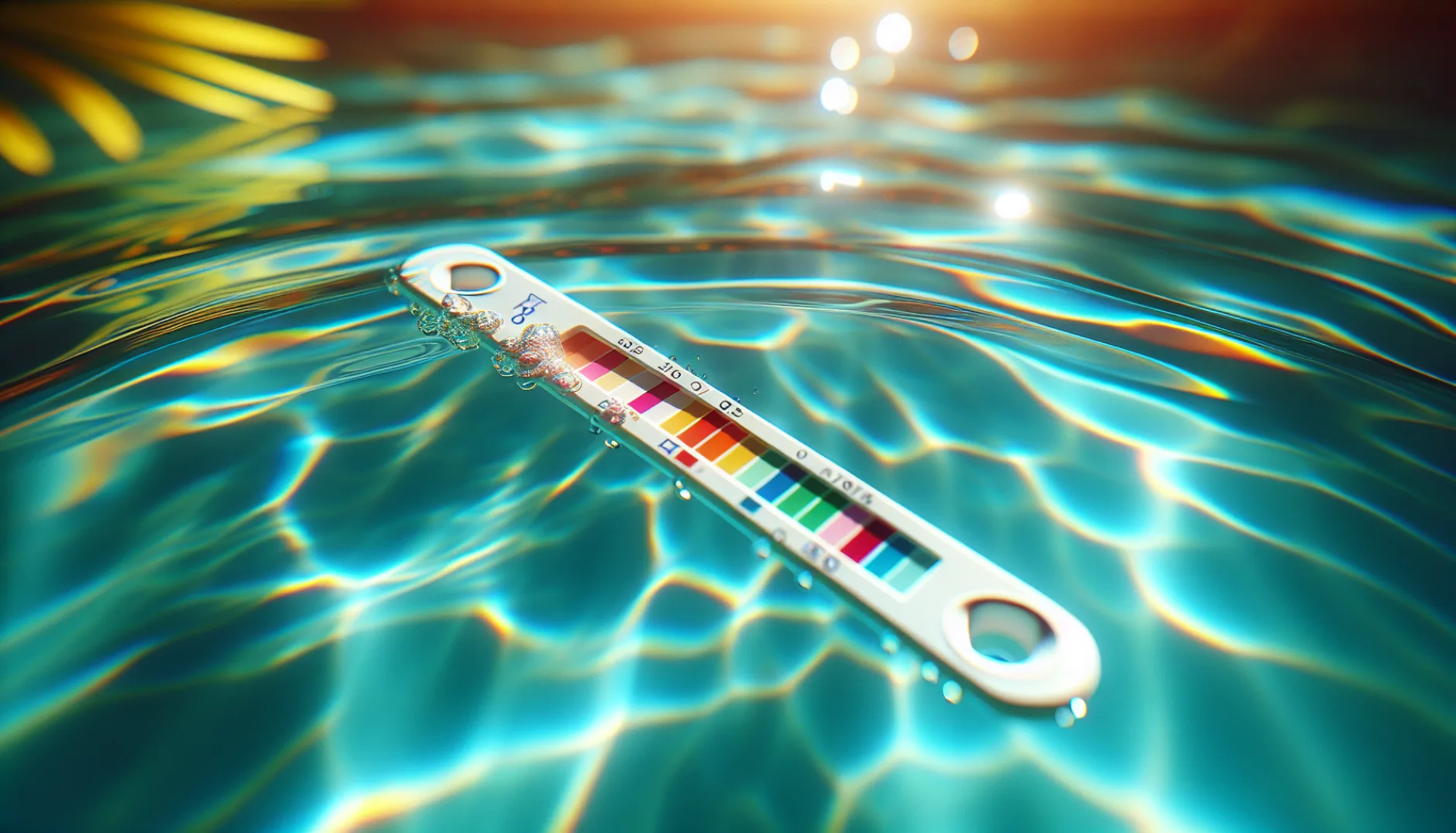
Test your water at least twice a week using test strips or a liquid test kit. The key readings:
- pH — target 7.2-7.6. Below 7.0 corrodes equipment and irritates skin. Above 7.8 reduces sanitiser effectiveness and causes scale
- Total alkalinity — target 80-120 ppm. This buffers pH and prevents it swinging wildly
- Sanitiser (chlorine or bromine) — chlorine: 3-5 ppm, bromine: 3-5 ppm. Swim spas need slightly higher levels than hot tubs due to the exercise-related contaminant load
- Calcium hardness — target 150-250 ppm. Too low causes corrosion; too high causes scale deposits
Adjusting Chemistry
- Always adjust alkalinity first — it stabilises everything else. Use sodium bicarbonate to raise it, pH reducer (sodium bisulphate) to lower it
- Then adjust pH — pH increaser (sodium carbonate) to raise, pH reducer to lower. Make small adjustments and retest after 4 hours
- Then check sanitiser — add chlorine granules or bromine tablets as needed. Never add sanitiser and pH chemicals at the same time — wait at least 30 minutes between treatments
Oxidiser Shock Treatment
Shock your swim spa weekly with a non-chlorine oxidiser (potassium monopersulphate) or chlorine shock. This breaks down combined chlorine (chloramines), body oils, and organic compounds that regular sanitisation doesn’t eliminate. According to BISHTA (British and Irish Spa and Hot Tub Association), weekly shock treatment is essential for maintaining safe water quality in heavily used spas.
Run the jets for 20 minutes after shocking with the cover off to allow gases to escape. Don’t swim for at least 30 minutes after a non-chlorine shock, or until chlorine levels drop below 5 ppm after a chlorine shock.
Monthly Deep Maintenance
Jet Inspection
- Check each jet rotates freely — stuck jets usually have debris caught behind the face plate
- Remove any jets that aren’t turning and soak them in diluted white vinegar for 2 hours
- Inspect the jet gaskets for wear — replace any that feel brittle or show cracking
- Run the swim current on full power for 10 minutes and listen for unusual noises from the pump
Shell and Waterline Cleaning
The waterline accumulates a ring of body oils, calcium deposits, and biofilm. Clean it monthly with a dedicated spa surface cleaner — never household cleaning products, which foam and contaminate the water.
Use a non-abrasive sponge or microfibre cloth. For stubborn calcium scale, a specialist spa descaler applied directly to the deposits works better than scrubbing.
Cabinet and Cover Check
- Cover condition — check for waterlogging (a heavy cover means the vapour barrier has failed), torn vinyl, or broken stitching. A damaged cover loses heat and costs you money
- Cabinet panels — check for warping, pest entry points, and adequate ventilation around the pump housing
- Base drainage — ensure water drains away from the base. Standing water under a swim spa promotes mould and can undermine the foundation
Filter Care and Replacement
Filters are your swim spa’s first line of defence. Neglect them and everything else suffers.
Weekly Rinse
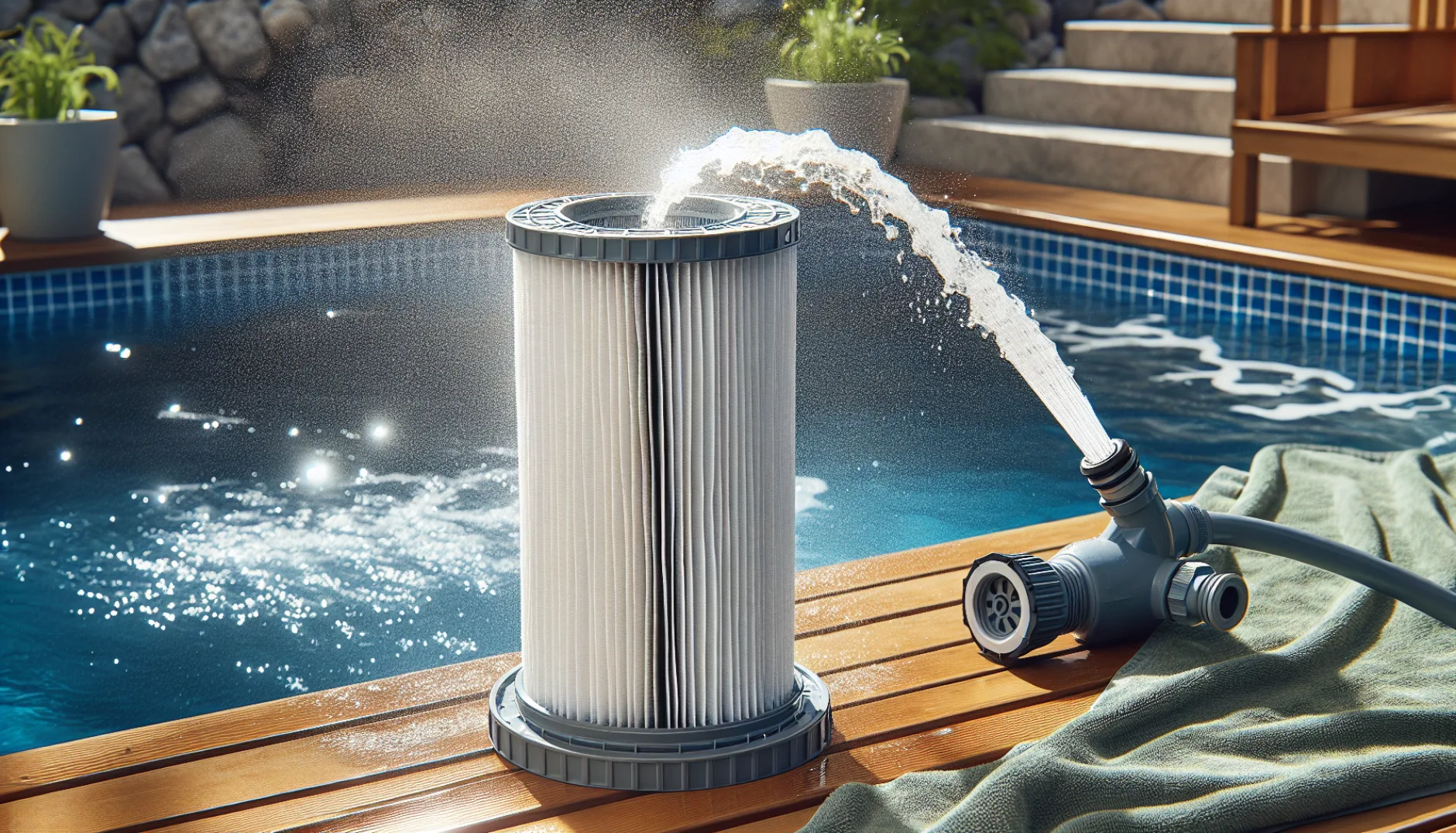
Remove the filter cartridge and rinse it with a garden hose. Use a filter cleaning wand if you have one — the fan spray gets between the pleats better than a standard nozzle. Let the filter dry before reinserting.
Monthly Deep Clean
Soak the filter in a dedicated filter cleaning solution for 12-24 hours. This dissolves oils, calcium, and biofilm that rinsing alone can’t remove. Rinse thoroughly after soaking.
Replacement Schedule
- Standard pleated filters — replace every 12-18 months with regular cleaning
- Microfilter/secondary filters — replace every 6 months
- Ceramic or eco filters — follow manufacturer guidance, typically 2-3 years
A swim spa works its filters harder than a hot tub. If you’re swimming daily, lean towards the shorter end of replacement intervals. A degraded filter forces the pump to work harder, increasing energy costs and reducing filtration quality.
Rotation Strategy
Buy two sets of filters. While one set soaks in cleaning solution, use the other set in the spa. This means you’re never running the swim spa without filters, and each set dries completely between uses (which extends lifespan).
Water Changes: When and How
How Often
Full water changes every 3-4 months for a swim spa used 3-4 times weekly. If you swim daily, every 2-3 months. The rule of thumb: divide the water volume in litres by the daily bather load multiplied by 12. But if the water looks tired, smells off, or requires increasing chemical doses to stay balanced, it’s time regardless of the calculation.
The Drain and Refill Process
- Add pipe flush product 24 hours before draining — this loosens biofilm inside the plumbing that you can’t reach manually
- Run all jets and the swim current on full for 20 minutes with the flush circulating
- Drain completely — use the built-in drain valve or a submersible pump (faster). A 4,000-litre swim spa takes 30-45 minutes with a pump vs 3-4 hours via gravity drain
- Wipe down the shell while empty — this is your chance to clean areas normally underwater. Use spa-safe surface cleaner only
- Inspect the jets, gaskets, and pump intakes for debris or wear
- Refill through the filter housing — this prevents airlocks in the pump. Fill slowly to allow air to escape
- Heat and balance — it takes 12-24 hours to reach temperature. Add chemicals once the water hits 20°C+
Water Disposal
In the UK, you can drain swim spa water into a foul water drain (not a surface water drain or directly onto soil). The chlorine and chemical content means it shouldn’t enter watercourses. If you’re unsure which drain is which, your local water company can advise.
Seasonal Maintenance Calendar
Spring (March-April)
- Deep clean the shell and replace filters after winter
- Check the heating element — winter running puts extra strain on heaters
- Inspect the cover — winter weather causes the most cover damage
- Full water change if the spa was running over winter, or refill and commission if it was winterised
Summer (June-August)
- Increase sanitiser levels slightly — warmer ambient temperatures accelerate bacterial growth
- Top up water more frequently — evaporation and splash-out increase in summer
- Clean the area around the spa — grass clippings, pollen, and insects are summer’s biggest contaminant sources
- Check UV exposure — if your spa isn’t covered or shaded, UV burns through chlorine faster. Consider a shade sail or gazebo
Autumn (September-November)
- Clear fallen leaves daily — leaves decompose quickly and create phosphate problems
- Check the cover seal — ensure it seats properly as wind increases
- Inspect the cabinet for rodent entry points before they seek warmth for winter
- Run a pipe flush before your autumn water change
Winter (December-February)
- Keep the spa running — turning off a swim spa in winter risks frozen pipes and catastrophic damage
- Insulate exposed pipes if they’re accessible — pipe lagging from Screwfix or B&Q costs a few pounds and prevents disaster
- Clear snow from the cover — accumulated snow weight can crack the cover and the acrylic lip
- Reduce swim frequency if outdoors — each use in cold weather requires more energy to recover temperature. Budget for higher electricity costs November through February
- For full winterisation steps if you’re shutting down entirely, our winterisation guide covers the procedure (applies to swim spas with minor adaptations)
Common Swim Spa Problems and Fixes
Cloudy Water
- Cause: Insufficient sanitiser, dirty filters, high bather load, or old water
- Fix: Shock treat, clean or replace filters, check sanitiser levels. If it doesn’t clear within 48 hours, drain and refill
Foam on the Surface
- Cause: Body oils, detergent residue from swimwear, lotions, or high TDS (total dissolved solids)
- Fix: Add a spa defoamer for immediate relief. Long-term, enforce the pre-swim shower rule and wash swimwear without fabric softener. Persistent foam usually means the water needs changing
Green Tint
- Cause: Algae (rare in properly maintained spas) or copper from the water supply
- Fix: For algae, shock heavily with chlorine and scrub surfaces. For copper, use a metal sequestrant and address the source (usually old copper pipes or a failing heater element)
Weak Swim Current
- Cause: Clogged intake screen, air in the pump, worn impeller, or blocked jets
- Fix: Clean the intake screen first (most common culprit). If the problem persists, check for air leaks in the plumbing and inspect the pump impeller for wear. Pump replacement typically costs £300-600 including labour
Error Codes
Most swim spas display error codes on the topside panel when something’s wrong. Common ones:
- FLO / FL — flow sensor issue. Usually a dirty sensor or airlock. Clean the sensor and prime the pump
- OH — overheating. The temperature exceeded safe limits. Check the circulation pump and thermostat
- SN / SNS — sensor failure. May need professional repair if the sensor probe has failed
Maintenance Costs: What to Budget
Annual Running Costs
- Chemicals — £300-500 per year (roughly double a hot tub due to volume)
- Filters — £80-150 per year (two sets in rotation)
- Electricity — £800-1,500 per year depending on usage, insulation quality, and energy tariff. Swim spas cost more than hot tubs to heat due to the larger volume and lower swim zone temperature requiring constant maintenance
- Water — £40-80 per year for 3-4 full water changes (metered supply)
Periodic Costs
- Cover replacement — £300-600 every 3-5 years
- Pump service/replacement — £200-600 if a pump fails (typically after 5-8 years)
- Heater element — £150-300 if it fails (typically after 5-10 years)
- Professional service — £100-200 per visit. Worth scheduling annually even if everything seems fine
Total Annual Budget
Budget approximately £1,400-2,200 per year for a well-maintained swim spa in the UK. The electricity bill is the biggest component. Running during off-peak tariff hours (if you have an Economy 7 or flexible tariff) can reduce this by 20-30%.
Frequently Asked Questions
How often should I change swim spa water? Every 3-4 months with regular use (3-4 times weekly). Daily swimmers should change every 2-3 months. If the water becomes difficult to balance, looks tired despite treatment, or develops a persistent odour, change it regardless of timing.
Can I use the same chemicals as my hot tub? Yes — the same sanitisers (chlorine or bromine), pH adjusters, and shock treatments work in swim spas. You’ll just need larger doses proportional to the water volume. A 4,000-litre swim spa needs roughly 3-4 times the chemicals of a 1,200-litre hot tub per treatment.
How long should the filtration run each day? 8-12 hours minimum for a swim spa, split into cycles if your system allows it. If you swim daily, aim for 12 hours. More filtration is always better — the electricity cost of running the circulation pump is modest compared to the cost of fixing problems caused by poor filtration.
Do I need to maintain both zones separately? In a dual-zone swim spa, yes. Each zone has its own water chemistry that needs independent testing and treatment. The swim zone runs cooler and may need less sanitiser, while the hot tub zone runs hotter and burns through chemicals faster. Test each zone separately during your weekly routine.
What temperature should a swim spa be set to? The swim zone works best at 26-28°C for exercise — warm enough to be comfortable but cool enough to swim without overheating. The hot tub zone typically sits at 37-39°C. Running the swim zone above 30°C makes exercise uncomfortable and increases chemical consumption.